Home

Thanksgiving Walk

4 Comments

The blog’s new header is intended to reflect my interest in nature and native plants, a “third side of one mind.”  It is a close up of a cottonwood tree I saw at the Bosque del Apache.  Today’s post about my Thanksgiving features other native plants.


Waiting at the copy center in Staples I listened to the customer in front of me and the salesclerk chat.  “I hate Black Friday,’ the clerk was saying.

“So do I,” the customer said.  “Maybe if you’re poor it makes sense.”

“I’m poor,” the clerk responded.  “And I’d rather spend time with my family than save $100 on a television set.”

Recovering quickly the customer said, “I’ve been there too.  I felt the same way.”  When I was done my business I told the clerk “I hope you survive Black Friday!”  She smiled.
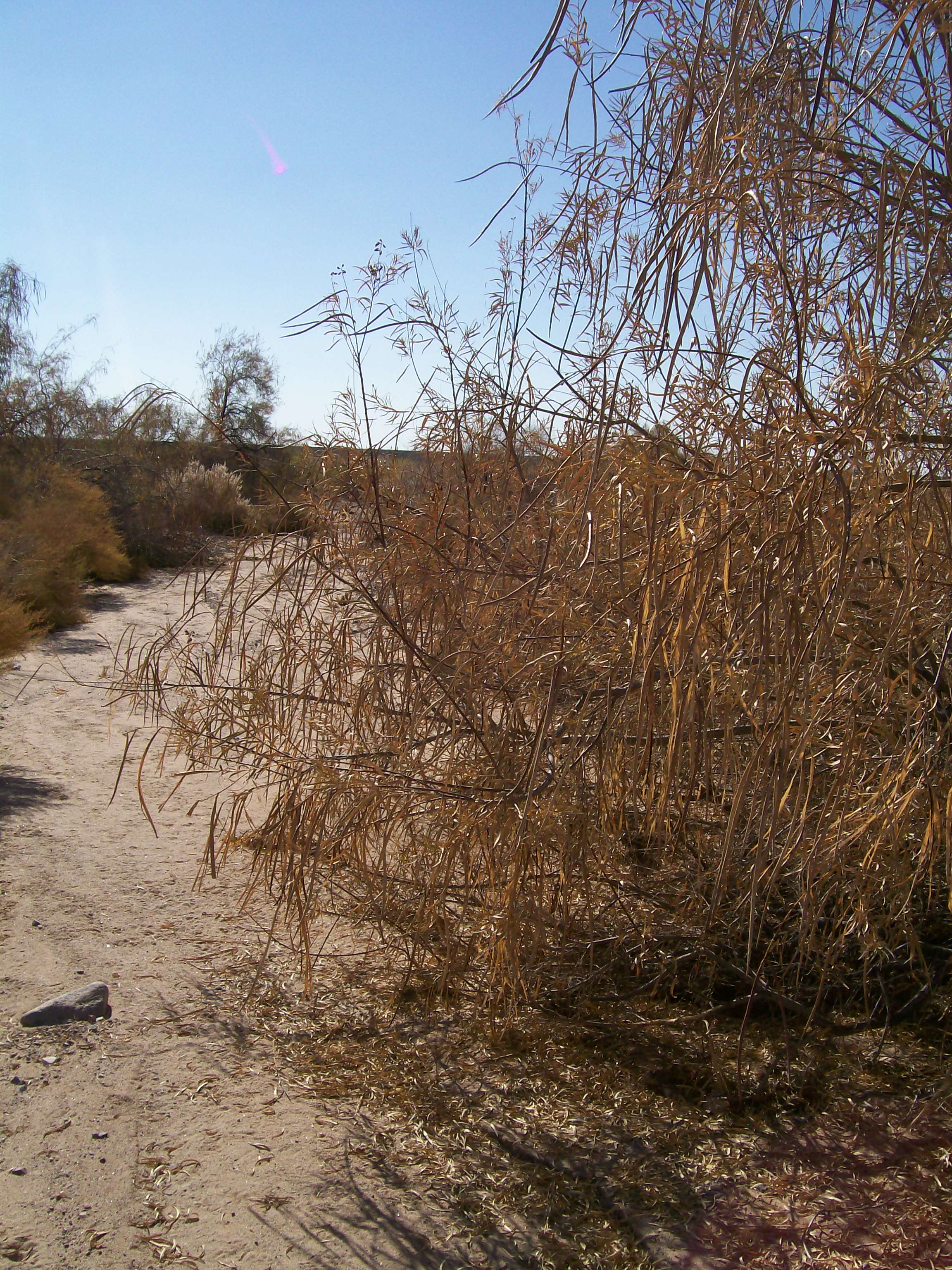
Desert Willow

For me, “Black Friday” is a day to stay home, catch up, finish cleaning up for Thanksgiving.  One of many things I have been and am grateful for is the extended family and friends who came to our house for Thanksgiving every year for many years: anywhere from six to seventeen people.  That left a lot of next day cleanup to be done, but it was worth the effort.  I am also grateful that we no longer do that.  We do a Thanksgiving dinner for ourselves, because for us, next after family, Thanksgiving is about the leftovers: the sandwiches and all the stock for soup, the many uses of turkey chunks.

This quieter Thanksgiving allows me time to take a walk.  This year I walked into
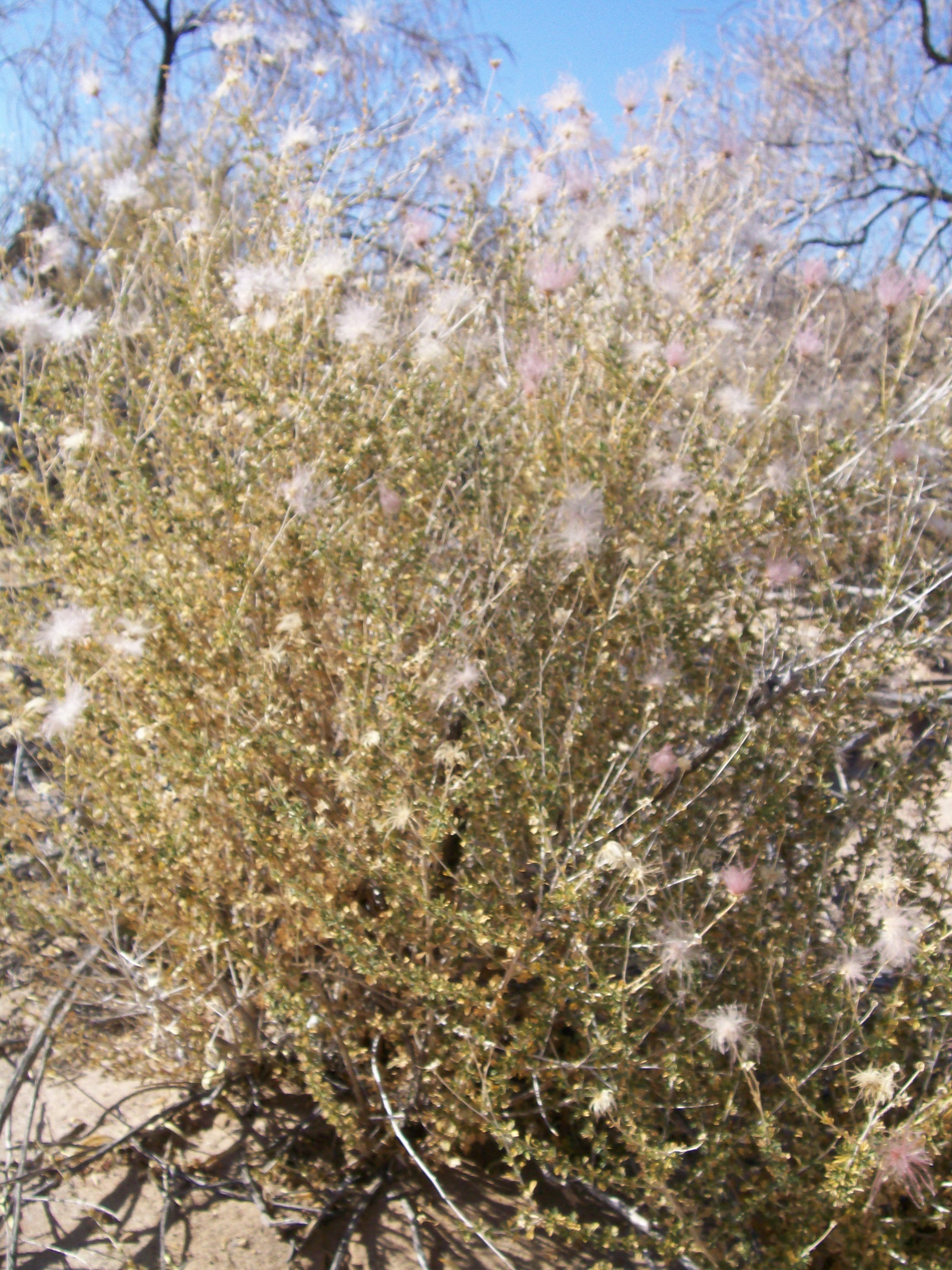
Apache Plume

the arroyo behind the dam that is built for a 500 year flood and rarely sees more than a few small ponds in the rainy season.  Now it is quite dry.  I found many things to be thankful for, including desert willows whose long seed pods showed me how many flowers I’d missed seeing by not being out their way in the warmer weather.  There was apache plume which was still “pluming” – its sprays of seed pods not yet blown away.  And most pleasing of all, there were buffalo gourds.  These grow on large leaved plants which have gotten scarce in the last year or two because of the drought conditions.  I picked up a few for my Thanksgiving table decoration.  It was a longer walk than I had taken in quite a while.  But I knew I would have Black Friday to rest up.
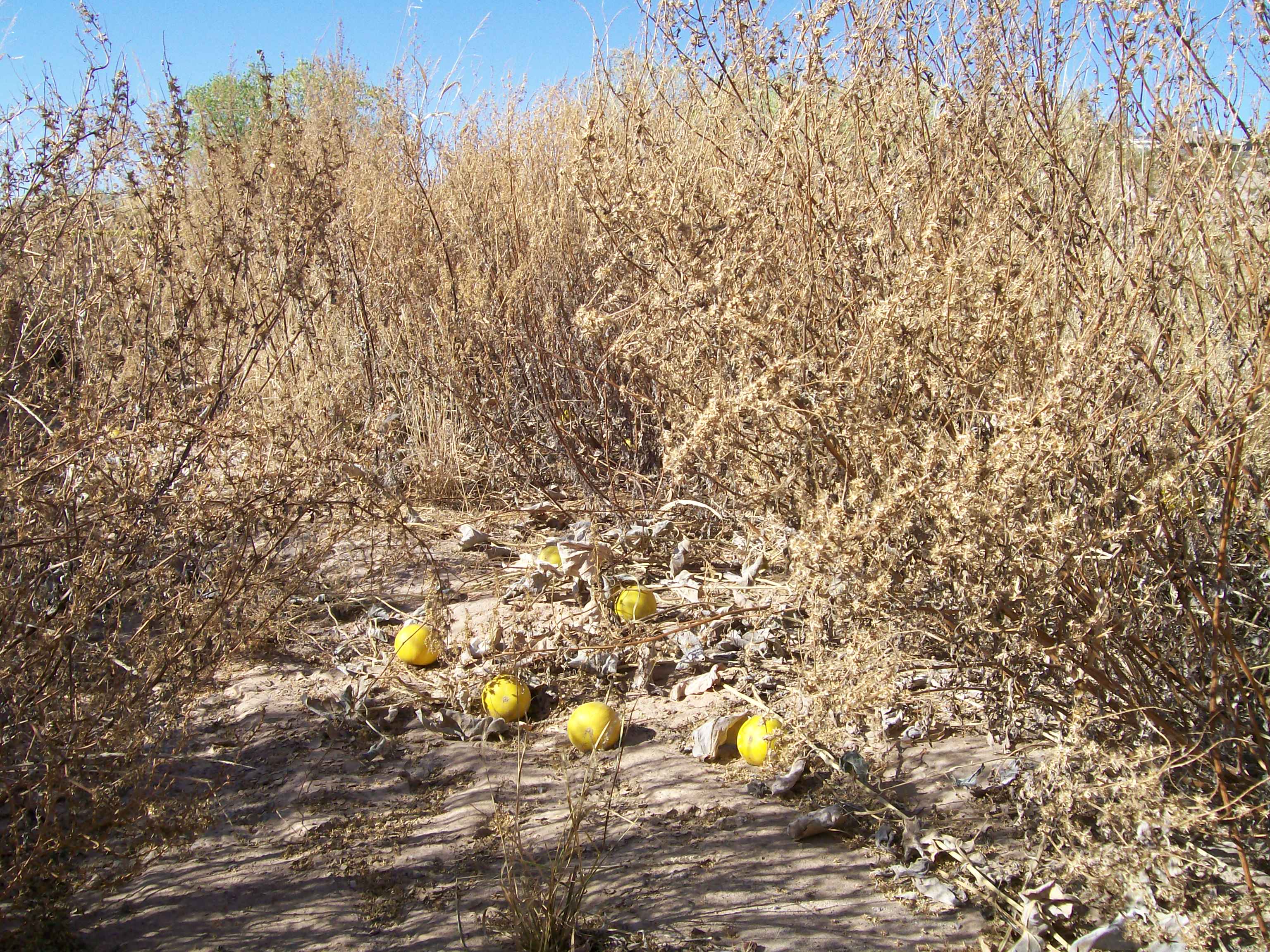
Buffalo Gourds
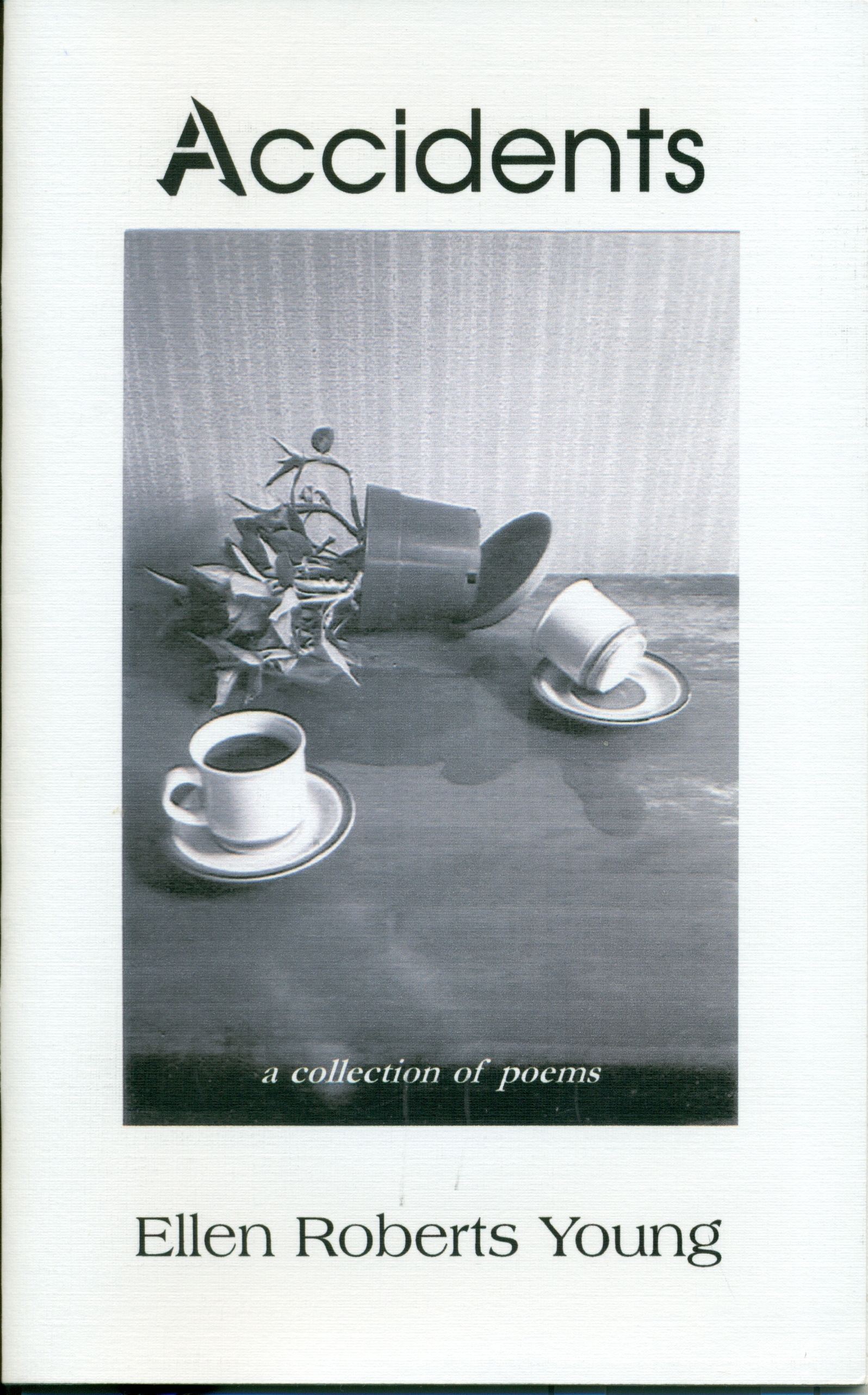
Accidents for Sale

Leave a comment

 I inventoried my storage closet recently and discovered that I have a huge box of copies of my first chapbook.  Accidents was published by Finishing Line Press in 2004.  I bought out their supply of the book because then I felt better about submitting again.  I think my second chapbook is even better than my first, but I’m still happy with the way the first came out.

The title refers to the small upsets of the domestic sphere.  I created the cover picture of a spilled coffee cup and tipped house plant to suggest those little crises.

I have already published one poem from this chapbook on this blog. “Decaf Please” on October 3.  Today I’m offering another example, the title piece, called “Accidents Will Happen.”

Accidents Will Happen

A spill on the stove.
Wiping up is holding action:
minimize the damage.

To empty the pot, replace
the cooktop is too much
lost: the moment.

Repair, reuse,
mend the frayed edges
of a day in tatters.

The world still rocks
on its axis like the cap
on a pressure cooker.

Yes there are days when I’ve felt like this.  Perhaps you have too.  There are twenty-one poems in the chapbook.  I am now offering copies of Accidents at $5.00 each, including postage.  Use the contact page to get my email and address.  They could make good Christmas gifts for your reading friends, and you won’t have to tell them about the bargain price.  Or you could boast about it at a $5.00 gift exchange event.

Up-to-date In Kansas City: From the Biography

Leave a comment

At the end of the nineteenth century, Kansas City was an exciting place to be.  Businessmen were optimistic, having survived a local real estate bust in the 1880s and the national economic crisis of 1893.  John Emerson Roberts’s “Church of This World” fit right in with the sense of progress.

People back in Michigan, where Roberts had grown up and where he returned each summer, took notice of his success.  In a long interview reported in the Grand Rapids Herald, Roberts was asked about his church.  He responded:

“We don’t deal with anything of which we have no knowledge. We have quit fooling with phantoms and ghosts and the future. We are satisfied to live in this world and to study life here rather than what we are to enjoy hereafter. We don’t lie about what we don’t know. As for prayer and that sort of thing, I can’t see any occasion for it. Christ never prayed in public.”

When the reporter suggested that the Gospel of John indicates otherwise, Roberts argued that that book was written long after the events, and that the writer had no personal experience of the case.  At the end of his article the interviewer referred to Roberts as “the Kansas City up-to-date minister.”

            In 1900, Kansas City was “up to date,” a phrase widely used at the time, in a number of ways. The “skyscraper” celebrated as “seven stories high” in Oscar Hammerstein’s lyrics for Oklahoma was actually ten stories tall. It was the New YorkLifeBuilding at 20 W.    Ninth Street. A few other buildings had reached eight stories by 1900. The city’s boosters were eager to make a national impression. They persuaded the Democratic Convention to meet there in July, in the Convention Hall they had built with private money the year before. They got more attention than they expected. Convention Hall burned down in April. A campaign began immediately to rebuild. City leaders assured the Democratic Party that the work would be done in time and it was—just barely. The convention itself brought in plenty of business but it was not an exciting event: The nomination of William Jennings Bryan was a foregone conclusion.


The excerpts above are from John Emerson Roberts: Kansas City’s “Up-to-date” Freethought Preacher (Xlibris, 2011).  For more information, see the Books page or contact me.

A Special Place in New Mexico: Bosque del Apache

6 Comments

This past weekend I made a trip up to the Bosque del Apache to see the cranes.  The Bosque is a national wildlife refuge established twenty-five years ago to provide winter forage for migrating sandhill cranes and snow geese.  The refuge is only about 120 miles north of where I live, not a long distance by New Mexico standards, especially on the Interstate, but I had never been there during the winter season.  There were a fair number of cars taking the loop road and stopping to see the ponds and fields, but I am sure I avoided much larger crowds who will come for the Festival of the Cranes next weekend.

Geese on the pond

The Bosque del Apache takes its name from its use by Apaches during the Spanish era as a camping ground.  Now the area is turned over to the birds.  Fields are planted and ponds are maintained to provide the habitat needed.  (I think this is a great use of my tax money.  When the refuge was first created, the sandhill cranes were in serious decline.  Now there are plenty of them.)

Cranes in the field

I missed the move of the geese from the pond to their roosting areas.  The pond had hundreds of geese in it when I drove into the area.  Cars were lining up along the pond to see the “show.” When I completed the loop road the geese had flown, leaving the water to a few brown ducks.  I had come to see the cranes and I did.   They were moving in small groups from field to field, feasting on the only young green plants for miles around.

Cottonwood by the trailhead

I had intended to hike and stay until dusk to see the cranes fly to their roosting places, but it was cold and windy.  I decided to start for home before dark.  I had been richly rewarded for my time and travel by this first view of the cranes and the unexpected sight of so many geese.

Parley of Instruments: A Tale

3 Comments

“I’m feeling off, and achy,” complains the watch as his band stretches around the boy’s hand.  “I’ve been reset so often my knob’s worn down.”

“My time is right,” the clock on the stove calls out.

“So is mine,” the clock on the radio mutters.

“B-bong, b-bong,” the windup clock on the wall begins to chime the hour.

“You’re two minutes early,” stove clock declares.

“Close enough.  I don’t run on current like you.”

“At least we agree,” stove clock assures radio clock.

“Of course!  We run on the same power!”

“You’re grumpy this morning, radio clock,” wall clock says.

“Stove clock’s acting like she’s in charge – again.”

The boy looks at his watch, which is running five minutes slow.  “I’ve still got five minutes,” he says to himself.

“You’re reading the wrong timepiece!” the others cry together, but to the boy they are as silent as the lights flashing at the school crossing, where five minutes is enough to mark him tardy.

“He didn’t look at any of us,” stove clock sighs as the door closes.


This little story was a side trip in my journey with William Paley’s Natural Theology.  The image of the watch which opens Paley’s argument is so strong that it took me a while to realize that Paley is not really interested in what watches do, that is, tell time.  He is interested in the watch as a mechanism which must have had a designer.  It is a parallel to the eye, ear, and all the other parts of the body which, it is his project to demonstrate, must have been designed.  Paley’s world view is a topic for another time,. as is our contemporary bondage to clocks and the minutes they represent.

One Nation or Eleven?

Leave a comment

Are we one country?  I haven’t finished reading Colin Woodard’s American Nations, but it already helps me make sense of the chaos, the confusion, the peculiarity of the fall hysteria called a national election.  Woodard’s basic thesis is that eleven groups of people―ethnic groups, class groups, religious groups―came to this continent, beginning with the ones he calls “First Nation” who came from the west.  These eleven groups spread across the continent.  The group that got to any region in sufficient numbers first made its imprint on the culture in that place.  Others who came later, though they came from other “nations,” were absorbed into the existing culture rather than changing it.  The map of the continent showing these nations is a set of very wiggly lines. These lines rarely bear any relation to present state or even national borders.  The territories vary from wide to very narrow bands.  The map, which is on the front of the paper cover of the book, looks like an etch-a-sketch drawing gone wild.

Some of the “nations” make immediate sense.  In particular, the “First Nation” dominates part of Canada, and “El Norte” is the name given for the Spanish movement up from Mexico.  France had a significant influence in the areas now represented by Quebec and New Orleans.  The other nations take some study and persuasion.  Most of them were founded by the English.  The different classes and religious formations, however, produced very different views of what political life should look like.

I won’t go into all of Woodard’s claims and explanations here.  He might be horrified at my simplifications of his detailed arguments. The book is well written and an easy read in spite of the complications of his argument.  I recommend it.

To begin with the founding of the country, I learned long ago that the establishment of the government involved major compromise between the New England and the Southern ideas.  Woodard makes clear that even the language was different.  From the beginning New Englanders, because of their covenantal religious structure, were committed to participatory democracy in town meetings where everyone could speak, but expected considerable social conformity.  They were big on schools, since reading the Bible was important. The leaders of Tidewater Virginia, in contrast, were country gentlemen who expected “liberties” according to their class, and considered government a privilege and responsibility of the elite.

“Midlanders” the “nation” which first settled New Jersey, Pennsylvania and Delaware, were a mixed lot, Quaker, Dutch and German, who valued tolerance, with minimal interference in one anothers’ cultures.  A second group came in through Pennsylvania, settled in the interior and then moved down into Appalachia.  Woodard calls these “Borderlanders” because they came from the desperate border areas of Britain.  For the Scots, Irish and Scotch-Irish, the sense of community was in family and clan and they valued fighting skill, honor and independence.  “Freedom” to them meant being left alone, a contrast to the freedom of the Yankees to participate in government.

These groups spread west, so that the Midwestern states are divided in bands of different cultures, with Yankees in the northern sections and Borderlanders in the south, with a narrow strip of Midlanders in between.  My one sentence summaries of their different attitudes should make it clear that these three groups will be seeking totally different conditions in their governments.Yankees want to put everyone in school; Borderlanders want to be left alone.  Midlanders want to get along, both socially and economically.  Thus the Midlanders come to be the swing votes in the swing states.

Woodard claims that it was the Midlander vote going for Obama which gave him the win in 2008.  It will be interesting to see how he characterizes the 2012 election.  He makes me wish we had a lot more “Midlanders” in Congress.  My sense of the election results is that we, the country, are going to need all the tolerance we can get from our leadership.

Daily Horoscope

1 Comment

I read my horoscope regularly―it’s on the same page with the word puzzles―but I usually take it lightly. I am a Scorpio and I know that is a deep water sign, which suggests depth of all kinds, deep thoughts or deeply hidden emotions.  I’ve been accused of both.  Lately the horoscope page has been telling me that with the sun now coming into my sign I have lots of energy.

aster in sand, Ghost Ranch

Some days I do have lots of energy, but I prefer to attribute it to the weather.  I am like the purple aster which blooms best in the fall and continues until the frost.

One time my horoscope went way too far, promising that I can do it all. “You will with joy accomplish every item on today’s list.”

“This is a trap!” I declare to the newspaper page.  Yes I could do it all, but I would have to spend tomorrow, or maybe two tomorrows, recovering.  I’d be back where I started then, if not worse, since the to-do list would pile up while I returned to normal.

“This must be a message for another Scorpio,” I argue.  “One who’s more organized, more disciplined.”  I am actually quite disciplined about writing.  The horoscope writer doesn’t know where my focus has to be.  My to-do list is all the other, smaller things I ought to do, the ones I will forget if I don’t write them down.

It’s silly to be talking back to the newspaper horoscope.  An artist coach whose work I read somewhere suggested that one shouldn’t worry about one’s list, because half of it won’t matter in the long run.  Which half would that be?  The glasses that need adjusting?  The socks that are due for replacement?  Triage itself takes time and attention.  Meanwhile the list gets longer.  That coach is right on the principle, however.  A focus on to-do lists is a drain on creativity.

Would it be accurate to say that we all have more important things to do than the things on our lists?  It all depends, of course, on what we put on those lists.  I never put “write” on the list.  I just do it.  I don’t put “love” on a list either.  We don’t need lists for the really important things.

Halloween and Other Ghosts

2 Comments

We’ve reached another cross-quarter day, the midpoint between the fall equinox and the winter solstice, better known as Halloween.  It is interesting that this day gets so much attention.  Many believe it has no connection with religion.  They celebrate it with fun and costumes in the early dark.  A significant minority in this country knows that it has religious origins and prohibits it as satanic.  In its early form it was a time of religious ritual, particularly rituals of purification through fire, and of moving to winter quarters.  In some places it was also the start of a new year

I’ve always thought it would be an awkward day for a birthday.  How special would you feel if everyone else was getting candy too?  A friend born on this day, however, told a story about a time in elementary school when birthday parties were forbidden.  The teacher worked her birthday into the Halloween festivities.  That would make a person feel special.

Another person who was born on this day was my mother-in-law, Jane.  Her sons would have no excuse for forgetting their mother’s special day.

I’ve not been impressed with the recent focus on zombies.  I don’t believe in them.  Ghosts, however, are real, in a number of ways.  A woman from New Orleans told me, “Home is where you listen to the ghosts.”  I picture her attending to voices of her―and her community’s―past now that she has returned home, voices she could not hear properly when she lived elsewhere.

My own ancestor research has been work with ghosts, a crowd of people clamoring to be remembered.  They have sometimes weighted on me as an obligation.  At other times they are more like sprites, delightful wisps teasing me into the past.

One of the special things about my mother-in-law was an uncanny ability to find a parking place just where she needed one, no matter how crowded the situation.  To this day, when my husband and I find a space like that we say, “That’s Jane’s space.”  It’s as if she has found and held it for us.  She’s a good ghost; we’ll have her with us as long as we remember.  The parts of our past we’ve neglected may come back to haunt us.  Those we’ve cherished will remain in our hearts, connecting us to our heritage.  Perhaps you’d rather call them something else than ghosts.  Any metaphor will do, as long as we remain mindful of this phenomenon, that we continue to be connected to those who are gone.

A New “Church”: From the Biography

Leave a comment

John Emerson Roberts’s contacts with Robert Ingersoll, described in my blog of October 6, bore fruit in the fall of 1897.  From my biography of Roberts, here is a description of Roberts’s independent “Church” and how it operated:

The Church of This World held its first service in the Coates Opera House on September 12, 1897. In addition to Roberts’s lecture, which he still called a sermon, music was provided by Carl Busch. The service apparently consisted only of this music and the sermon with no offering, no hymnody, and certainly no prayer. It is interesting that the organization was called a church, given the comments Roberts made in the spring about the negative connotations of that term. The phrase “this world” was evidently taken from Ingersoll’s letter praising Roberts’s sermon about the boy who died in jail: “You are preaching a religion for this world.”

Carl Busch was a major figure in the music world of Kansas City.  Born in Denmark in 1862, he studied in various institutions in Europe.  In 1887, Busch was working in Paris, playing in orchestras conducted by Camille Saint Saens and Charles Gounod. The Danish vice-consul in Kansas City invited Busch to organize a string quartet and bring it to America. Busch did so, and spent the rest of his life based in Kansas City. Times were not easy for the arts. Busch organized a series of orchestras and programs, but between the economic troubles of the late 1880s and the 1890s, and the lack of developed musical taste among the well-to-do business class who were the city’s elite, support was not always sufficient. The position as music director for the Church of This World was at least steady work, though very part time; Busch was still employed there when his biography was written for Whitney’s Kansas City, Missouri, in 1908.

The Church of This World was set up with a board of trustees just as the Unitarian Society had been. The names of the earliest set of trustees are not known. The trustees are listed in the newspapers only in later years when there were stories of development or decline to report. The funding for the church was provided by supporters who paid for their seats; the cost ranged from $5 to $25 per year. This practice is comparable to the idea of pew rentals, which many churches used to provide a base of income; the theater seats were no doubt more comfortable than typical pews. Seats for those who just came in were free.

The sermons Roberts gave in that first year are lost.  In the fall of his second year, however, Roberts published a series of sermons as a hardbound book.  A few copies have survived.

These sermons show how his preaching and views had evolved. The first sermon was titled “The Imperial Demands of Progress.” The word progress had become a highly resonant term for Roberts. He begins with the idea that one has an obligation to participate in progress:
“Deeper upon enlightened minds grows the conviction that progress is the world’s supreme law. To contribute to that progress, to obey that law, is the cosmic business of everyone and of everything that is.”
While he sees this as a human undertaking, however, he has not become a true Ingersollian; he has not given up talking of God, of spirit and of the divine. He concludes this first sermon by saying,
“Let us trust the old, the common, the misunderstood earth. Let us hail the dawn of the day coming fast and sure, when all men everywhere shall see that the earth is divine, man is divine and God is all in all.”
Though “thought” and “reason” are among his favorite themes, Roberts also holds on to the idea that religion, as opposed to specific religions, is an element of life that will endure.

There’s that dawn metaphor again in the second quotation, an image Roberts used often.  Read more about his most unusual institution in John Emerson Roberts: Kansas City’s “Up-to-date” Freethought Preacher, available through Amazon from ERYBooks (or use the contact page).

The Map of Longing: Poem and Chapbook

4 Comments

How shall I properly introduce my chapbook The Map of Longing now that it has snuck into my blog entries through a poem called to mind be recent experience?  It is my second chapbook with Finishing Line Press, published in 2009.  It is a collection of poems about loss and longing within the ordinary phases of life.  I had the fun of working with a friend who is a photographer to choose the cover picture, which shows a road leading to some unknown place through overhanging trees.  The fact that it is a scene from my home state, California, was an incidental plus.


My mother, Emily, in her prime

Many of the poems in this collection relate to my mother, including some about the last months of her lifeand clearing outher house.  Others refer to my own move from Pennsylvania to New Mexico, which happened the same year as my mother’s death.  Is it any wonder the two themes are intertwined?

There are several poems, however, which attempt to capture the feeling of being lost, disoriented, out of touch, as a general human condition, not connected to any specific circumstances.  One of these is the title poem, which expresses the mood of distraction and disorientation by the very number of its metaphoric images.

The Map of Longing

The express train
knows where it’s headed.

I zigzag,
a squirrel before cool weather
signals gathering,

no pattern tidy
as trimming for a skirt,

no purpose,
like switchbacks
up a mountain.

My turns random as leafing
through a dictionary,

I skid like a getaway car
within a movie frame,
constricted by the tracks of time,

direction inescapable
as A to Z.

The Map of Longing is available through Amazon.  You can get a signed copy from me via ERYBooks.

Older Entries Newer Entries