Home

Hong Kong Visit

1 Comment

I’ve just had a great trip to Hong Kong, my first there, and only my second ever to Asia.  Hong Kong is a very lively city, and fairly compact for its size, as it is hemmed in by steep mountains.  The central part of the city, on Hong Kong Island, is built on the side of a hill.  Streets uphill are frequently replaced by stairs.  Clearly, the harbor was the important feature in the selection of this location by the British back in the nineteenth century.  The city continues to be bi-lingual, with a large foreign population – it takes seven years, I learned, to become a permanent resident.  And there are enough foreigners to support quite a few coffee shops, a feature I appreciated in the mornings, though I enjoy Chinese tea the rest of the day.

It was grey when we arrived, a result of the typhoons in the area.  This was convenient for one coming from a colder climate.

From the Star Ferry

From the Star Ferry

Gradually the weather warmed and the sun came out, providing an opportunity to enjoy the view from Victoria Peak.  Across the harbor is Kowloon, another part of the city, which is a peninsula of the mainland.

View from the Peak

View from the Peak

The look back at the peak, from a 42nd floor hotel room, shows how close the green landscape is, where it gets too steep to build.
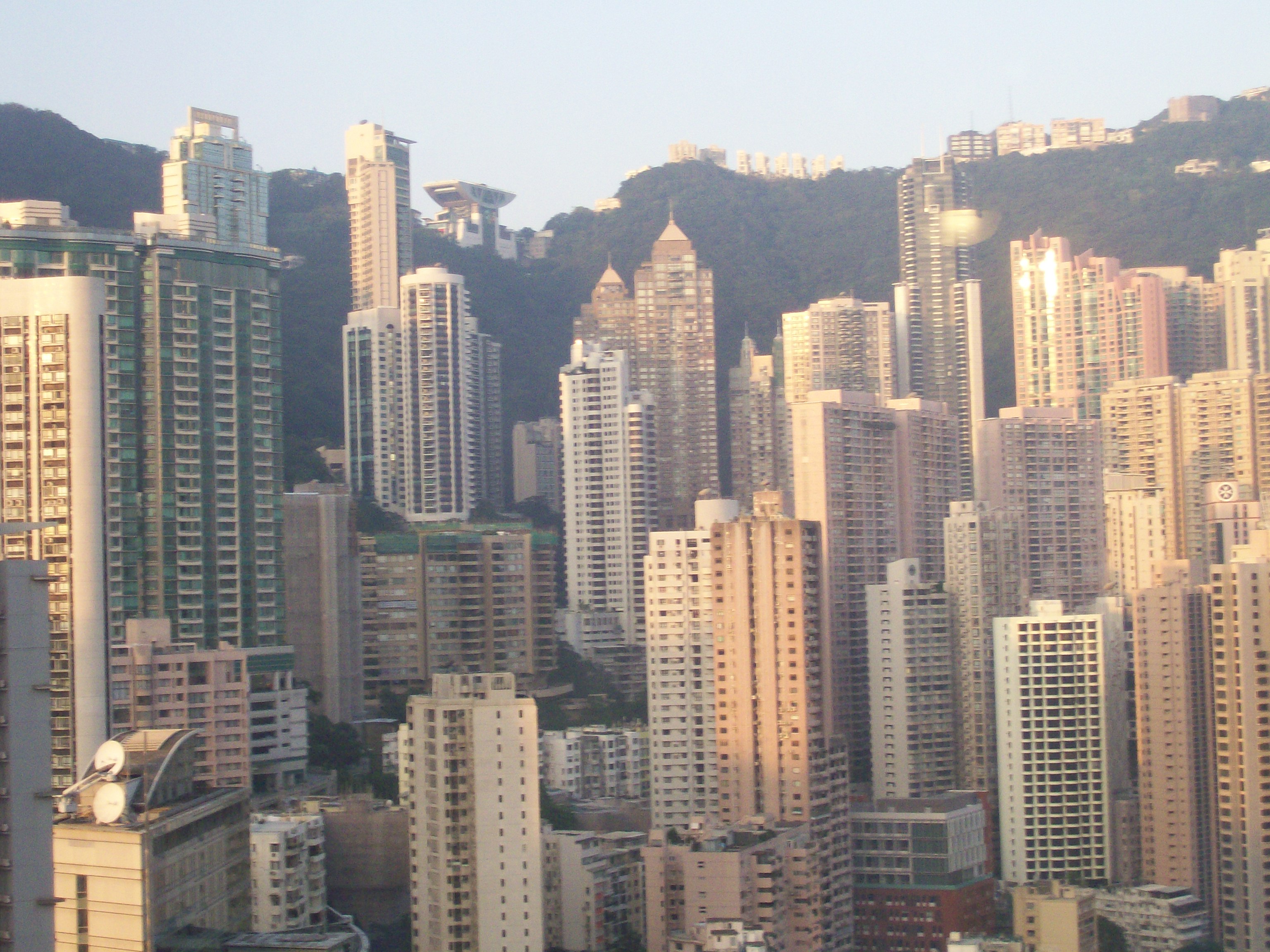
Southern view from hotel

Southern view from hotel, morning sun

A half hour bus or taxi ride takes one around the hills and down to the south side of the island, where there are villages with nice beaches and houses which seem far away from the city high rises.  More of that in another post.

Progress on “Made and Remade”

1 Comment

The Bridge Outside Paley's Door

The Bridge Outside Paley’s Door

The manuscript for my collection of poems about William Paley and his 200 year old text Natural Theology has gone to the publisher.  Made and Remade should be out in the middle of 2014

To celebrate I offer this poem, which opens the book and describes my enthusiasm for the project.  It also points to all that has changed since Paley wrote, and the world of change we live in now.

            Obsession

for Polly

I’m fixed on this book
like a three-year-old on trucks,
a five-year-old on dinosaurs.  You could
make it my motif, were I young
enough for birthday parties.

Language to sift and savor
artfully, skillfully portrays
a world of fixed order, art
and skilled contrivance.
This balance
wavers as I wonder
at that world’s collapse in
swings, cycles, evolving
life, shifting earth.

Mechanistic views dissolve in
reality’s wash and rub.  I
turn and read again for fragments,
museum quality gems of evidence
for a long dead argument, a fresh fix
of fine writing, proceeding
from a fine mind.

This poem was included in Ascents: Five Southwestern Women Poets.

Project Linus

3 Comments

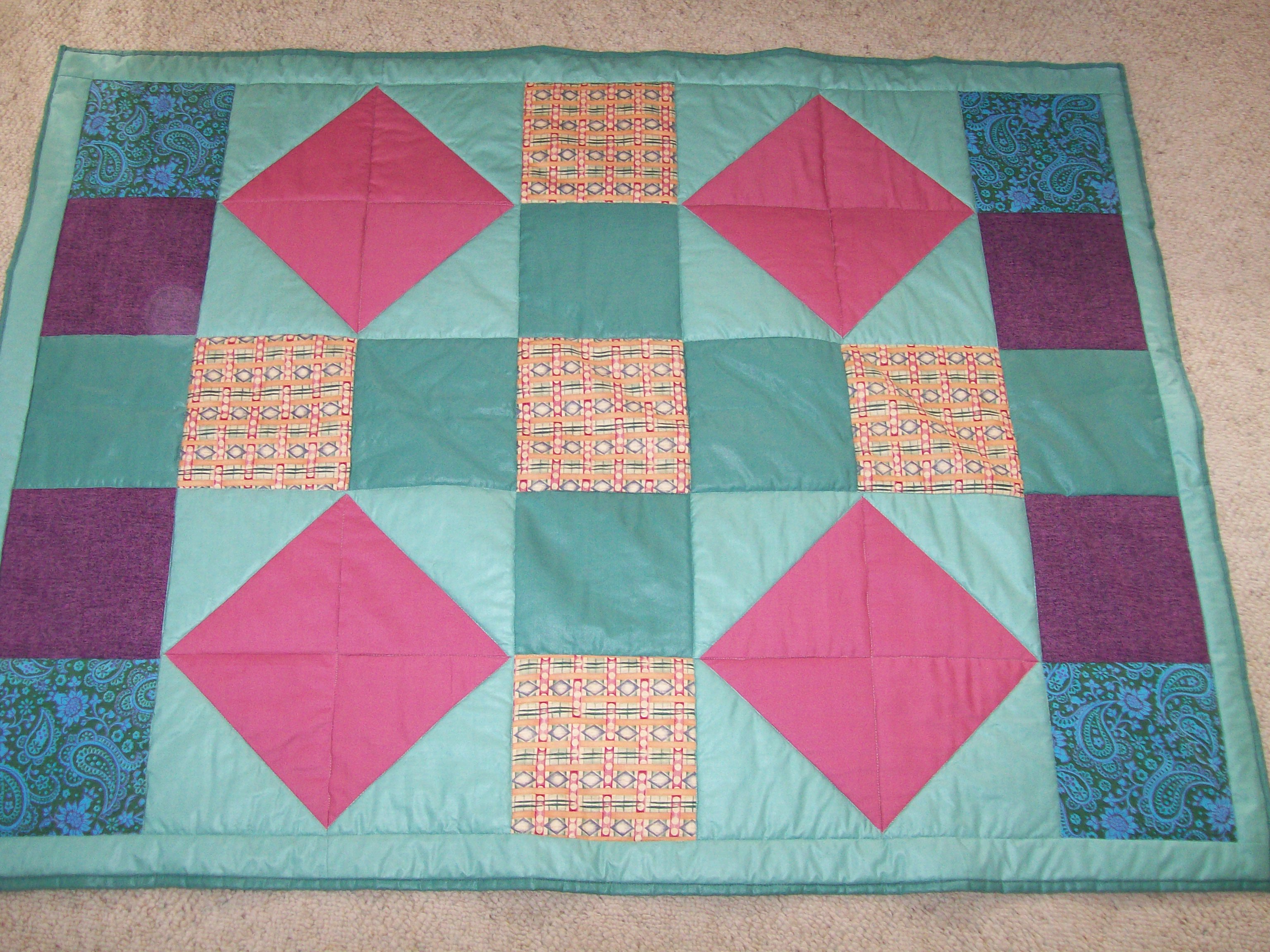
I’ve sewn many of my own clothes over the years, and kept the leftover fabric, saying “Some day I’ll make a quilt of this.”  I didn’t know how to make a quilt.  I bought a book about quilts and admired all the complex designs.  I had no idea where to begin.

Flannels.Jan.10

With this background it is surprising that I only discovered Project Linus a few years ago.  Members of Project Linus make blankets of all kinds: fleece, flannel, knitted and quilted, for children who are ill or in times of stress.  The local sheriff carries a bag of Linus blankets in his car because he never knows when the need will arise.  Local agencies are glad to receive them.  The local chapter is very active, but the supply never exceeds the need.

I began working with flannel, making small blankets for infants.  The quilting part – stitching the layers together – isn’t difficult. Maine Quilt

Gradually I learned to do piecing. Squares are still the easiest thing, but I did learn how to do triangles, which create diamonds.  Gradually I worked with larger sizes, though I don’t have space to do full size quilts.

100_0535

What I like best is looking at colors and mixing and matching them.  I’ll never win prizes for my quilting, but I take pictures for my own remembering, and decided to share them.

Project Linus is easy to find at http://www.projectlinus.org.

100_0494

All Saints Day

1 Comment

Saints: the holy ones.  the old word “hallowed” gives us All Hallows Eve (or Halloween), a once new name for an old, old festival that marks the turning of the year toward winter, the diminished days.  Astrologers say that “the veil between the worlds” is thinner at this time, and so people think of their dead.  The early church wisely added to this pattern rather than combatting it.

We sing “For all the saints who from their labors rest . . . .”  Who are these saints?  Traditional theology would say it is all those who died in the faith, having been made holy by their baptism.  But if we are created by a loving God, we are already holy in our making.  And if you don’t believe in a god, don’t you think that all sentient beings deserve respect – and especially those of our own species?

Empathy and concern for the common good seem to be hard to learn in our individualistic society.  One could claim that an interest in the good of the whole is a characteristic for survival from earlier times which is no longer needed.  That is a limited view.  I wish that the barriers between us, the living, might also become thinner, so that we might more easily talk across our differences to discern what is best for all.

John Emerson Roberts: His Significance in Freethought History

Leave a comment

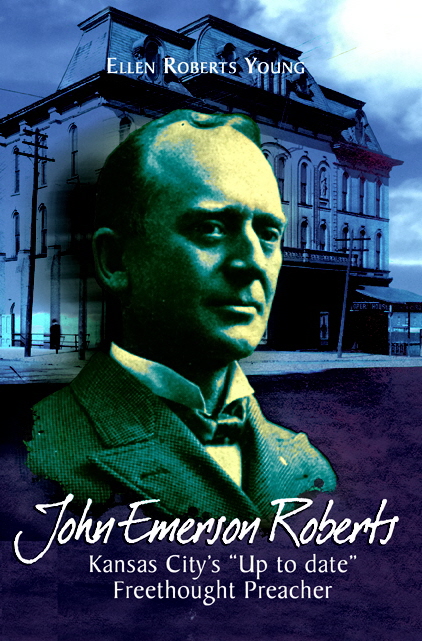
The Council for Secular Humanism has published on their website an article I wrote describing John Emerson Roberts’s pivotal position in the development of freethought from liberalism to radicalism.  You can find it at:

https://www.secularhumanism.org/index.php/articles/356994933_CoverFront

If the article makes you interested in more background, consider ordering my biography, which gives much attention to the context in which Roberts worked and what made him successful.  You can get a new, signed copy from me via Amazon, through ERYBooks, at:

http://www.amazon.com/gp/aag/main/ref=olp_merch_name_9?ie=UTF8&asin=1462876919&isAmazonFulfilled=0&seller=AW0M3U1KS6UKI

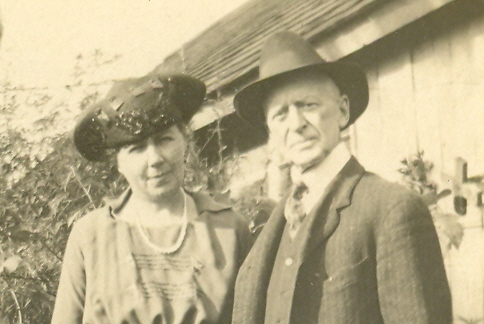
J. E. Roberts in later life with his fourth wife, Frances (Hynes Bacon) Roberts

J. E. Roberts with his fourth wife, Frances (Hynes Bacon) Roberts

Location, location

1 Comment

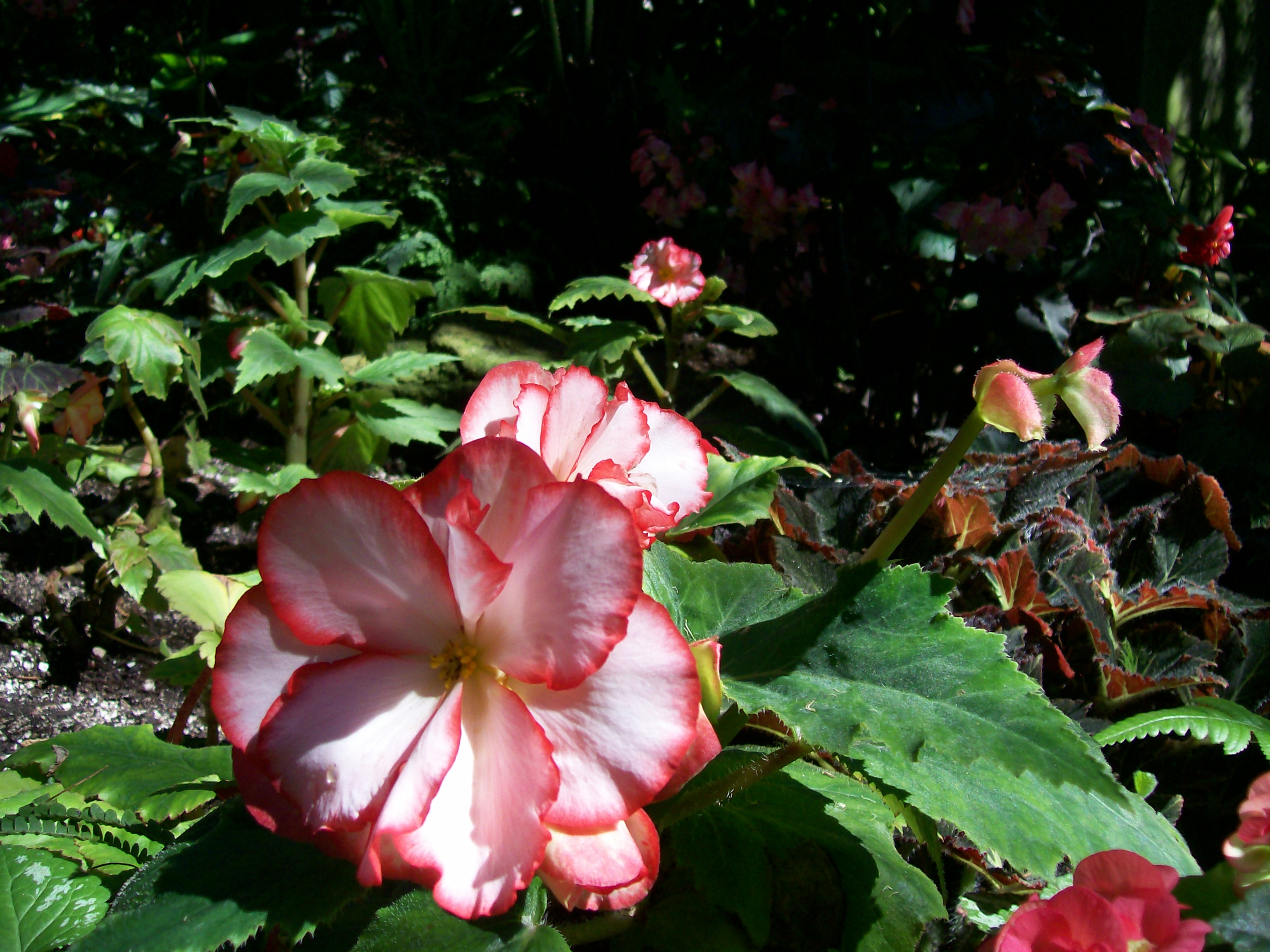
The weather here is back to good walking temperatures, and I’m out in the desert and in the sun more.  (In the heat I walk either briefly, around a few blocks, or before breakfast.)  Plants are blooming and grasses are going to seed.

100_1006

A fondness for nature and place is something I share with William Paley, whose book is the basis for my collection of poems, Made and Remade, due out next year.

The Bridge Outside Paley's Door

The Bridge Outside Paley’s Door

As the picture of the bridge at Wearmouth reminds me, Paley’s place is very different from mine, but when he talks about the joy of walking out in nature, I know whereof he speaks.  I tried to express this in “Shared Ground,” previously published in Ascents.  (See more on the books page for that volume.)

Shared Ground

Walking among new-born
flies, aphids, all nature
to feed his wonder, the parson
loses regrets (the bishop’s ring
never bestowed) finds comfort
in common creaturehood.

He’s at home wherever
he walks, while I, creature
of foggy hills, green valleys,
walk on alien land where
nothing of profit’s produced,
nothing is wasted.

A jackrabbit feeds on
freeze-battered prickly pear,
bolts at my approach,
happy in his speed, doing
what he’s made for.

If the universe has a maker
is it made less lonely?
My legs being made for walking,
their motion settles my spirit.

Southern New Mexico State Fair

1 Comment

Southern New Mexico State Fair?  There is no State of Southern New Mexico, so how can this be a State Fair? The title is meant to convey that this event at the Dona Ana County Fairgrounds is a multi-county event.  The population of most of the southern counties, however, is such that this “state fair” is rather less than the Santa Clara County Fair in California which I visited as a child.  It is smaller in acreage: the county fair had a truck-pulled train to take people from the entrance to the animal barns at the back of the property.  In between there was room for an airplane or army vehicle display.  The county fair had four exhibit buildings.  The SNMSF has only one.

In spite of its smallness I do visit the local fair every other year or so, as much for nostalgia as anything.  I loved the rabbits and poultry when I was a child.  We have those here as well.rooster


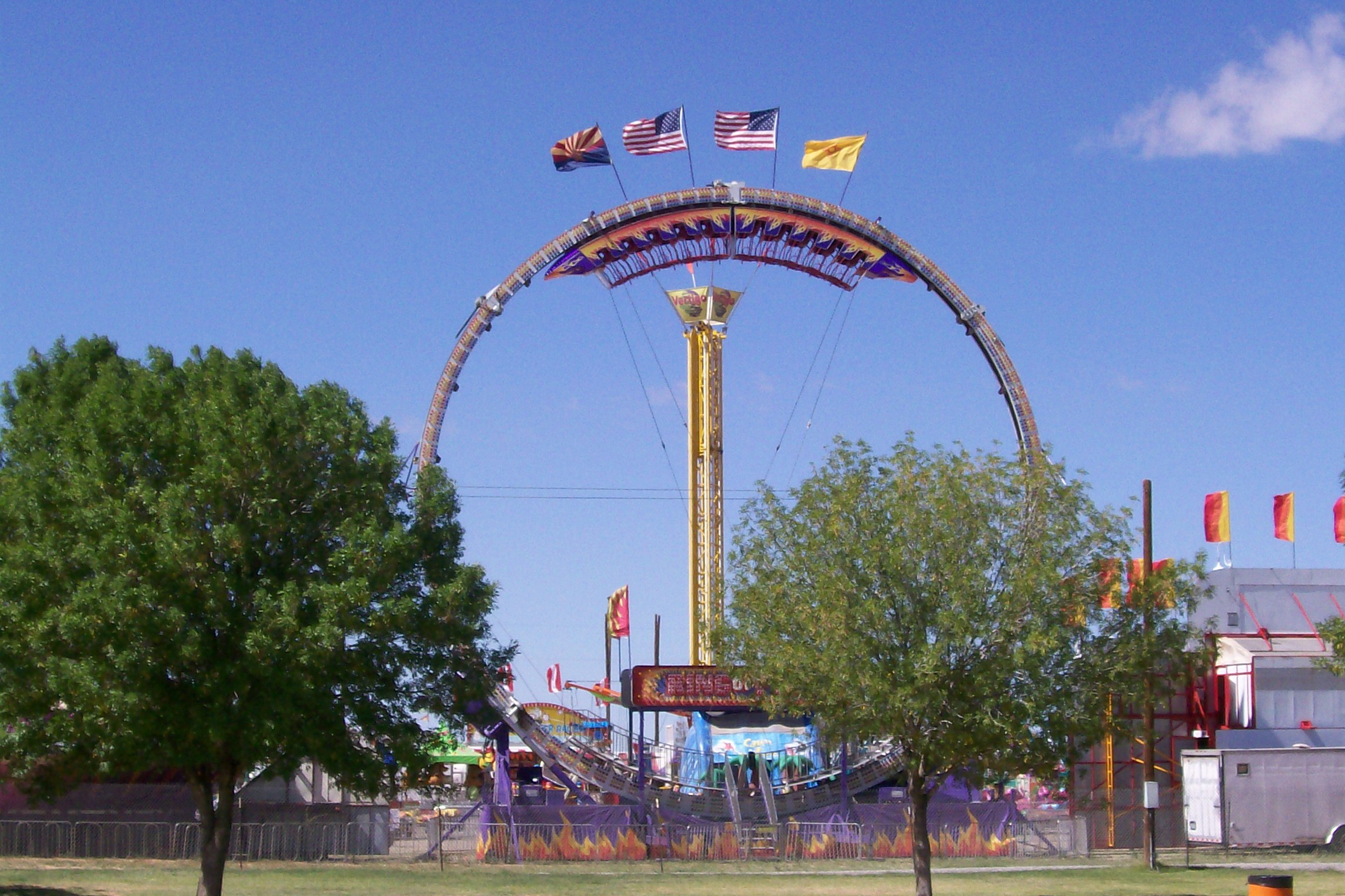
There is of course a midway.  I suppose I thought as a child that those rides sat on that ground through the year.  It is evident that at the local fair, they don’t.  There’s an Arizona flag at one end and a New Mexico flag at the other, suggesting the territory this ride concession serves.midway flags closeup

All fairs, I think, have shiny new farm machines.100_0990

Something that I don’t think existed when I was a child was the climbing tower.  Notice the flags on this one.  They worship the almighty dollar?100_0997

And there is always food.  The quesadilla booth wasn’t open yet when I was there, so I decided on a funnel cake.  Funnel cakes, like “Philly” cheese steaks, were foods I knew nothing of until I moved to Pennsylvania.  They’ve crossed the country, but the funnel cake I had was not up to the standard of the one which I considered the special treat of the annual flower show in Philadelphia.  (The flower show was aptly timed for March, a convention center full of flowers and shrubs when it was still winter outside.  The funnel cake was just a side benefit.)100_0982

I did not see any cotton candy, which was the treat I liked at the fair as a child.  There were many souvenirs, but no kewpie dolls, the little plastic dolls on wooden sticks.  My parents did not approve of them, so they remained at the stand.  Nowadays, I don’t need souvenirs.  I have memories of fairs I’ve been to, and expectation of visiting again in years to come.

San Diego Flora

Leave a comment

When I visit San Diego I am always amazed at the plantings.  I’ve assumed that the area was naturally rich in diversity and greenery.  I have been reading about Kate Sessions, called the mother of Balboa Park, and I find that she is largely responsible for the illusion that everything just grows in San Diego.  In fact, things grow well, when watered, but many of them came from elsewhere, and many of them were brought in and urged on residents by Kate Sessions, beginning at the end of the 1800s.

The Palm Canyon in Balboa Park contains many, many palms, but they didn’t just grow there; they were planted.  The fan palm came from Hawaii.fan palm

Other palms, so high I had trouble getting a picture, were brought back by Kate Sessions from Baja California.  No doubt not all of the trees in Palm Canyon date back to Ms. Sessions’ work: they grow very thickly in spots.100_0966

And other plants thrive in the shade of the palms.

100_0970

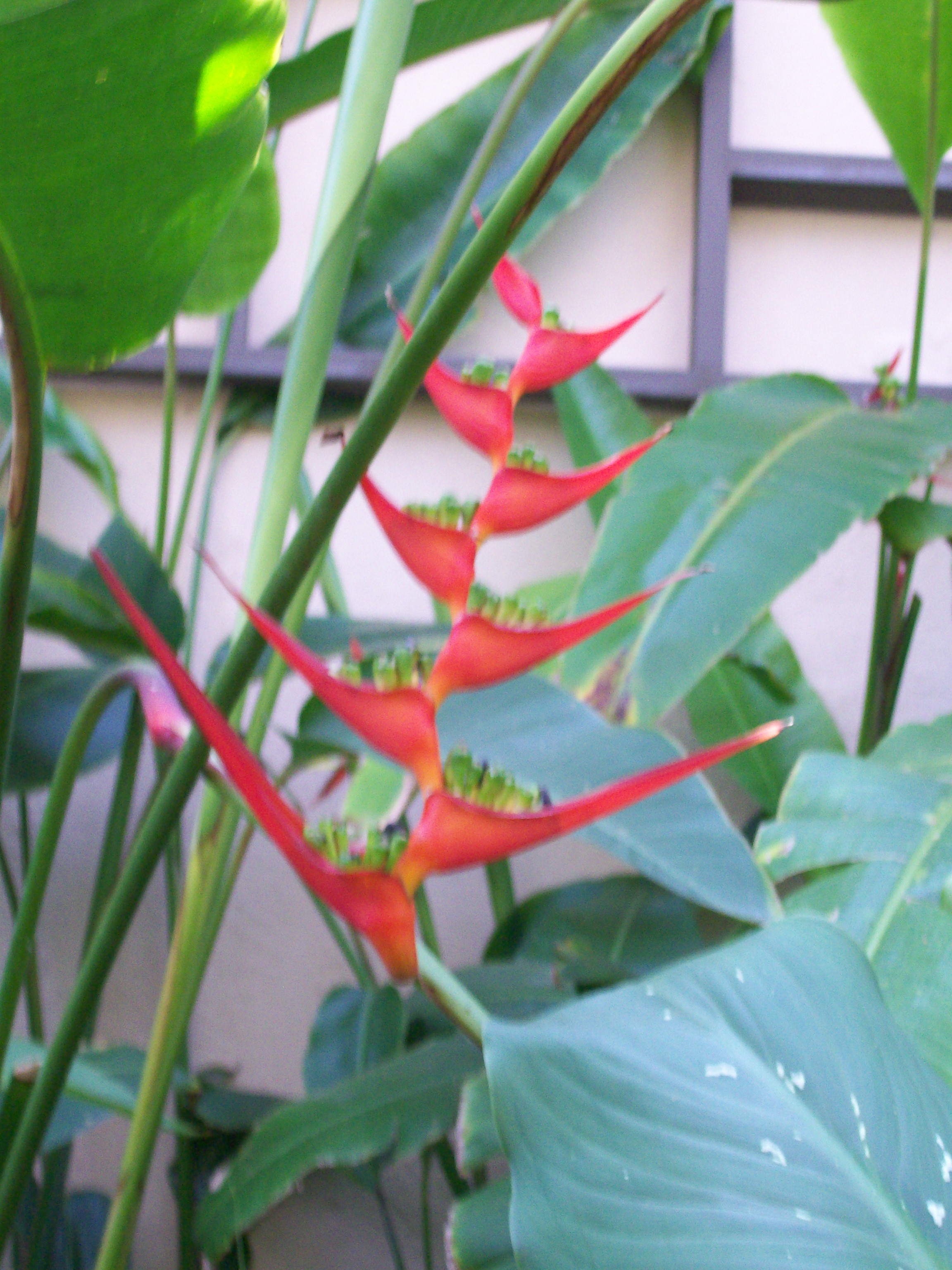
We also explored the Botanical Building, filled with exotic plants which would not thrive out of doors.  I liked this odd plant best, but neglected to note its name.100_0971

For better pictures of all manner of things in and around San Diego, including flowers on Friday, visit the blog of Russel Ray: http://russelrayphotos2.com

Balboa Park, San Diego

Leave a comment

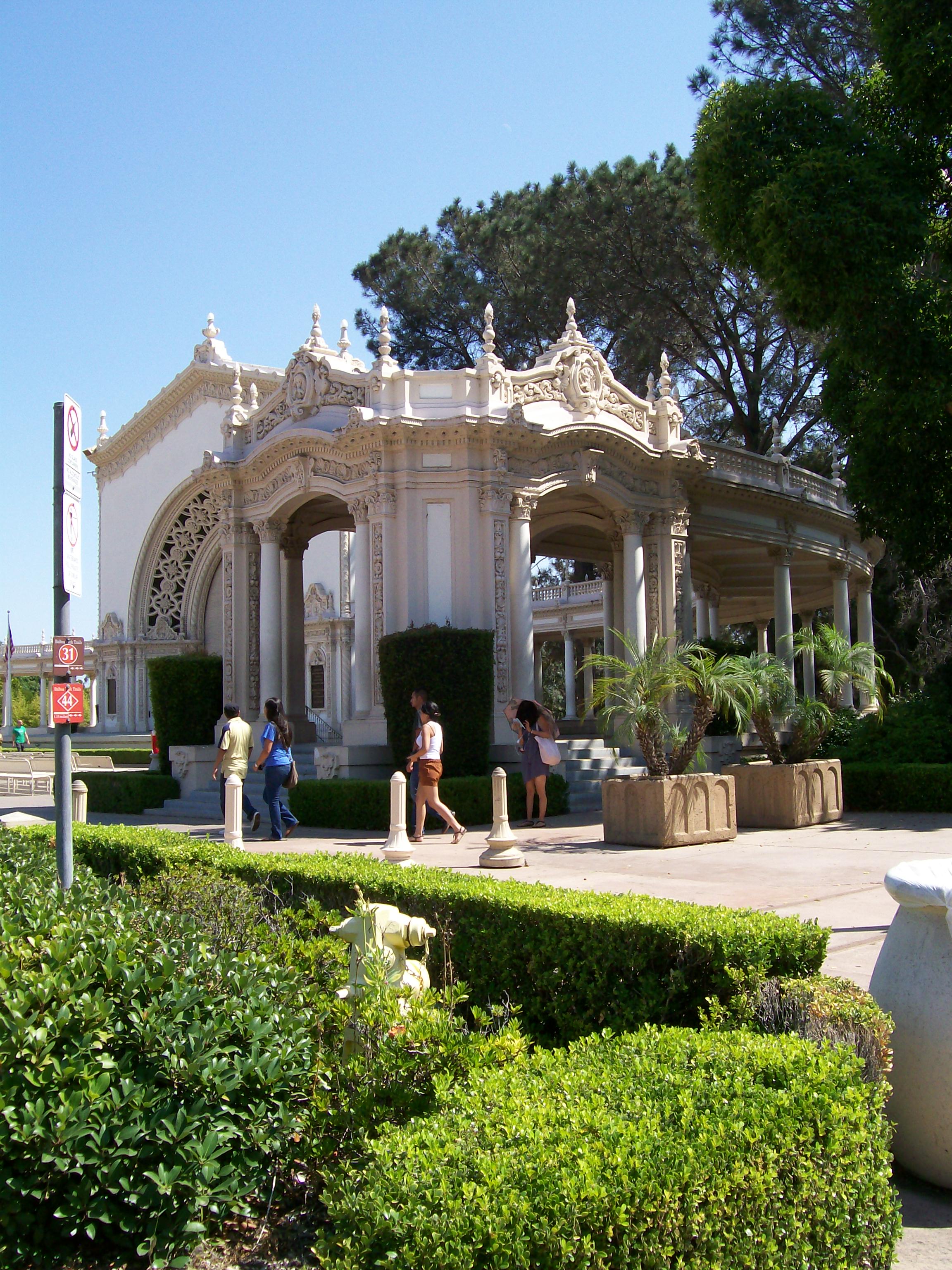
On a recent visit to San Diego I made a visit to Balboa Park.  We had been there before for the organ concerts, but not seen the rest of it.  We didn’t see “the rest of it” this time either, but we saw a little more than we had before.  The organ shell was, of course, shut this time:

100_0959

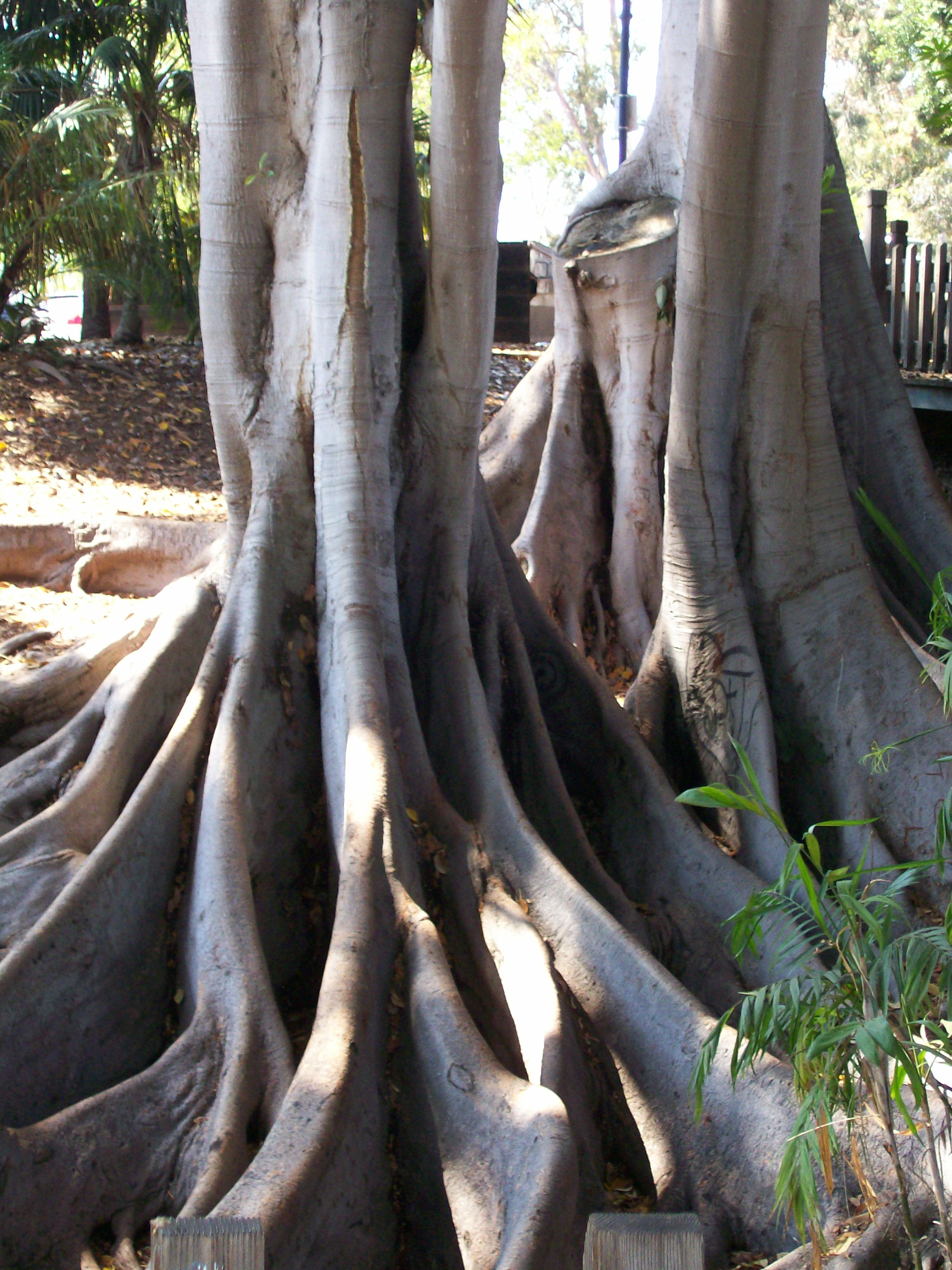
The shell is hiding here behind the curved portico, because we were headed for the palm canyon across the street.  The most impressive tree in the palm canyon area is not a palm, nor is it a strikingly tall tree, if you don’t count the long exposed roots which extend down the canyon.  Here is my attempt to give an impression of this tree:

tree top

tree trunk

tree roots


Because the tree is surrounded by others it was hard to get a long view.  These photos were taken from the stairway down into the canyon.

Those of you who have been following my previous posts will recognize that I have a fascination with roots.  Unlike my other photos these roots were not crossing a trail.  They were just there, being themselves, being admired by people like me.


Even in this well maintained park there were things growing where they “weren’t supposed to.”  This branch was particularly colorful:100_0973


In the Sign of Libra

4 Comments

John Emerson Roberts

John Emerson Roberts, subject of my biography

September 28, 2013 is the 160th anniversary of John Emerson Roberts’s birth.  This makes ‘Kansas City’s Up-to-date Freethought Preacher” a Libra according to astrology.  My father and my son, Dr. Roberts’s grandson and great-great-grandson, were also born in this sign.  Libra is the Latin word for balance.  I am not sure in what sense all Libras should exhibit balance, but equilibrium has not been characteristic of any of these three men.

It would make more sense if “Libra” were connected “liber,” the Latin work that means free, as in liberation, and book, as in library.  All of these men have been freethinkers according to their times.  None of them has believed in a conventional god, and they have embraced the new, each in his own way.  John Emerson Roberts explored new ideas of all kinds: science, theology and humanism.  My father was an exponent of new ways of looking at language (as developed by Noam Chomsky).  My son has made his career in computer software development.

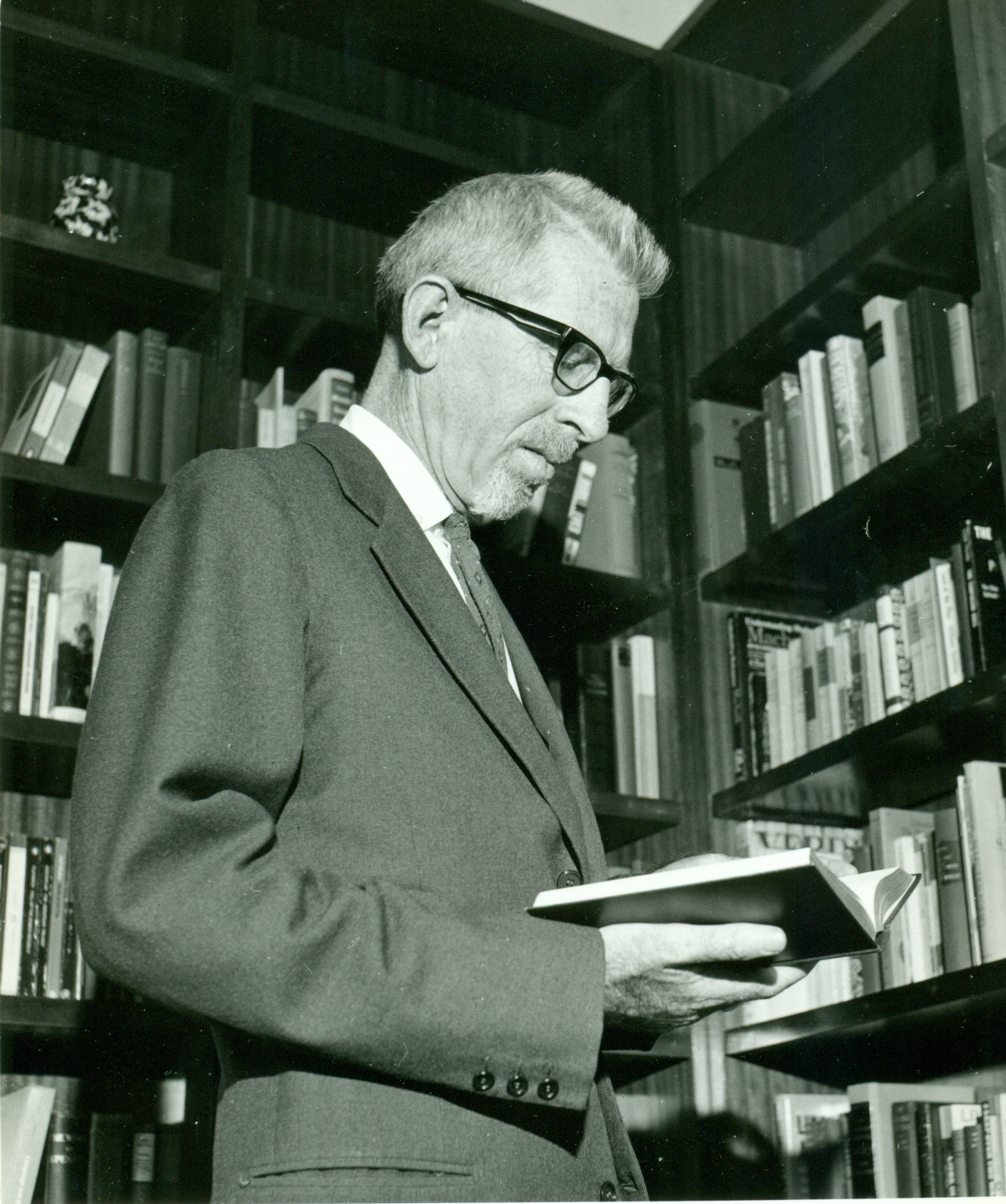
Paul McHenry Roberts

My father, Paul McHenry Roberts

One tradition in astrology focuses on the elements (earth, air, fire, water) associated with each astrological sign.  Libra is an “air” sign.  This connects it with the mind, with ideas.  The sign is associated with intellectual creativity and intensity.  This fits my three men well.

But I, a deep water Scorpio, also focus on intellect.  Where does my freethinking, intellectual approach to “life, the universe and everything” come from?  How does inheritance relate to astrology?

I like to explore astrological theories, because it seems reasonable to me that there are resonances at multiple levels throughout the cosmos.  However, no interpretation I’ve come across yet has been able to capture the subtleties of such possible influences.

Older Entries Newer Entries