Home

San Diego Flora

Leave a comment

When I visit San Diego I am always amazed at the plantings.  I’ve assumed that the area was naturally rich in diversity and greenery.  I have been reading about Kate Sessions, called the mother of Balboa Park, and I find that she is largely responsible for the illusion that everything just grows in San Diego.  In fact, things grow well, when watered, but many of them came from elsewhere, and many of them were brought in and urged on residents by Kate Sessions, beginning at the end of the 1800s.

The Palm Canyon in Balboa Park contains many, many palms, but they didn’t just grow there; they were planted.  The fan palm came from Hawaii.fan palm

Other palms, so high I had trouble getting a picture, were brought back by Kate Sessions from Baja California.  No doubt not all of the trees in Palm Canyon date back to Ms. Sessions’ work: they grow very thickly in spots.100_0966

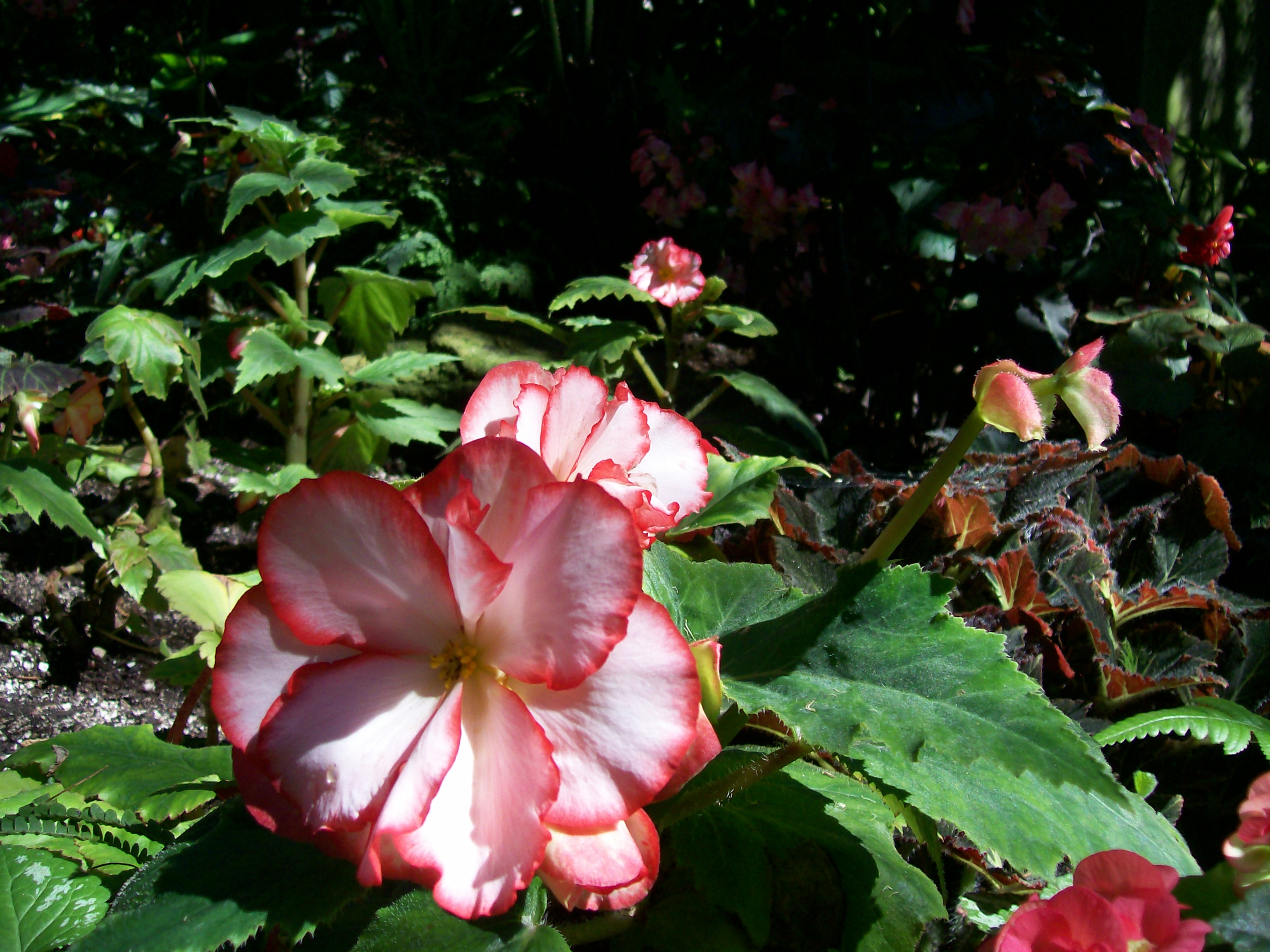
And other plants thrive in the shade of the palms.
100_0970

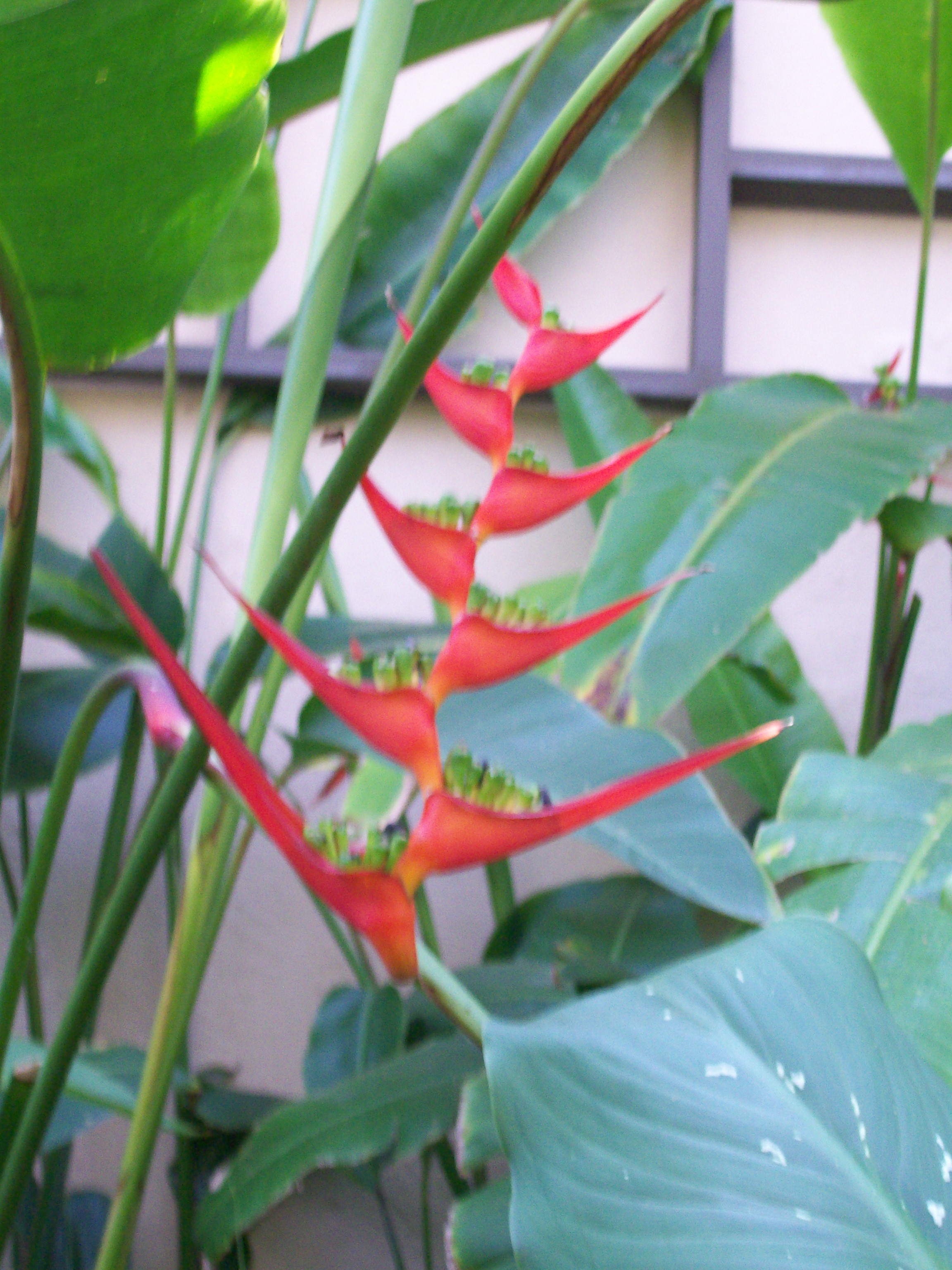
We also explored the Botanical Building, filled with exotic plants which would not thrive out of doors.  I liked this odd plant best, but neglected to note its name.100_0971
For better pictures of all manner of things in and around San Diego, including flowers on Friday, visit the blog of Russel Ray: http://russelrayphotos2.com
Balboa Park, San Diego

Leave a comment

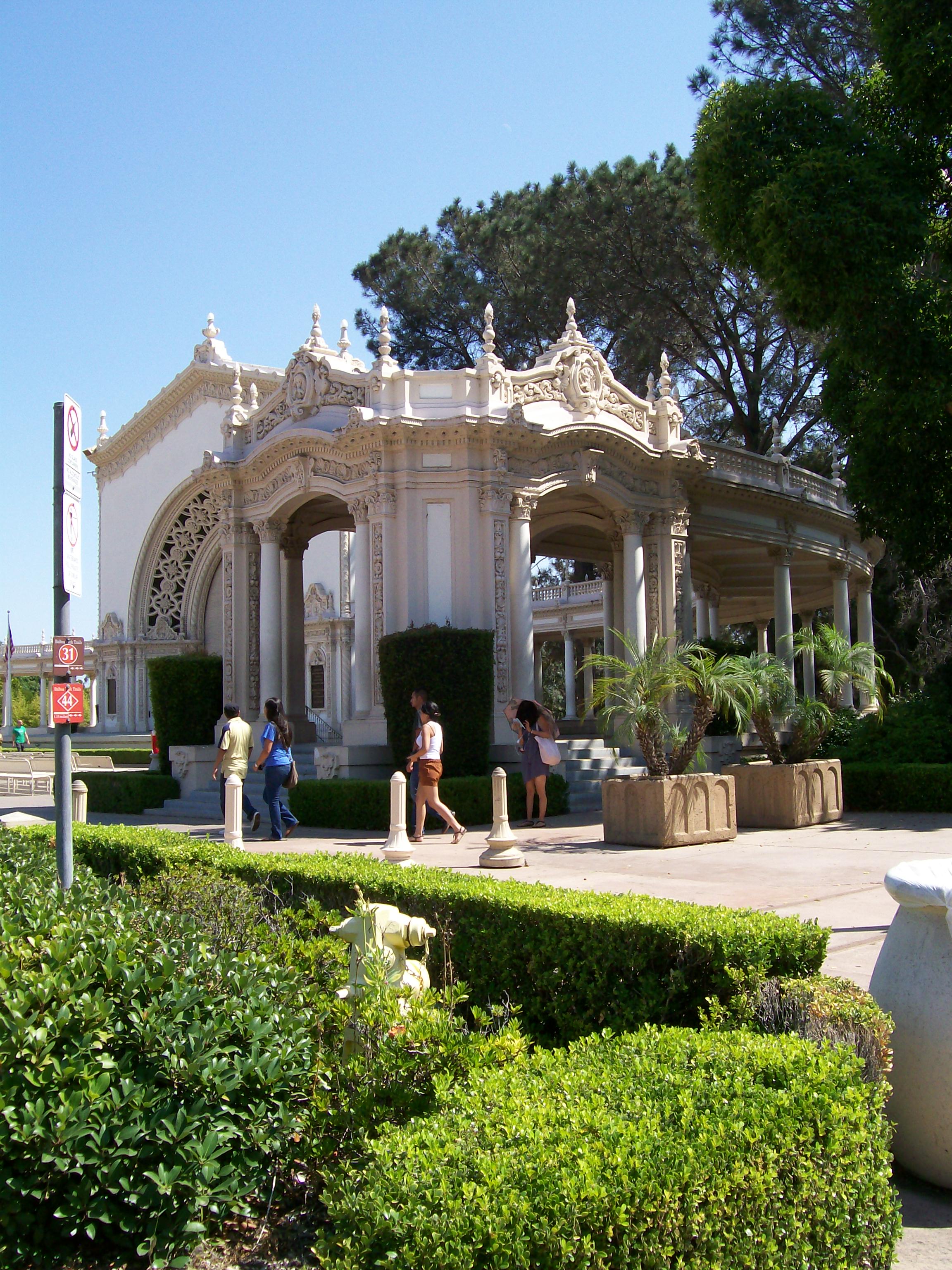
On a recent visit to San Diego I made a visit to Balboa Park.  We had been there before for the organ concerts, but not seen the rest of it.  We didn’t see “the rest of it” this time either, but we saw a little more than we had before.  The organ shell was, of course, shut this time:

100_0959

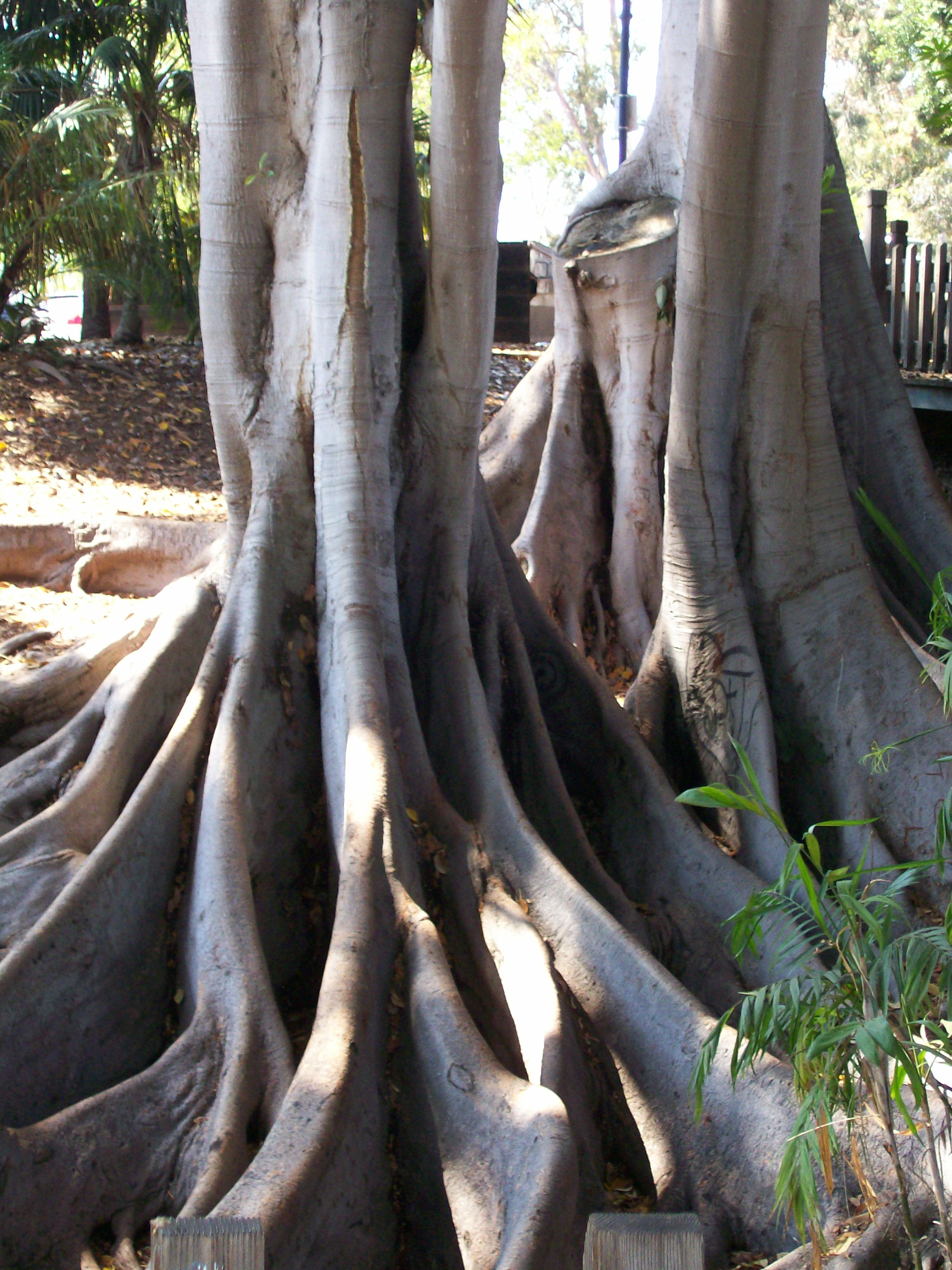
The shell is hiding here behind the curved portico, because we were headed for the palm canyon across the street.  The most impressive tree in the palm canyon area is not a palm, nor is it a strikingly tall tree, if you don’t count the long exposed roots which extend down the canyon.  Here is my attempt to give an impression of this tree:

tree top

tree trunk

tree roots


Because the tree is surrounded by others it was hard to get a long view.  These photos were taken from the stairway down into the canyon.

Those of you who have been following my previous posts will recognize that I have a fascination with roots.  Unlike my other photos these roots were not crossing a trail.  They were just there, being themselves, being admired by people like me.


Even in this well maintained park there were things growing where they “weren’t supposed to.”  This branch was particularly colorful:100_0973


In the Sign of Libra

4 Comments

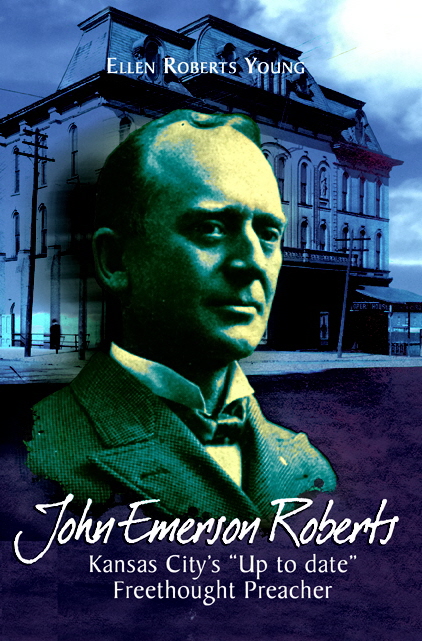
John Emerson Roberts

John Emerson Roberts, subject of my biography

September 28, 2013 is the 160th anniversary of John Emerson Roberts’s birth.  This makes ‘Kansas City’s Up-to-date Freethought Preacher” a Libra according to astrology.  My father and my son, Dr. Roberts’s grandson and great-great-grandson, were also born in this sign.  Libra is the Latin word for balance.  I am not sure in what sense all Libras should exhibit balance, but equilibrium has not been characteristic of any of these three men.

It would make more sense if “Libra” were connected “liber,” the Latin work that means free, as in liberation, and book, as in library.  All of these men have been freethinkers according to their times.  None of them has believed in a conventional god, and they have embraced the new, each in his own way.  John Emerson Roberts explored new ideas of all kinds: science, theology and humanism.  My father was an exponent of new ways of looking at language (as developed by Noam Chomsky).  My son has made his career in computer software development.

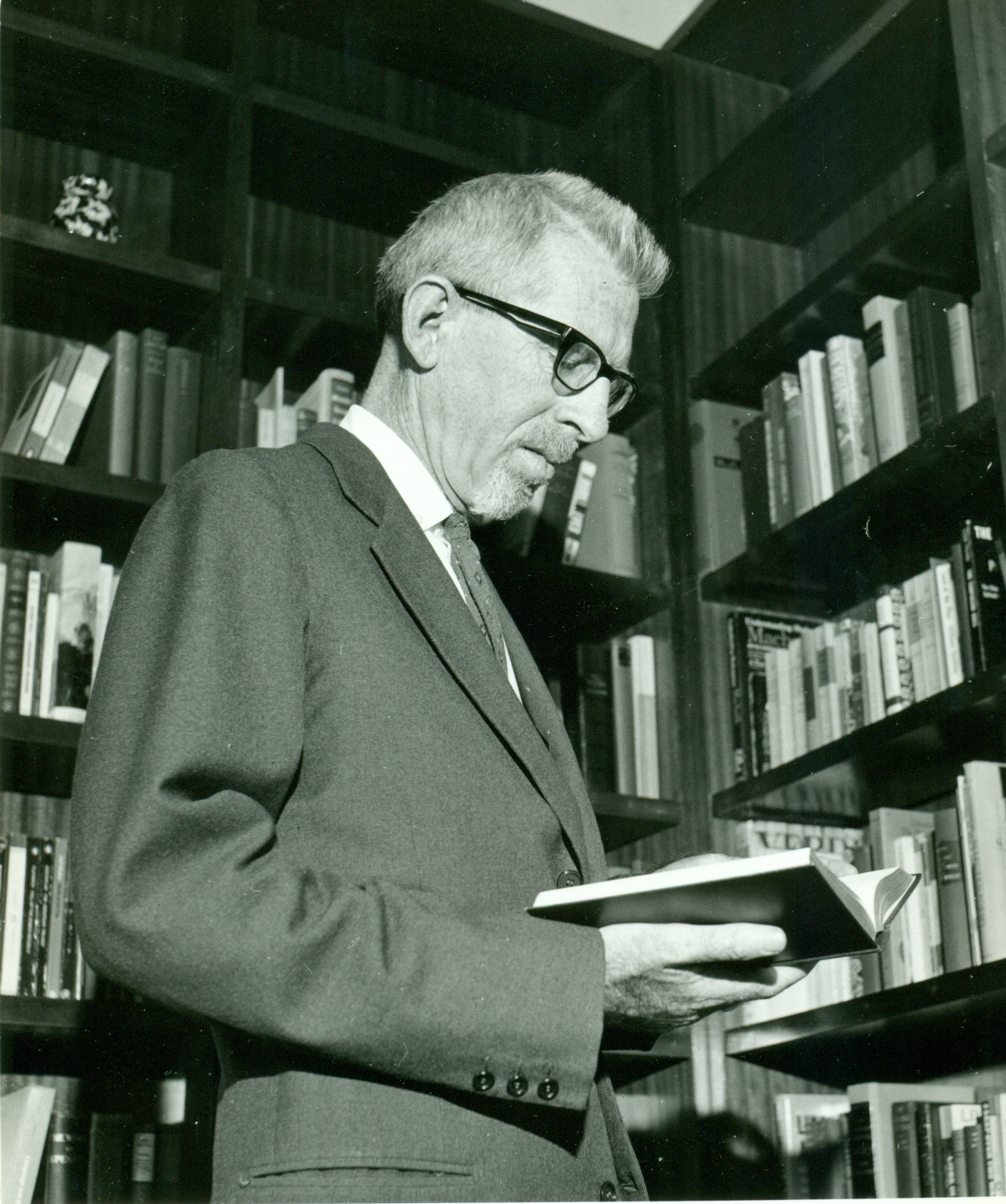
Paul McHenry Roberts

My father, Paul McHenry Roberts

One tradition in astrology focuses on the elements (earth, air, fire, water) associated with each astrological sign.  Libra is an “air” sign.  This connects it with the mind, with ideas.  The sign is associated with intellectual creativity and intensity.  This fits my three men well.

But I, a deep water Scorpio, also focus on intellect.  Where does my freethinking, intellectual approach to “life, the universe and everything” come from?  How does inheritance relate to astrology?

I like to explore astrological theories, because it seems reasonable to me that there are resonances at multiple levels throughout the cosmos.  However, no interpretation I’ve come across yet has been able to capture the subtleties of such possible influences.

Public Art in La Jolla, CA

1 Comment

La Jolla from Torrey Pines Beach

La Jolla from Torrey Pines

On a trip last week to southern California we found out about the mural project in La Jolla and went to investigate.  We came south from Torrey Pines and worked our way into and around the village.

There are a total of eleven murals by ten artists.  They weren’t easy to find, especially from a car, and some of us are poor walkers, but we did find several.  Here are some I liked:

53 Women by Ryan McGinness

53 Women by Ryan McGinness

Applied, by Richard Allen Morris

Applied, by Richard Allen Morris

Tail Whip, by Gajin Fujita

Tail Whip, by Gajin Fujita

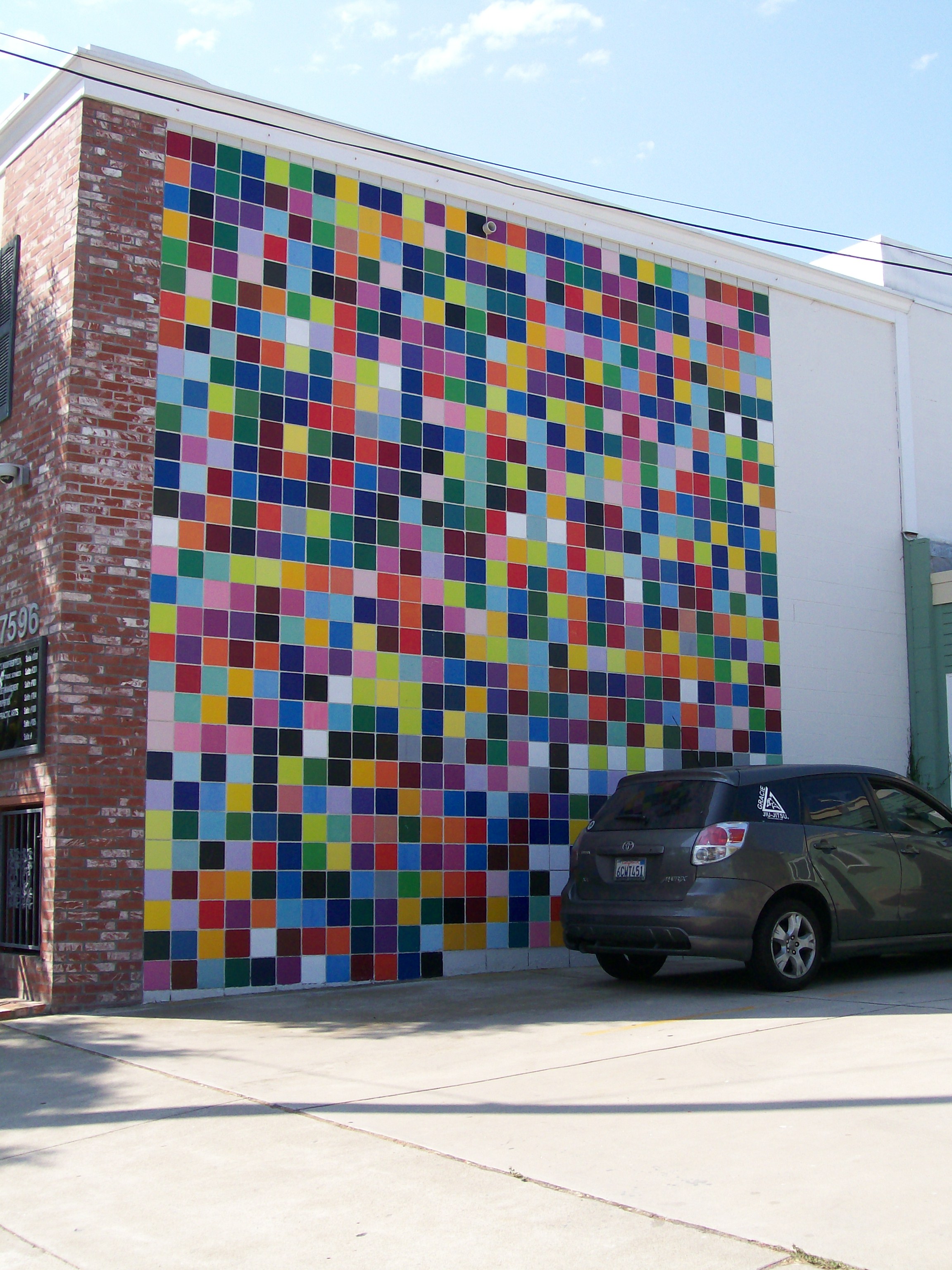
Favorite Color, by Roy McMakin

Favorite Color, by Roy McMakin

It was fun to hunt for these.  I can’t pick a favorite among the art works, but I particularly like the title “Favorite Color.”  You can learn about the rest of the eleven murals at www.muralsoflajolla.com

Salinas Pueblo Missions, Part II

1 Comment

Abo is not far from Quarai (see previous post) though present roads take one around three sides of a trapezoid.  It appears to have been about a ten mile walk south from Quarai to Abo along the eastern slope of the Manzano Mountains in the days when the Spanish missions were built.  The sites are similar, but have worn and are maintained differently.

100_0926A

The Abo church and its buildings are surrounded by yellow grass – it would be good food for cattle if they were allowed in.  Instead of scraps of stone on the hillside, there are huge stone slabs where water ran.100_0930A

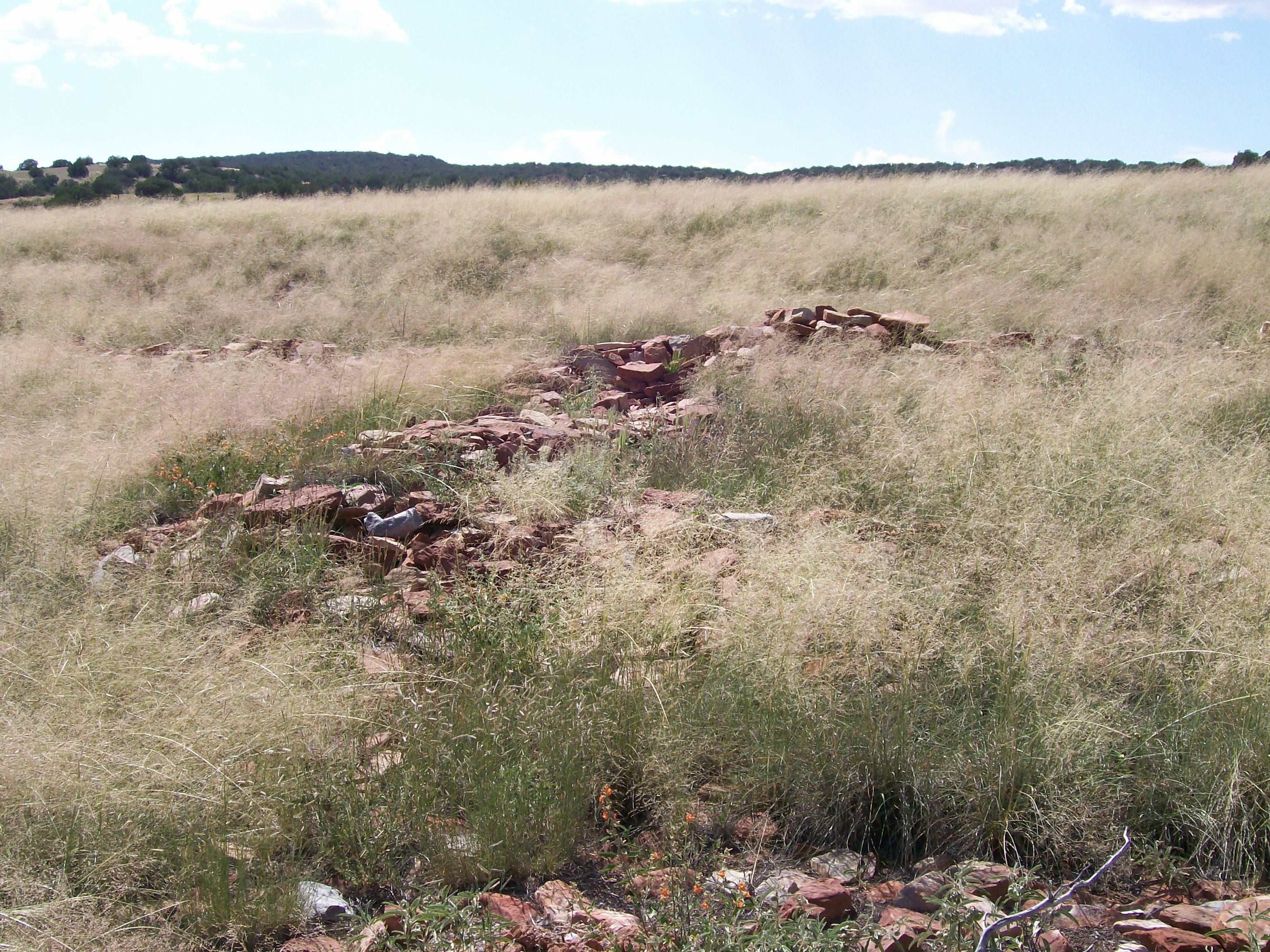
I came close to one ruin of a Pueblo building.  It is just tumbled stone, suggesting that one strong point for the Spanish conquerors was the ability to make better mortar.pueblo house A

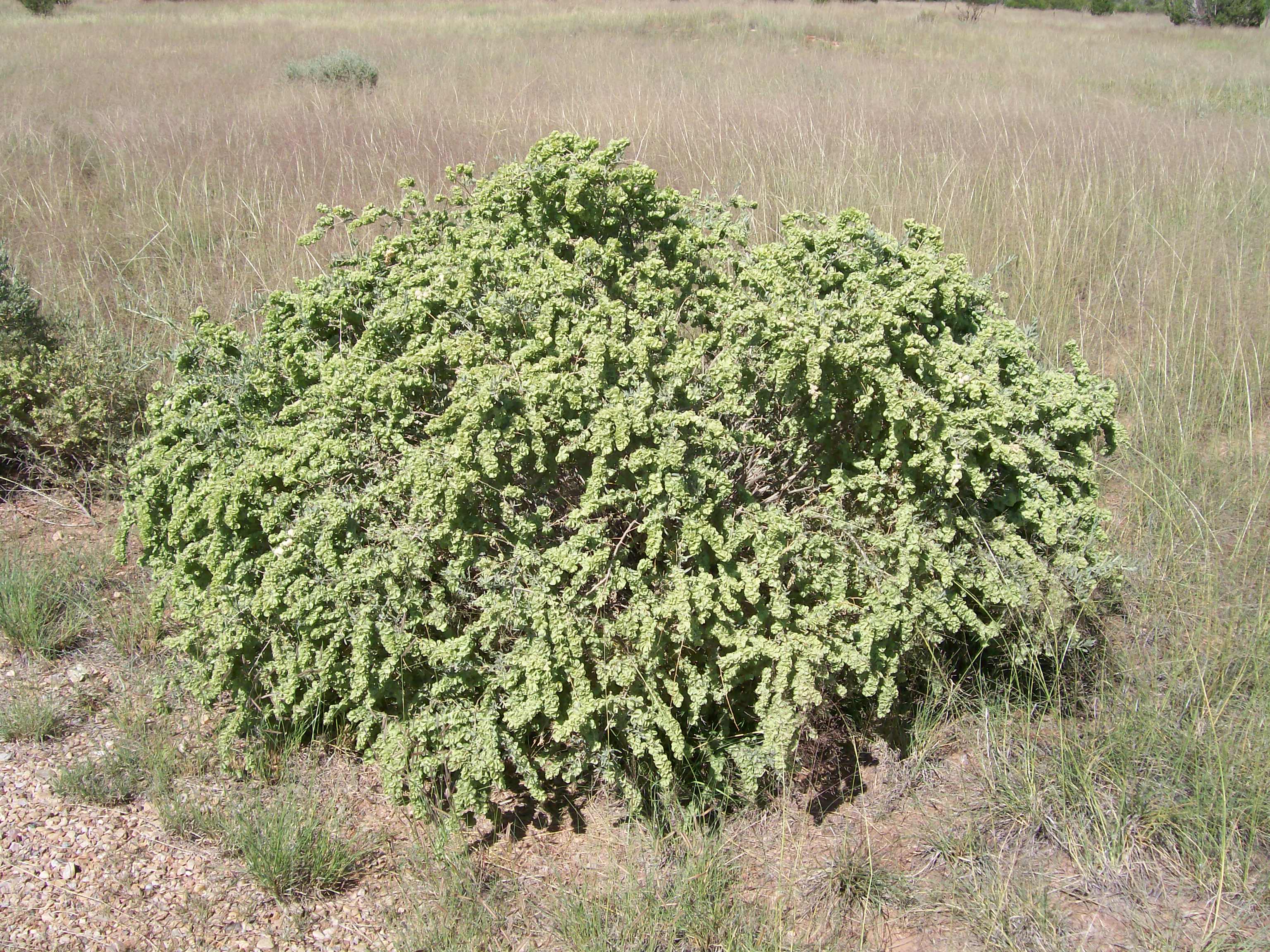
Two plants particularly caught my attention.  The first was an nicely shaped four-wing saltbush.  Its four-winged seeds will turn golden in the fall.  I have one of these in my back yard; it gets too much water apparently, due to other plants around it, and is very shaggy.saltbush A

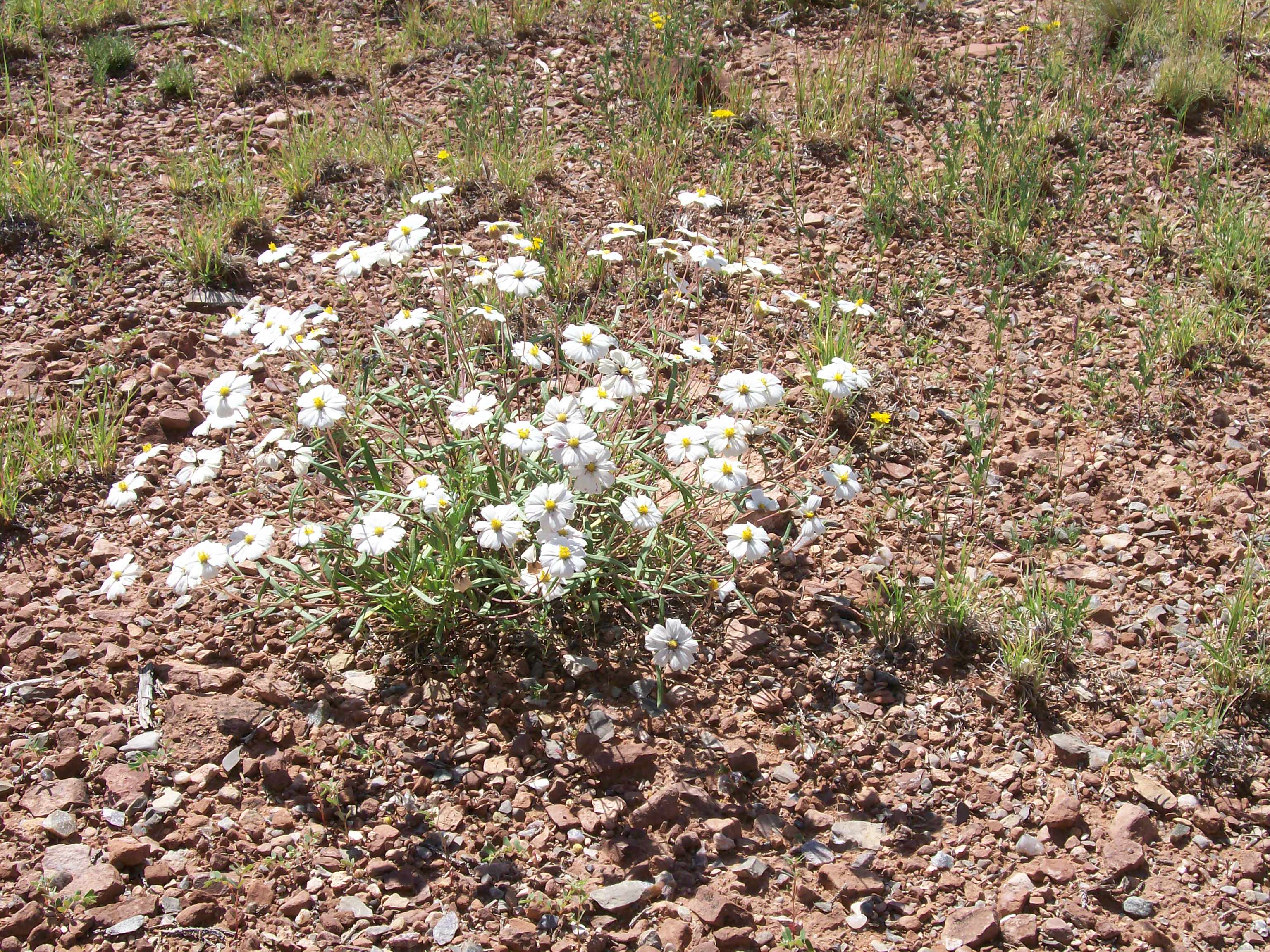
Another well-shaped plant I came across at Abo is one I have found in the arroyo near our house in a good season.  It shows up in summer after rain and is covered with white flowers all at once.  They don’t last long.  I have not learned its name.white flower A

Salinas Missions, Part 1

1 Comment

On a trip to northern New Mexico last weekend I stopped to visit two of the Salinas Missions.  The Salinas Pueblo Missions National Monument, established in 1981, consists of three separate sites.  Each was once a native American pueblo, inhabited by people who spoke Tiwa.  Each became a Spanish mission site, with a big church and a number of outbuildings.  At only one site, Gran Quivera, is there much of the pueblo to see.  I visited that place quite a few years ago, before I had a digital camera.  Now that I’ve seen the other two, I am eager to go back.

This post is about Quarai, located north of Mountainair.  The church there is the best preserved and is often photographed.

100_0908

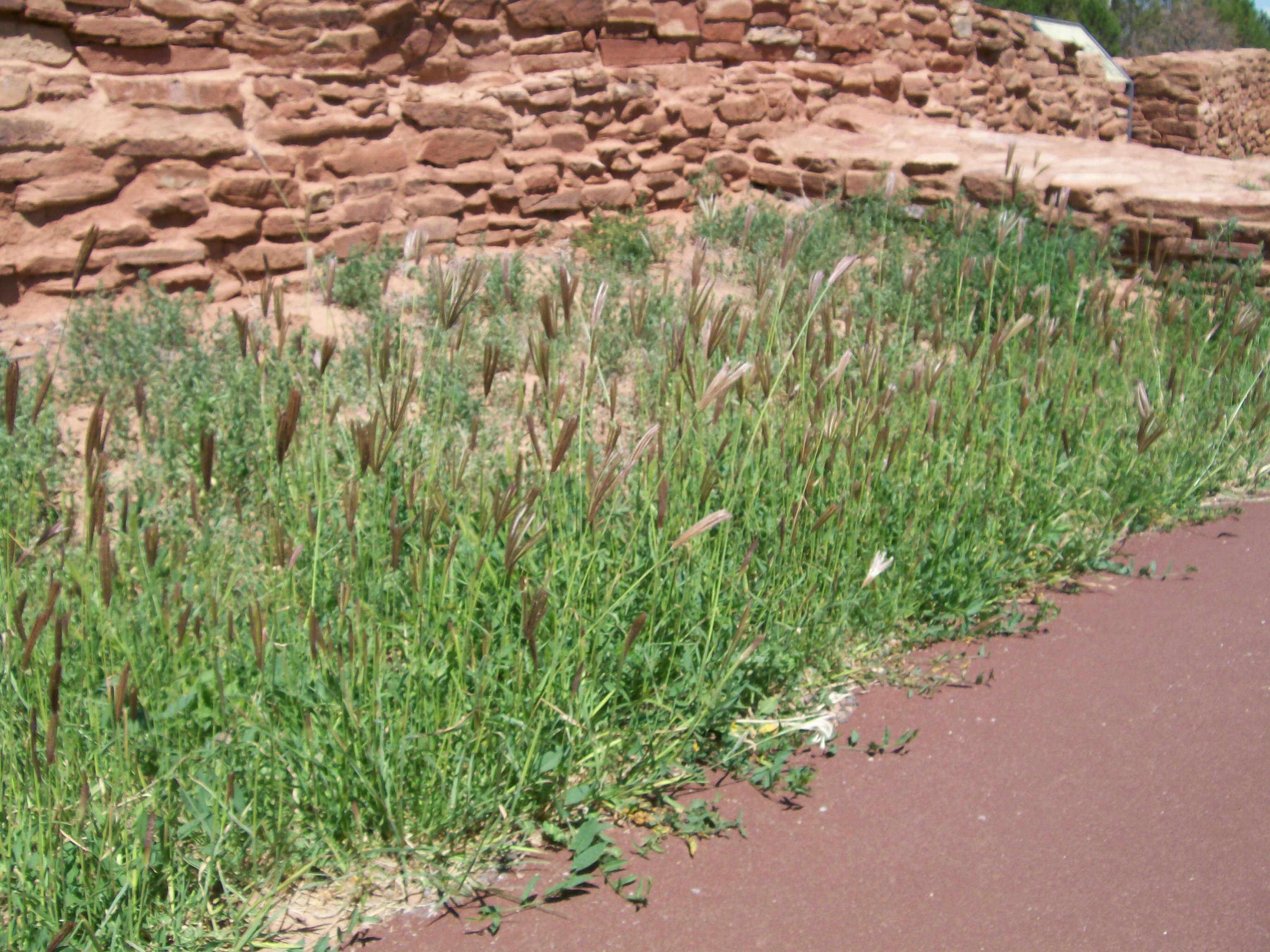
Below is an attempt to photograph a grass I don’t know the name of, which has quite large heads for a grass.  I wondered if it is edible.

grassQuarai has a one mile “primitive” trail beyond the once settled area, where the “trail” is paved.  It becomes clear that the stone for building did not have to be brought from far away.

stone trail

Looking from the trail toward the green near the entrance to the ruins I had complicated thoughts: this green is neither natural nor a reconstruction of what was there when the Spanish mission was operating.  How hard the park service works, simply for our enjoyment!  Our tax dollars at work.

100_0914

Two pictures show how different plants share space.  The first shows the orange flowers of desert globemallow, a plant which grows six feet tall and blows in the breeze in my back yard.

100_0922

This second picture was an attempt to capture the sense of fall: red berries on what I believe is a sumac.  It is so intertwined with other plants that it is hard to tell.

berries

My next post will have pictures from Abo, the third of the three Spanish pueblo mission sites in the National Monument.

A Mountain Hike

2 Comments

This past week I found the time to drive to Cloudcroft for a hike in the Lincoln National Forest.  I’ve been meaning to do this for years – since I moved to Las Cruces, in fact, and this was the first time I did it.  The air temperature in Cloudcroft, at over 8,000 feet, runs about 20 degrees cooler than the temperature here at 4,000 feet, where it has been up in the high 90s for many days.  The weather was beautiful; it only rained while I was in the car.  The beginner hike of two miles round trip was just my speed.

Osha Trail

Osha Trail

I hoped to see more wildflowers.  Those I did see are not known to me by name, but pleasing all the same, especially the one that pokes out of other plants’ leaves to give itself a green background.

100_0901

100_0899


The forest is primarily pines and maples.  At one spot, the baby maple trees were so thick they looked like ground cover.

100_0904

I promised myself I would come back again soon.  It’s an hour and a half drive away, which in New Mexico, is not considered far at all.  I have no excuse.

After Rain

1 Comment

The ground in my back yard is mostly sand between the bushes.  But then it rains and it becomes clear how many seeds are buried in that sand.   Rain is a good metaphor for all kinds of nurturing.  When the rain doesn’t come for a while, more yellow shows from the ground.  When it comes again, the ground is green.

100_0896


Dry skin in winter,
wind burnt in spring, the ground
turns to green fuzz
after rain, grows out ragged
as an adolescent’s beard.

100_0897

Half Way to Fall

2 Comments

It’s another cross-quarter day, the midpoint between the summer solstice and the fall equinox.  About this time I begin to notice the days are getting shorter, and there’s some logic to this, because of the sine wave nature of the changing sun patterns.  This means the changes are faster in the middle than at the peak and nadir of longest and shortest day.

This is the day commonly called Lammas.  it is the early harvest.  If you think it is too early to be harvesting grain, think corn.  We have been enjoying corn on the cob for a few weeks now.

Any harvest time is a thanksgiving time.  When we receive the bounty of the earth, we should give thanks, one way or another.  Here in the southwest we give thanks for the rain, which has come sooner and in greater abundance than for several years past.  Not enough to cancel the drought of course, but a pleasure all the same.  The plants too are showing their gratitude (to speak anthropomorphically) by putting out their flowers.  Here are two making a show in my yard this week.

Desert Globemallow

Desert Globemallow


The desert globemallow is a third generation plant from one I transplanted from the arroyo beyond our housing development.  The purple mat came with the house; it is hard to photograph because of its small size.  It takes many of the little purple flowers to make an impact.

Purple Mat

Purple Mat

The Way It Used to Be?

4 Comments

100_0892

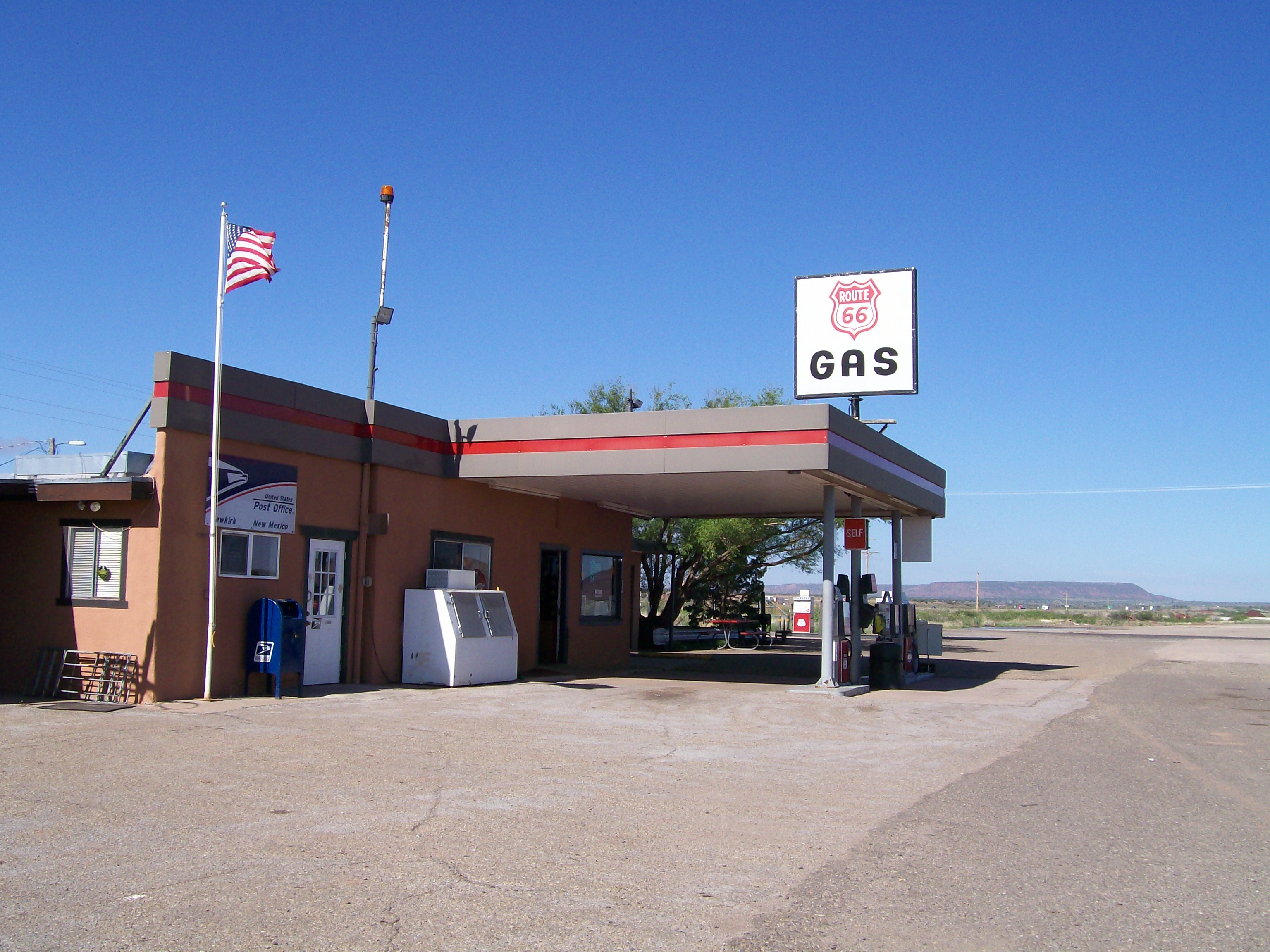
Sometimes the little guy wins.  Driving toward home on Interstate 40 we planned to stop at the Shell plus Dairy Queen between Tucumcari and Santa Rosa.  It had closed.  Our next opportunity, ten miles down the road, was this little gas station.  That white door on this side of it is the post office of Newkirk, New Mexico, a town which scarcely exists since the Interstate came through.   The market at this gas station had regular coffee with dry creamer.  No cappuccino machine?  How quickly we grow accustomed to our travel patterns.  But they did have small bottles of milk so we could skip the dry creamer.

For all its tiny size and old-fashioned look, this gas station has been redone, perhaps more recently than the road.  Route 66 is only to be found in sections, where the Interstate didn’t cover it up.  Back when I came through New Mexico with my parents, it was the main road.

100_0893

These pictures are uncropped because for me part of the delight of New Mexico is the expanse of sky.  How is it different from the Midwest?  Perhaps it’s the dryness that makes it sharper.  Perhaps it is just that it is home.

Older Entries Newer Entries