Home

My Forthcoming Book and William Paley’s Bridge

2 Comments

My collection of poems, Made and Remade, about William Paley’s book, Natural Theology, and the famous watch metaphor, has been accepted for publication by WordTech Editions.  In considering ideas for a cover, I came across a picture of a bridge, built in 1796, across the Wear River in Northern England.

Photo: Sunderland Public Libraries / Foter.com / CC BY-NC-SA

Photo: Sunderland Public Libraries / Foter.com / CC BY-NC-SA

William Paley used this bridge as an image for the structure of the ribs in the human body.  He wrote (in 1802):

The manner of it is this: the end of the rib is divided by a middle ridge into two surfaces . . . . Now this is the very contrivance which is employed in the famous iron bridge at my door at Bishop-Wearmouth . . .

The new bridge delighted William Paley as all mechanical devices and constructions did.  He found in many of them analogies to natural forms.

Though new and wonderful to Paley, the bridge has been replaced, but the image still serves to represent Paley’s fascinations and interests. Until a cover is created for Made and Remade (due out in 2014) this image will serve as an icon for the book.

Visit to Portland

2 Comments

I had three things in mind for my visit to Portland, Oregon, last weekend.  All came out well.

The first was a visit with my mother’s cousin Del, whom I had not seen in over ten years.  She is living with her grandsons Dan and David, who, like so many in their thirties and even their forties these days, could not afford to buy a house without her help.  We had great conversation and good food together.

The second thing and the main excuse for making the trip was a meeting of the American Society of Church History.  Years ago, as a graduate student, I was giving papers at meetings like this one.  Now I listened to current students as well as older scholars.  The varied topics included the warlike language of new churches during the second world war, and the changes in sacred spaces at various times in religious history.  Just what makes a space sacred is always a good topic for debate.

My third activity was sightseeing, which meant a visit to the one place I know is an important tourist destination in Portland: Powell’s Book Store.  It did not disappoint:  a huge establishment with a nice café, it was quite busy on Friday morning.  They have two long sets of shelves of poetry books, much more than any other bookstore I’ve been in, and were selling them at 15% off in honor of Poetry Month.  I came home with four more books to add to the pile of books I had ordered from them online back in January.  Having the books in one’s hand makes it harder to resist.  And, yes, I bought the tee-shirt.

Powells Logo

Powells Logo

Outside it was spring; the rain was washing down blossoms from the tree.  Coming from the desert I enjoyed the damp air and took several walks.  I’m not sure how long I would appreciate the gray skies, but for a weekend it was wonderful.

First Anniversary

6 Comments

Today, February 8, this blog is one year old.  A year ago I thought it would be quite a challenge to keep going so long.  This is my 102nd post.  Perhaps I am hitting my stride.

The life span of blogs is more like that of cats than humans.  At one year old this blog is past its infancy (It has learned to walk and talk) and adolescence (I’ve learned a variety of techniques and made some long term connections) and is into the stage of young adulthood, finding its on-going role in the world.

Much of this blogging world is still a mystery to me.  I’ve seen some blogs disappear, others go dormant.  Some have thousands of followers, and I can’t figure out how they got there.  My numbers are small in comparison, but I appreciate all who follow, and all who comment.  You have been a wonderful audience.

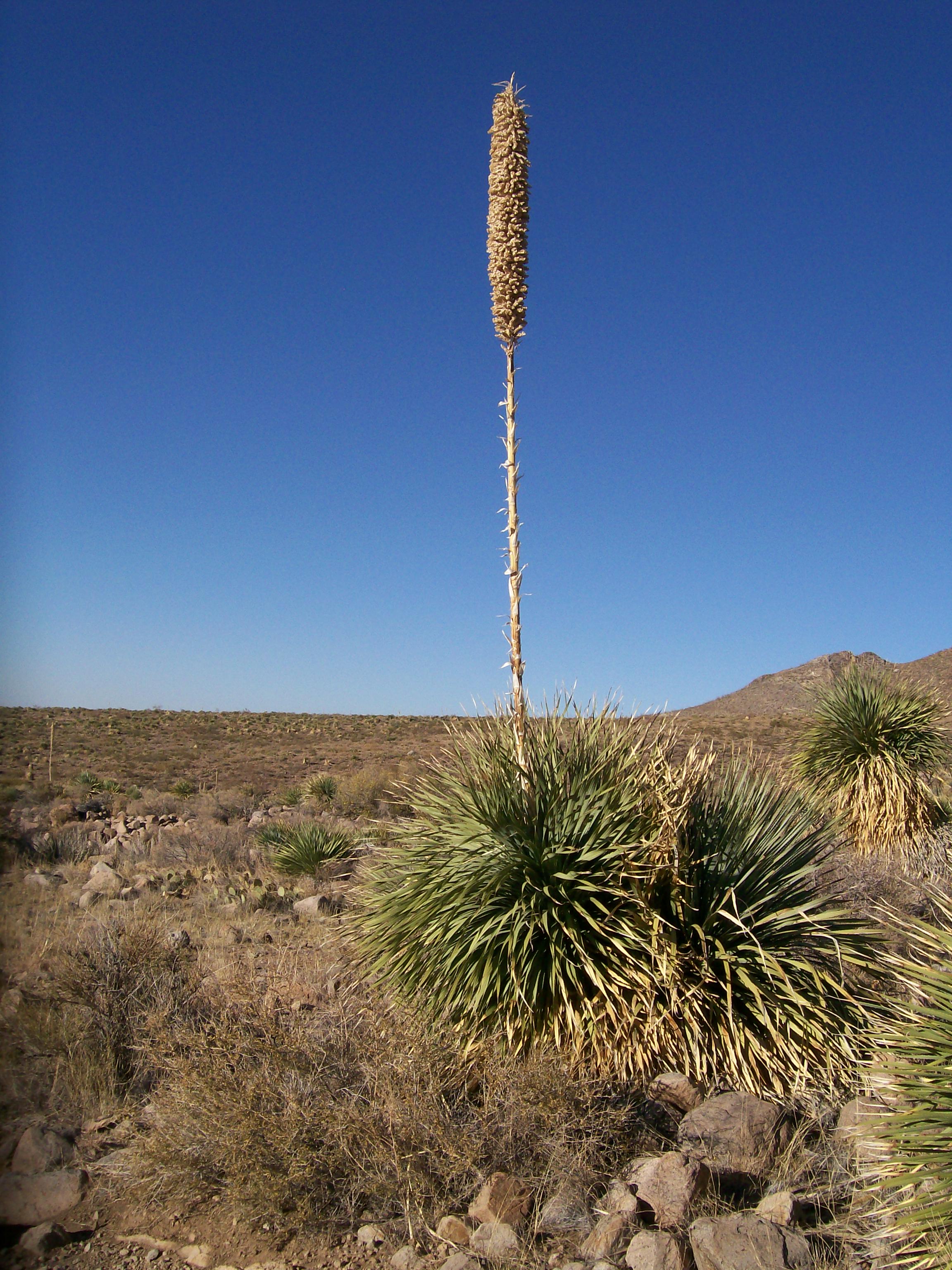
Sotol on Baylor Canyon Trail

Sotol on Baylor Canyon Trail


I’m moving into my second year of blogging with the expectation of new and better things to come: guest blogging perhaps, and more recommendations, and links with other like-minded blogs.  But I’ll continue to pretend that my mix of freethinking and metaphor is unique, special.  Aren’t we all?  Plants may be fine examples of their species, like this sotol I noticed on a hike in January, but every human being is different.  Thank goodness!  Keep visiting to see what comes next.

Illusions, or It’s All In How You Look at It

2 Comments

I had a professor in a religious studies class on Zen Buddhism who was fond of saying, “It’s all in how you look at it.”  Here are two examples of looking.

In the back yard

In the back yard

The early sun shining through the bushes makes splotches on the wall which look, from the window by my writing desk, like a bouquet.  A pleasant illusion.  It reminds me how much of art, including poetry, is a matter of illusions.  Illusions which convey truth, we want to be believe.  This is what we artists strive for.

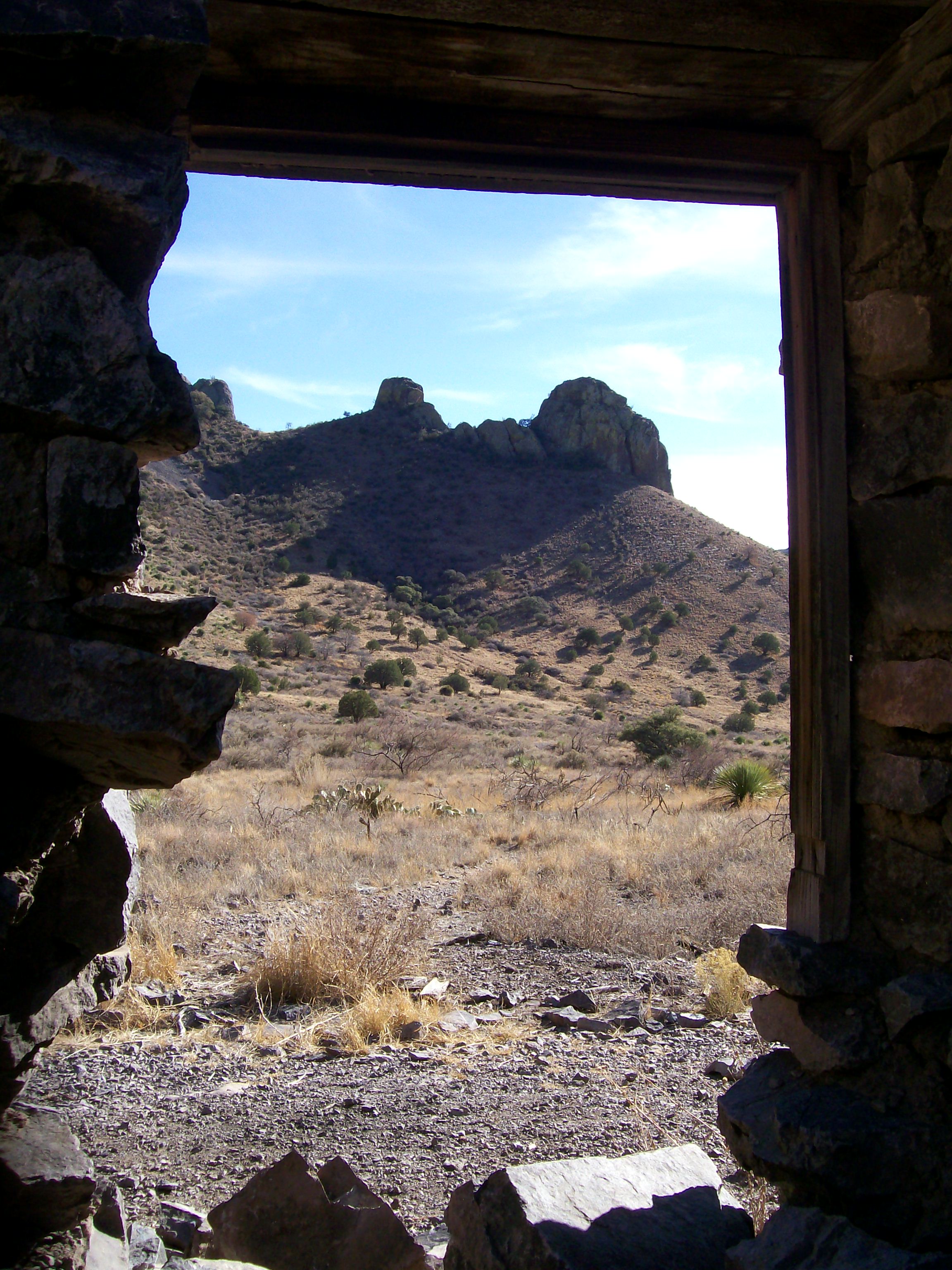
Bar Canyon View

Bar Canyon View

One of the hikes in my area leads to the ruin of an abandoned house.  Here I’m looking out from the house, and thinking about frames.  Did the people who lived in this house see what I see?  The way we frame a subject affects what we see.

Two pictures from southern New Mexico and a few thoughts for your enjoyment.

A Forgotten Freethinking Woman Speaks

1 Comment

On January 31, 1901, the landmark Coates Opera House in Kansas City, where John Emerson Roberts’s Church of This World had been meeting, burned down.   On the same day, Roberts was honored at a dinner. The newspaper reported that seventy-five friends and admirers attended.  The date was chosen for its proximity to January 29, the birthday of Thomas Paine, America’s first hero of freethought because of his radical views during and after the Revolution.

Within twenty-four hours of the fire, the Church of This World announced a new arrangement. It would meet henceforth at the Standard Theater, located two blocks south. It was considered an inferior place, for one article describes it, in relation to the new agreement, as “a playhouse which by a stroke of the pen has doffed the scarlet robes for the regenerated garb of a first-class establishment.”

What happened next is strange and cries out for explanation, but none has been given. After this dinner and the quick resolution of where his church would meet in the aftermath of the fire, Dr. Roberts was unable to lecture on the following Sunday. One source says he was ill, another that he was out of the city. Both statements are probably true, as this fits a later pattern. His wife, Edith, spoke in his place.
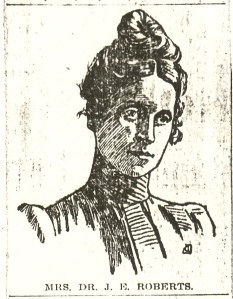
Newspaper drawing of Edith Wilson Roberts

Newspaper drawing of Edith Wilson Roberts

Edith Wilson, whose family were members of All Souls’ Unitarian Church, had married Dr. Roberts in 1893.  She was 21; he was 40.  She became stepmother to his three children, and they produced two more children together.  What she had to say in her husband’s absence shows that her ideas had developed alongside his and that she considered herself his partner and equal.  Her topic for her first lecture was “Marriage and Divorce.”

The lecture was a response to a current political debate in which one party wished to restrict the comparatively liberal divorce laws that had been put in place in Missouri some ten years earlier.  Mrs. Roberts begins with historical background; she praises the Romans for an era in which the matron reached a level of equality which Christianity squelched.  She blames the “heavy hand of superstition,” the “arrogant” St. Paul, and Pope Gregory VII, who put marriage firmly under church control as a sacrament. She describes marriage as having two purposes:

.  .  .  first and directly, the happiness of the contracting parties; second and indirectly, the welfare of children resulting from the union.  The purposes of divorce are identical with those of marriage, the second and indirect reason of the one becoming the paramount reason for the other.  To perpetuate in the home an atmosphere of misery that rapidly turns to hate is a crime against both children and parents; it incapacitates the family for usefulness, and brings to light the darkest relics of our human past, the fang, the claw, the suffocating coil.  To rear children under such conditions is an outrage to every responsibility of parenthood.

The courts, she argues, should do no more than recognize a decision to divorce.  The current practice, in which one judge had complained of “collusion and fraud” when two parties agreed to a divorce, should be abolished.  She points out that judges are not trained in psychology and therefore lack the “requisites for a correct estimate of human nature.”

In closing she suggests that two groups of people oppose liberal divorce laws.  The first are those who are unhappy in their own marriages and think others should be compelled to endure what they endure.  For these she sees no remedy.  The second group are those who are happy in their marriage, yet insensitive to those less fortunate.  To them she says:

.  .  . the men and women who have known what perfect marriage is, who have tried a happiness and pronounced it blessed, who have learned the meaning of love in its every sense and found that its other name is adoration, who have entered together the secret courts of parenthood and known the joy of rearing superb children that bear the sweet image of their mutual love—it seems to me that such men and women should most gladly give a chance of freedom to every disappointed lover.

These are the words of a woman happily married.  Her primary focus, however, is on the raising of “superb” children.  Edith Roberts declares that women are equal, responsible, able to make their own choices before the law, then adds that the use of the woman’s equality is to bear children, by choice.  The purpose of the home is to produce healthy, happy, intelligent children.  This is the purpose which this freethinking woman has chosen for herself.

For more on Edith Wilson Roberts and her husband, read my biography, John Emerson Roberts: Kansas City’s “Up-to-date” Freethought

Daily Horoscope

1 Comment

I read my horoscope regularly―it’s on the same page with the word puzzles―but I usually take it lightly. I am a Scorpio and I know that is a deep water sign, which suggests depth of all kinds, deep thoughts or deeply hidden emotions.  I’ve been accused of both.  Lately the horoscope page has been telling me that with the sun now coming into my sign I have lots of energy.

aster in sand, Ghost Ranch

Some days I do have lots of energy, but I prefer to attribute it to the weather.  I am like the purple aster which blooms best in the fall and continues until the frost.

One time my horoscope went way too far, promising that I can do it all. “You will with joy accomplish every item on today’s list.”

“This is a trap!” I declare to the newspaper page.  Yes I could do it all, but I would have to spend tomorrow, or maybe two tomorrows, recovering.  I’d be back where I started then, if not worse, since the to-do list would pile up while I returned to normal.

“This must be a message for another Scorpio,” I argue.  “One who’s more organized, more disciplined.”  I am actually quite disciplined about writing.  The horoscope writer doesn’t know where my focus has to be.  My to-do list is all the other, smaller things I ought to do, the ones I will forget if I don’t write them down.

It’s silly to be talking back to the newspaper horoscope.  An artist coach whose work I read somewhere suggested that one shouldn’t worry about one’s list, because half of it won’t matter in the long run.  Which half would that be?  The glasses that need adjusting?  The socks that are due for replacement?  Triage itself takes time and attention.  Meanwhile the list gets longer.  That coach is right on the principle, however.  A focus on to-do lists is a drain on creativity.

Would it be accurate to say that we all have more important things to do than the things on our lists?  It all depends, of course, on what we put on those lists.  I never put “write” on the list.  I just do it.  I don’t put “love” on a list either.  We don’t need lists for the really important things.

The Map of Longing: Poem and Chapbook

4 Comments

How shall I properly introduce my chapbook The Map of Longing now that it has snuck into my blog entries through a poem called to mind be recent experience?  It is my second chapbook with Finishing Line Press, published in 2009.  It is a collection of poems about loss and longing within the ordinary phases of life.  I had the fun of working with a friend who is a photographer to choose the cover picture, which shows a road leading to some unknown place through overhanging trees.  The fact that it is a scene from my home state, California, was an incidental plus.


My mother, Emily, in her prime

Many of the poems in this collection relate to my mother, including some about the last months of her lifeand clearing outher house.  Others refer to my own move from Pennsylvania to New Mexico, which happened the same year as my mother’s death.  Is it any wonder the two themes are intertwined?

There are several poems, however, which attempt to capture the feeling of being lost, disoriented, out of touch, as a general human condition, not connected to any specific circumstances.  One of these is the title poem, which expresses the mood of distraction and disorientation by the very number of its metaphoric images.

The Map of Longing

The express train
knows where it’s headed.

I zigzag,
a squirrel before cool weather
signals gathering,

no pattern tidy
as trimming for a skirt,

no purpose,
like switchbacks
up a mountain.

My turns random as leafing
through a dictionary,

I skid like a getaway car
within a movie frame,
constricted by the tracks of time,

direction inescapable
as A to Z.

The Map of Longing is available through Amazon.  You can get a signed copy from me via ERYBooks.

Recommendation: A Wonderful Writing Workshop

2 Comments

View from the Mesa

I have just returned from a week-long workshop at Ghost Ranch.  It was both stimulating and relaxing and full of kindred spirits in a spirit-filled place.  “The Ranch” has a long history, going back to a small dinosaur whose bones have been found there, the Coelophysis.  The name “Ghost Ranch” goes back to the Archuleta brothers, who told any would-be thieves or cattle rustlers the place was haunted―and no nefarious person ever came out alive to contradict them.  Ghost Ranch is connected to the Presbyterian Church but funded separately.  It offers a wide variety of classes from spring into fall, as well as a January term for students.

Anita Skeen is the organizer of, as well as one of the teachers in, the Fall Writing Workshop at Ghost Ranch.  Anita has put this together for the second week in October for something like fifteen years and has taught at the ranch for many years before that.

This year there were four classes.  While Anita taught one on The Writer’s Notebook, Ina Hughs taught Creative Nonfiction, Catherine Watson taught Travel Writing, and Jane Taylor led a workshop in poetry focusing on shape and voice.  Each teacher gave a reading, so that all participants could hear the work of all of them.  At the end, a joint reading of all the students gave an overview of the class approaches and assignments.

One afternoon, each teacher gave a short workshop.  It may be no surprise that the basic rules of good writing in all genres are much the same: details, emotion, a good beginning, middle and end, etc.,  but it is great reinforcement to hear this told in different ways for different kinds of writing.  Reminders are often as good as new material for encouraging the artistic process.  All of the teachers were entertaining as well as informative.

Our cozy classroom

The writing was all fresh work.  There were exercises and assignments, with freedom to interpret or adapt them to whatever flowed from the pen.  In my small class of three students, the variety produced from one assignment was a delight.  The mutual support and good spirits made everything seem even better than it was – at least in the case of my own efforts.  I came home with a batch of new bits and pieces to pursue, and new ideas about how to approach them.

There are a lot of different housing options.  I chose the cheapest, which were located up on the mesa, units of simple rooms with shared bathrooms.  This turned out to be a good choice in two ways.  First, the walk up and down the hill was good exercise to stir the writing muscles as well as the physical ones, and second, the mesa has the best cell phone service, the main part of the ranch being in a valley.

Will I go back next year?  Maybe.  Do I plan to go back before very many years go by?  Definitely.  Maybe next time I’ll find the words to describe the colors of the turning cottonwoods against the pines and junipers.  Watch for next year’s schedule to appear at www.ghostranch.org.

Juniper

Viva New Mexico

2 Comments

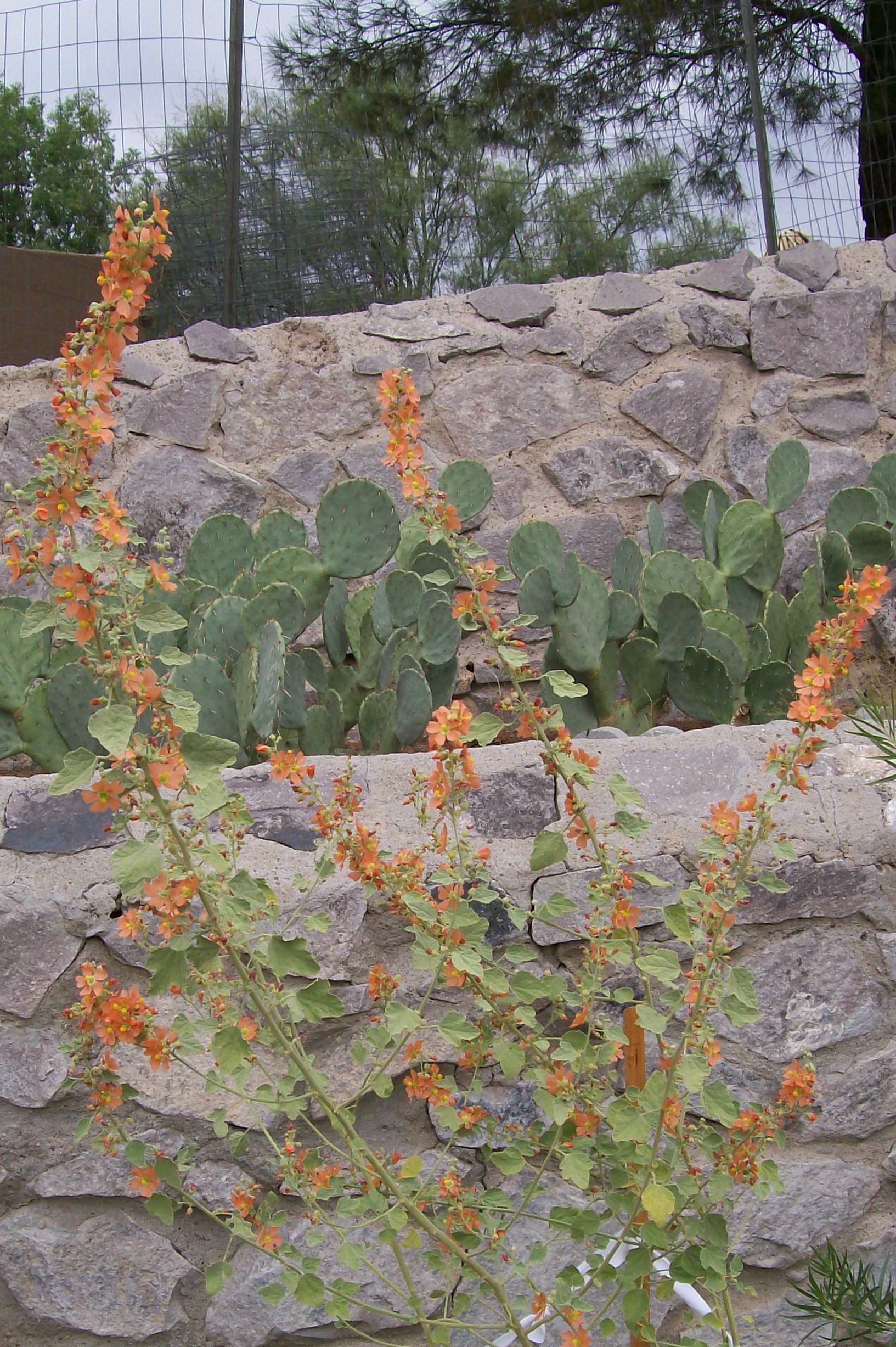
This desert globemallow is a southwestern native plant growing in my yard.  This one grew from a seed dropped by a plant I dug out of the sand in the arroyo near our house and transplanted several years ago.  Transplanting from the desert is tricky because the plants very quickly send their roots down deep for water.  If you cut the root the plant most likely won’t survive. Desert globemallow is a short-lived perennial, so I was pleased when two new plants arose to replace the old one.

I am setting up this post to go public while I am at a writing workshop at Ghost Ranch in Abiquiu, New Mexico.  That’s Georgia O’Keeffe country.  I hope to see, and photograph, some beautiful rocks, and perhaps some New Mexico native plants that don’t grow in the desert.

To experience more of New Mexico, click on 200 New Mexico Poems in the side bar.  This site has poems relating to many areas, landscapes and cultures of new Mexico.  New poems are being posted almost every day, growing toward the promised 200 poems.  It’s worthy of frequent visits.

Recommendation: One Earth Project

2 Comments

One earth?  Of course we all live on one earth, don’t we?  Yet, we don’t acknowledge this is all our actions.  Do we consume more than our share?  Are we depleting resources?  These questions have been around for a long time, without bringing people to new understandings of the place of humans on the earth.  Notice that I speak of “understandings” here, not of actions.  Action follows from belief structures.

Myths and religions grow up together.  Myths may have multiple meanings.  Religious leaders try to narrow them down.

I believe that sacred texts are meant to be encountered anew by each generation, each devout reader.  But we come to them with preconceptions, conditioning.  There’s the conditioning of our upbringing in Sunday School, perhaps.  But an even stronger influence may be the conditioning we have acquired from the society we live in.  Going back to reexamine our sacred text and to rethink meanings which have been handed down is a true spiritual quest.  It is how prophets are made.

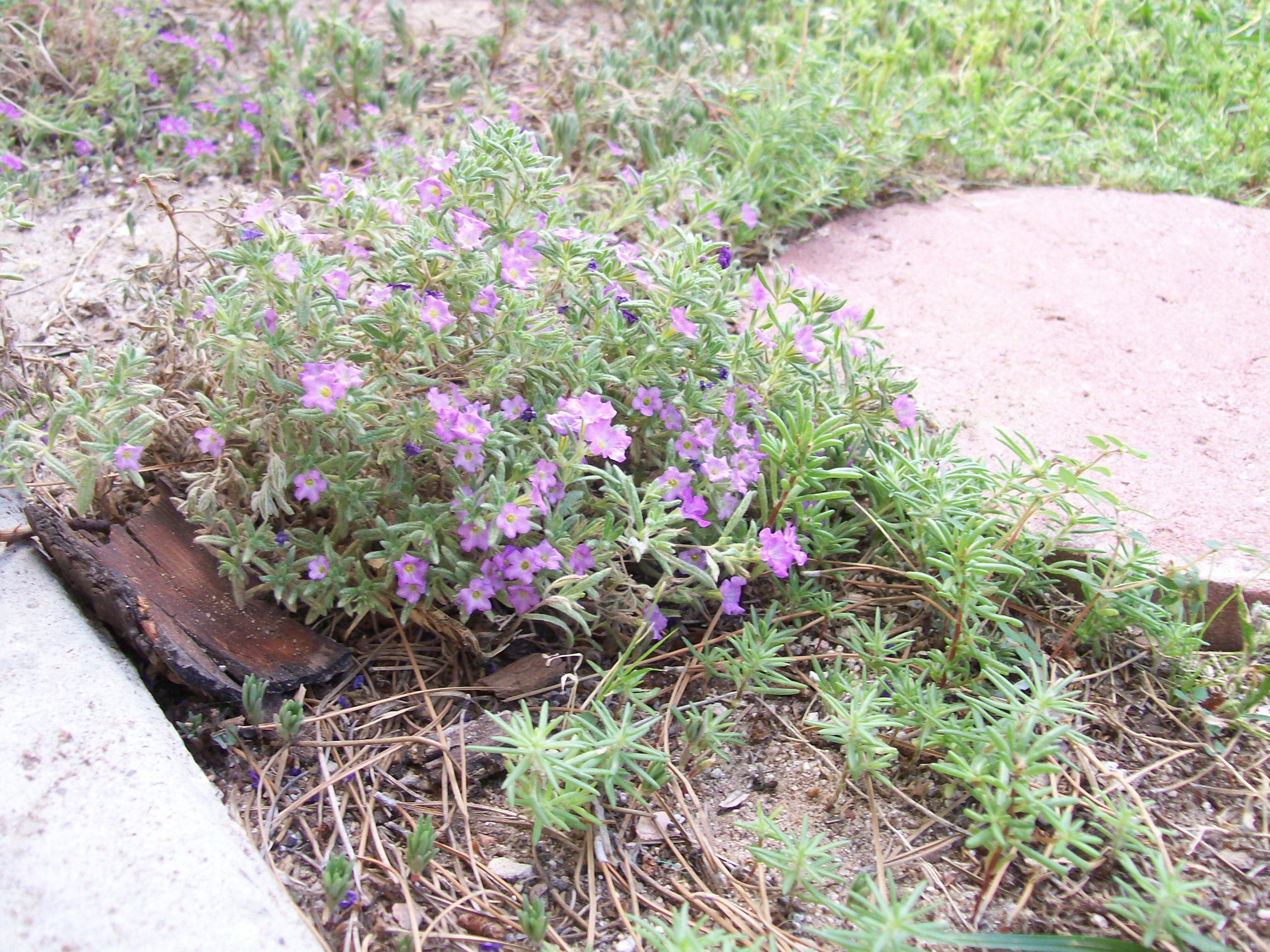
Purple Mat

I put here a new picture of the purple mat in my yard.  Notice the curved edge beside it.  That is a 12” round stepping stone that provides a sense of scale for this small plant.  You have to be watching for it to see it.  This is a good metaphor for the voices of prophets in our midst.  You have to be listening for those voices, but they are there.  One such voice can be found on Lee Van Ham’s blog, The One Earth Project.  Lee has rethought some very old stories in Genesis, the story of Eden and of Cain and Abel.  His interpretations give new insight for people trying to relearn what seems in our day almost a lost art: to be one with the created world instead of using and, in some cases, abusing it.  And to stop living as if we had multiple earths to supply our needs.

Click on One Earth Project in the blogroll on the right of this page.  See where Lee’s thinking is taking him now.

Older Entries Newer Entries