Home

Lupines

4 Comments

lupines blue

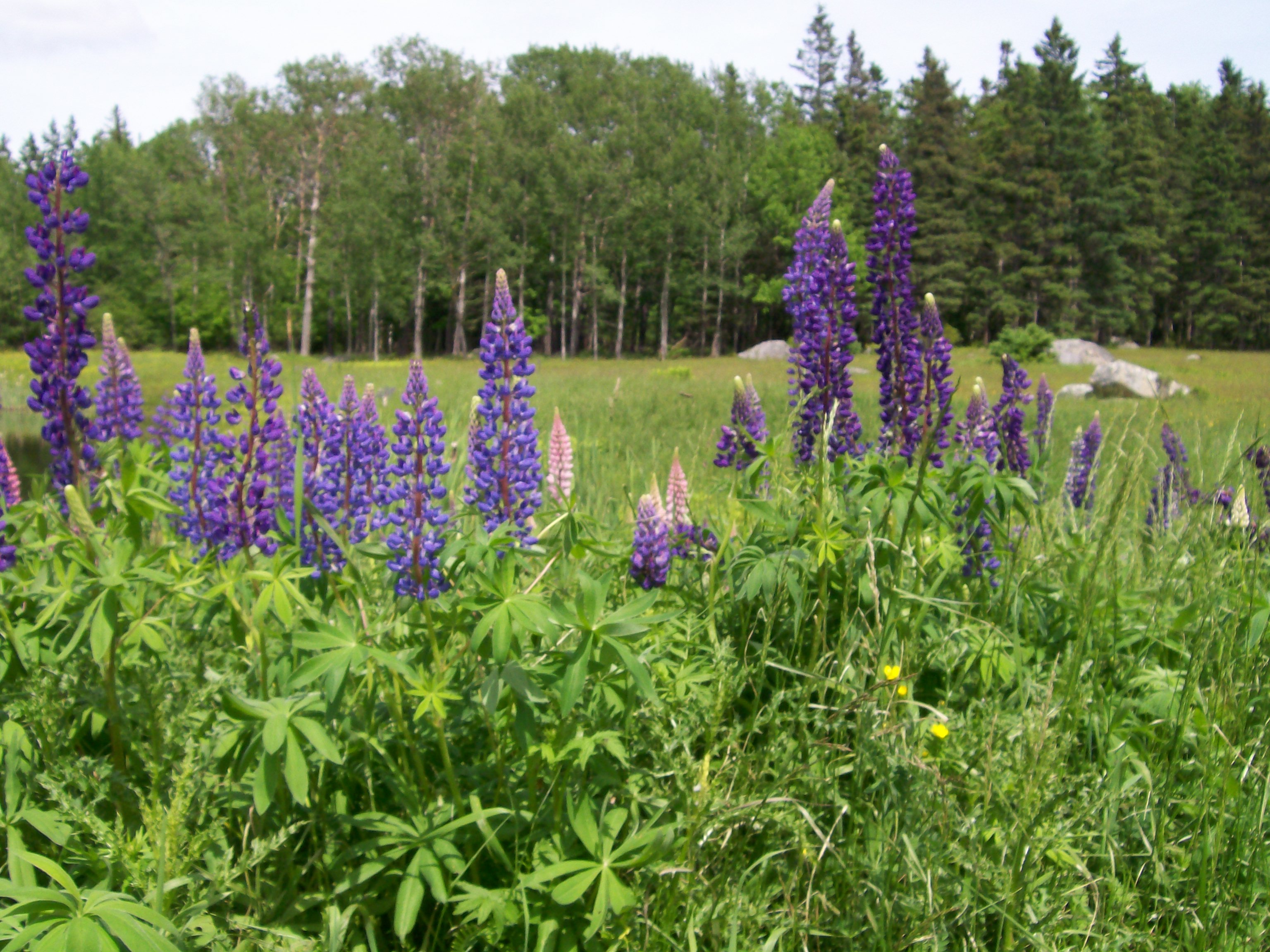
Lupines are one of the short-term pleasures of the Coast of Maine.  The Chamber of Commerce here held a Lupine Festival for several years.  Apparently it was not very profitable, either because it rained, as it does a lot in June, or because the lupines came too soon.  This year they are right on schedule, and no festival to greet them.

lupines white

There are still lots of people, both locals and PFAs (that’s People From Away, like me) who stop to enjoy them.  These come from a field near our house, far from the road.  Here they are for you to enjoy.

lupines pink

Another Anniversary

4 Comments

Today is the 116th anniversary of John Emerson Roberts’s departure from the Unitarian Church.  This move to leave the denomination and create his own “Church of this World” is what makes his an interesting story.  Without that move he would have been one of many successful liberal preachers in the denomination, hardly noticed in the world beyond.

In 1906, when Dr. Roberts decided to take a break from “the Church of this World” after nine years, a reporter for the Kansas City Journal declared that Roberts had fallen away from religion “because his name was Emerson.”  The writer (perhaps it was the paper’s editor) claimed that Roberts was imbued with “Emersonian mysticism.”  He didn’t address the fact that it was Dr. Roberts’s good Baptist parents who gave him this middle name.  Mysticism was not what led Dr. Roberts away from the denominations.  On the contrary, even the Unitarians had too much mysticism for his rational mind.

94933_CoverFrontThis June is also the second anniversary of the publication of my biography of Roberts.  A year ago I was giving talks about the book, which I enjoyed doing very much.  I had to admit, however, that the return on the cost of traveling was not worth it.  Through internet connections I did sell a few books, so this past winter I used LinkedIn ads to draw attention to this site when I posted selections from the book.  I got a nice increase in “views” but no sales.

I was ready to say, “Okay, I’ve done what I could.”  I’d sold some books.  I’d placed them in a few appropriate bookstores.  I’d sent review copies here, there and everywhere.  It seemed like time to put the project behind me.  Then two things happened this spring: the book was given a very favorable review in the Unitarian Universalist Historical Society Journal, and I was invited to write a short summary of Dr. Roberts’s success for Free Inquiry Magazine.  I wait to see what the 117th year since John Emerson Roberts left the Unitarian Church to create his “Church of this World” will bring.

Maine Rocks

Leave a comment

We live near a rocky beach where I like to walk.  Walking on rocks uses the leg muscles differently from a flat surface, so it takes me a few trips to get my “rock legs” back.

low tide

I didn’t pay a lot of attention to tides on my visits to the coast as a child, but at this latitude they are significant.  The vertical difference between high and low tide is about ten feet.  On the sloping beach that covers a wide stretch; all of the rocks in these two photos will be under water at high tide.

seaweed

The highest tides leave little walking space.  The best time to walk is mid-tide or lower, when the rocks have had time to dry out.  (Slipping on a wet rock is definitely dangerous.)  So I am very much aware of the fact that the tides shift by up to an hour each day.  And I wonder what the world would be like if the moon did not take longer or less than 24 hours to go around the earth.  The tides would always be at the same time.  And would the moon look the same to us too, always rising at the same time and in approximately the same shape?  How dull!  The phases of the moon not there to help early humans begin to make calendars!

I was pleased to see that my “tree lizard” had survived the winter.   (See “The Giant Lizard of Lounsberry Beach” posted June 28, 2012.)  While a large log rolled up on the beach by storms often stays there, it is usually tossed around quite a bit, and acquires some new seaweed dressing.

tree withh rock

I’ll be checking in with him to see if there’s a sequel to his story.


Maine Weather

2 Comments

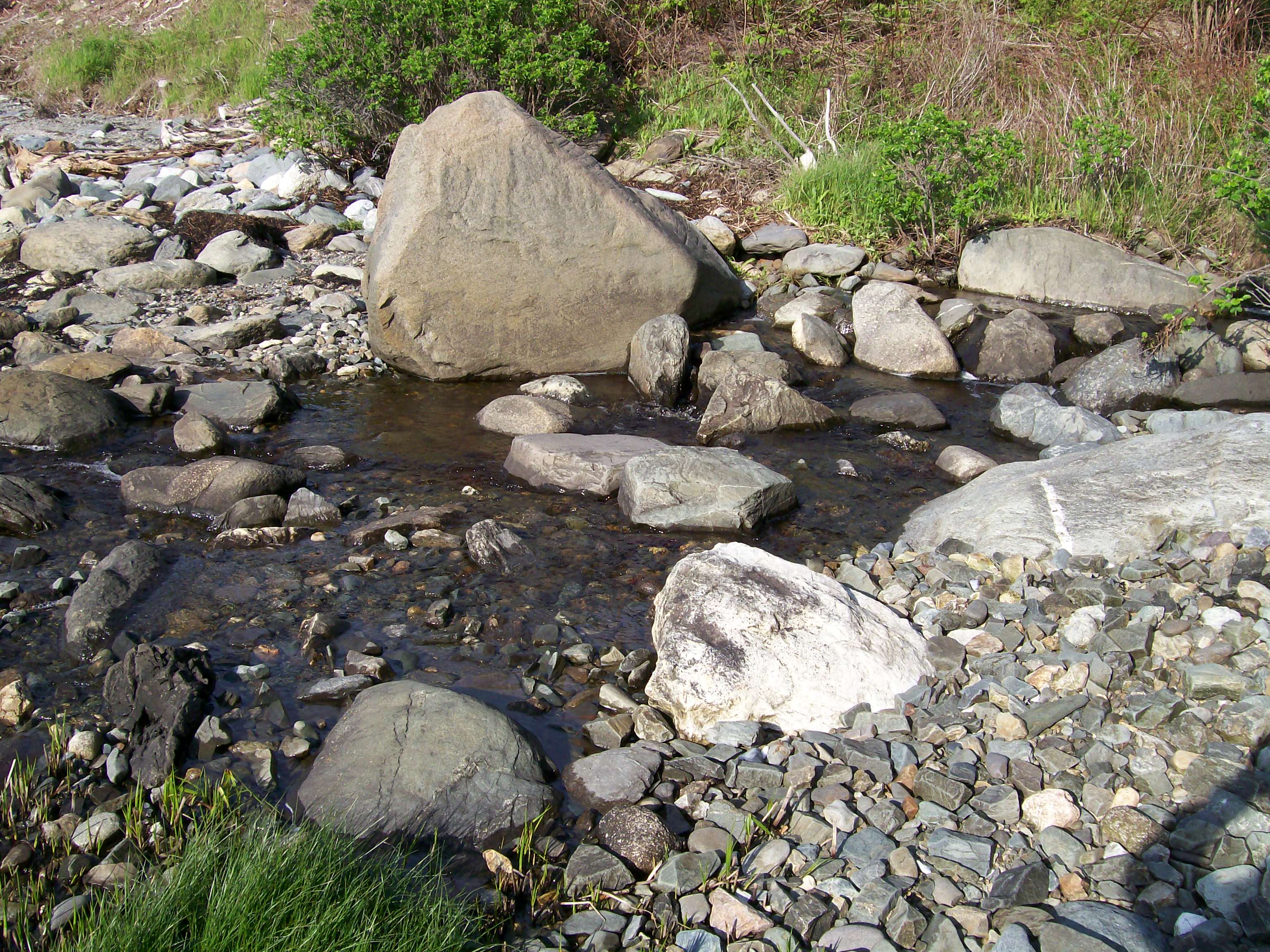
There’s lots of variety to the weather in Maine.  Not usually tornadoes, which we have escaped coming across the country.  It’s also not usually sunny and warm when we arrive about the first of June.  This year it was.  We know it had been raining, because the stream is running strong. (No, you can’t see the motion in a photograph.)

stream

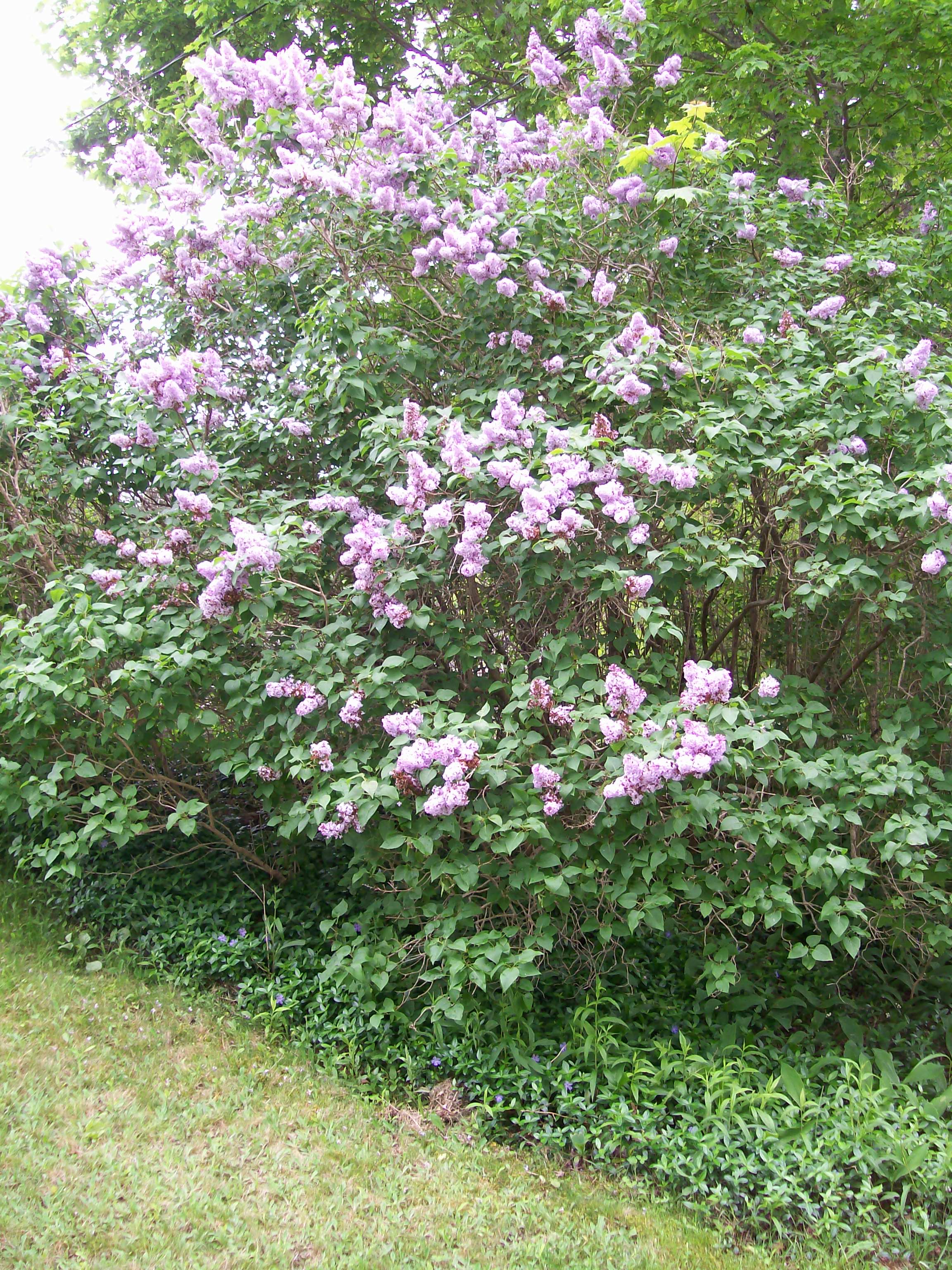
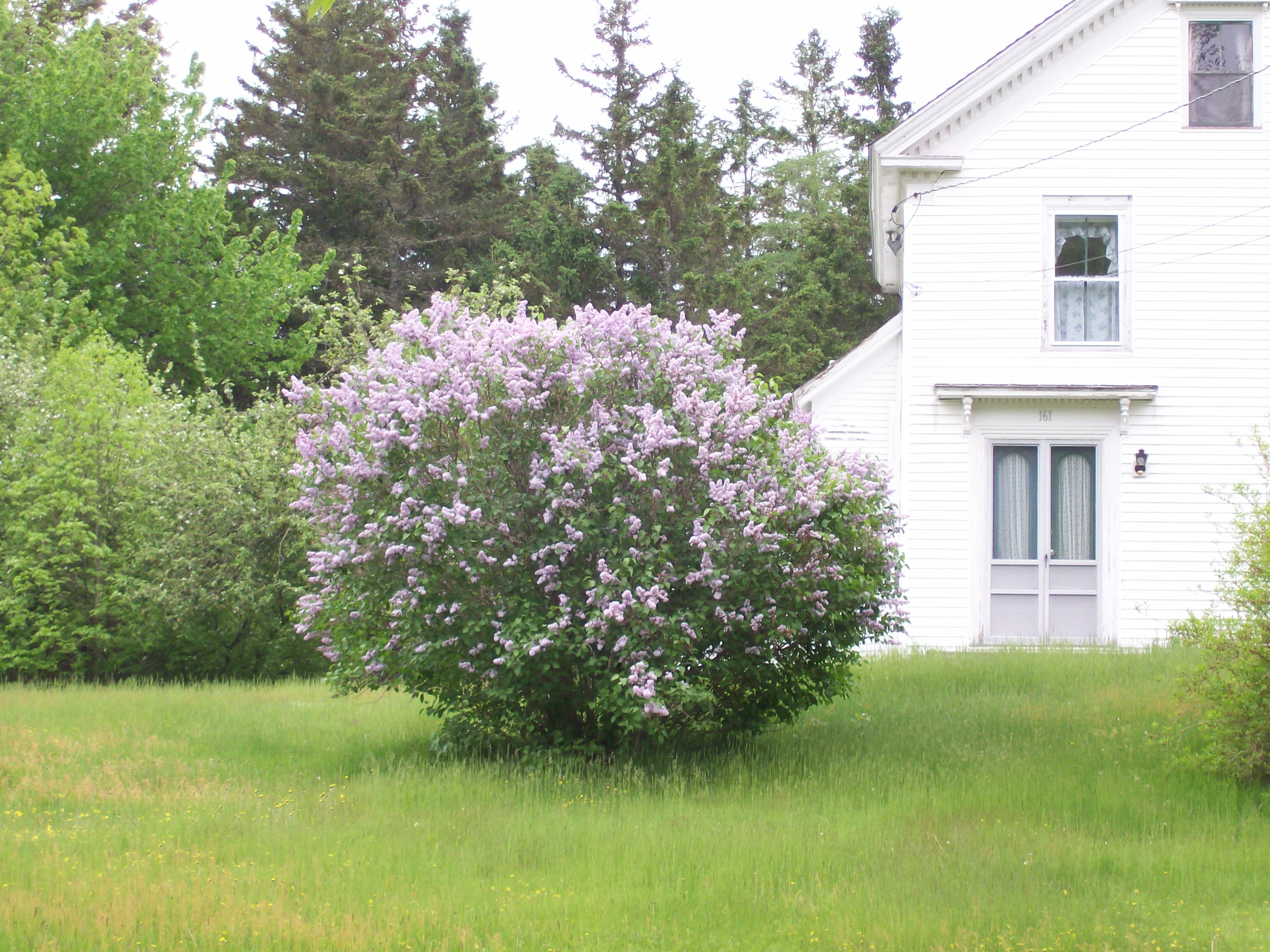
And we know it has been a cold spring, because the lilacs are in their glory.  Most years they are past or fading when we arrive.

lilacs

So many lilacs that the poem by Alfred Noyes starts running through my mind:

Go down to Kew in lilac time, in lilac time, in lilac time
Go down to Kew in lilac time.  It isn’t far from London.
And you shall wander hand in hand . . .

It’s from Noyes’s most quoted poem, “The Barrel Organ.”  I remember more fondly “The Highway Man” who came riding, riding, “When the moon is a ghostly galleon.”  Neither is great poetry, yet they’ve lasted.  They stick in the brain.  I’ve never been to Kew, and as I look at the moon I sometimes wonder which shape Noyes thought looked like a galleon, but how the words stick!

100_0825

On The Road: Hot Springs, AR

1 Comment

park sign

Hot Springs National Park in Hot Springs, Arkansas has a network of trails up its small mountains, but in other ways it is unlike most national parks.  There is no entrance gate and no fee.  There is and has always been a public/private partnership.

hot spring

We stopped here because it is a park we’ve never visited, and because it was on the way from our home base to where we needed to be two days later.  The park began as a federal preserve to protect the source of the spring water from developers before there was a park system.  A row of bath houses right downtown are fed by these springs, grand buildings, two of which are working bath houses; others are in disrepair, one is the national park office/store.  The buildings and the preserve were established as pleasure places for the elite in the late nineteenth century.  These days the clientele is more varied; the woman who served breakfast at our hotel said she gets “the works” (soak, massage, etc.) once a year.

The water is also available at several open spigots.  People come to fill jugs with the water, which has been extensively analyzed and tastes very good.

mountain road

I was hoping for more wildflowers on the drive up the mountain.  We saw mostly straggly buttercups along the road.  And we came upon one resting place which must have been there a long time.  They don’t build them like this anymore.

rest stop

Whose Bible?

3 Comments

I have several large Bibles with commentaries but only two, one King James Version and one Revised Standard Version, which are small enough to carry around.  Both were gifts and both are wearing out at the bindings.  I decided to shop for a portable New Revised Standard Bible (NRSV).  It turned out this translation is out of favor.  The rows of Bibles at Barnes and Noble feature, along with KJV, NIT, NLT, ESV and a few other versions.  I scanned the shelves, closing in on those which were smaller, but none were NRSV.

One such smaller volume in the row turned out to be labeled “The American Patriot’s Bible.”  The WHAT?

This is a puzzling confusion of categories.  I wasn’t willing to pay the $12 to find out what gives this edition the claim to patriotism.  I pictured a focus on the stories of Ezra and Nehemiah, in which the Israelites are trying to make themselves right with God by cleaning up their laws and purifying their blood lines.  Does anyone still give those stories much weight?

I’m proud to be an American, but I can’t figure out what in the Bible connects to that.  There are passages about welcoming the stranger and about caring for widows and orphans that suggest to me some good principles for responsible citizenship.  Is this what the editors have in mind?  When I say I suspect that it is not I reveal my own bias: those who wave the flag of patriotism often have another agenda.

Perhaps this “Patriot’s Bible” makes the claim that America is, or was, or should be a “Christian nation.”  Christian reformers have been a force for good in our history, but they are not the whole story.

I’ll stop at that and let the reader ponder what an “American Patriot’s Bible” might be, while I continue my search for a portable NRSV Bible for use when I travel.

Two Williams, Two World Views

2 Comments

I wouldn’t have discovered William Blake’s longer works if I hadn’t noticed that he was a contemporary of William Paley, the Anglican clergyman whose pre-Darwinian book, Natural Theology influenced education for decades afterwards.  As I’ve noted before (see “If Society Were Child’s Play” posted on May 19, 2012) these contemporaries never met and represented totally different worlds and world views. Blake was in London.  Paley was up in the north.  After being educated and teaching in Cambridge, he moved to a town near the mouth of the Wear River.  Blake was horrified by the mills which were expanding in his time; he wanted to return England to “a green and pleasant land.” Paley delighted in all forms of mechanical and scientific development.

They were also on opposite sides in religious matters.  Blake was a dissenter, raised and steeped in a tradition that did not trust the authorized religion.  Paley was an organization man, a parson in the Anglican church system.  Blake took Milton, a fellow dissenter, though a more conventional one, as one of his guides.

Blake’s visions are highly evocative and multi-layered, often difficult to interpret without clues from commentaries.  He combined words and picture in his most powerful pieces, as if to say that words are not enough, but are needed to complement the meaning of his pictures.  The pictures expand what the words say; the words both expand and limit what the pictures may “mean.”  In reading Blake I’m not always sure where meaning ends and sheer emotive force takes over.

Paley is the opposite.  His world is unified, and compared to Blake’s it is uncomplicated.  Everything has its form and its function.  Everything is ordained and by and large it is as it should be.

I say by-and-large because there are certain features of the world which Paley realizes require some justification.  His explanations are less than satisfying to a person of the current century.  He sees the inequalities of birth and opportunity as given.  God has set things up this way in the human condition and there is no expectation that they can be changed.  So Paley finds reasons why they should not be changed.  While there are discomforts in the world, this is still, he seems to say, though he doesn’t use the phrase, “the best of all possible worlds.”  Of course he has the idea that “suffering produces character” (a quotation from one of St. Paul’s letters) to fall back on.  Anything that is difficult in this world is mere testing and cleansing to make one better fit for the next world.

William Paley and William Blake read the same Bible and found different truths in it.  A great deal more scholarship and a broader understanding of the importance of the cultural context of any traditional text has widened the range of possible readings in our time.  Contradictory understandings of the world from the same sacred text, however, is nothing new.

An Early Poem

2 Comments

I’ve let the blog rest while I worked on an article for the past week or so.  There’s more to say about William Blake, and, as always, about John Emerson Roberts, but for today, I’m sharing a poem I still like, many years after I wrote it.

Earlier this spring, in thinning out a box of past efforts, I pulled out a long series of poems I had written in response to excavation reports from a location in southern Greece which is believed to be the Palace of Nestor, the wise old man in Homer’s tale of the Trojan War.  I found plenty of poems that I would not submit to public scrutiny any more.  I found others that seemed like a good idea worth revisiting.  I found a few, of which this is one, which I’m keeping as an example of my “early period.”

Beneath the Throne

The excavators call it treasure:
an agate pendant, a bit of paste,
some beads and twisted wire
tucked away under the dais.
I think of the mix in cornerstones,
builders’ gifts to the future.

I think of a brass-toned chain,
my grandmother’s ring, the earring
I didn’t lose, in a cardboard box
at the back of my dresser drawer,
of caches not intended
to be opened any time soon.

May Day Reflection

2 Comments

Another cross-quarter day.  Are we really only half way through Spring?  Here is Southern New Mexico it doesn’t feel like it.  The extreme drought doesn’t help.

When we moved into our house it had orange stone in the front yard, apparently a recent decision to give up on grass.  Evidence suggests that when the houses on our street were built, in the 1980s, front yard grass was the norm.  One by one the yards have been converted to stone and xeriscaping.

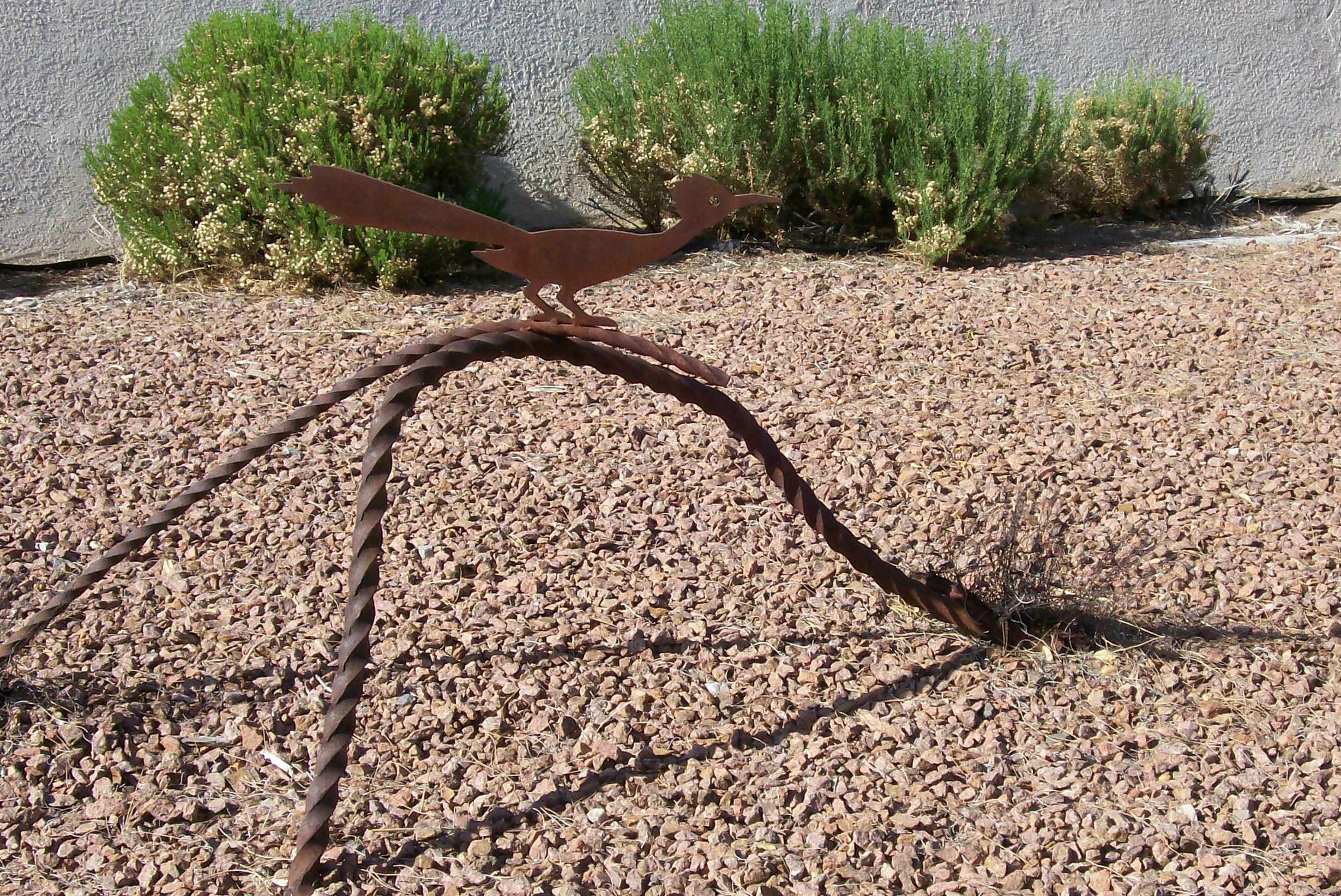
We didn’t want to invest in replacing the sprinklers with a new watering system for native plants, so we invested in sculpture instead.

100_0799

We now have a resident roadrunner, a small yucca, and an ocotillo.

100_0798

We are saving water, even over nature’s version of the same plants.  But there are a few weeks each year when the real ocotillos make our metal one want to hide its head in shame.

My Neighbor's Ocotillo

My Neighbor’s Ocotillo

A Treat for Both Sides of the Mind

1 Comment

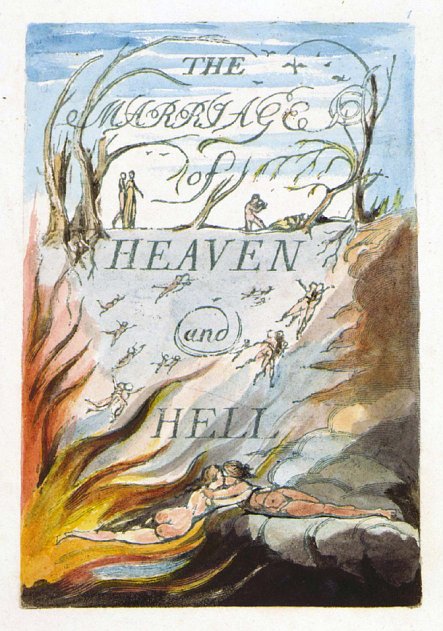
MoH&H_titleWilliam Blake’s The Marriage of Heaven and Hell is a work to delight both the poet and the freethinker.  It is a short book that combines language and art, serious ideas and comedy.

Most of us know Blake, if at all, for his short poems, like “The Tiger”:

Tiger, tiger, burning bright
In the forests of the night

or “The New Jerusalem”

Till we have built Jerusalem
In England’s green and pleasant land.

The latter is an introduction to a long work titled “Milton” though the Milton who appears in this tale is not the actual writer.  “Milton” is forty five pages of tiny script and complex images, telling an equally complex story.

“The Marriage of Heaven and Hell” is shorter, easier to follow, and fascinating for both the ideas and the language.  Blake constructed these books by etching copper plates, printing and then hand coloring each page.  “The Marriage of Heaven and Hell” consists of 27 such pages.  There are nine copies in existence; fortunately reproductions can be found in quite a variety of editions, some very inexpensive.  These editions usually print out the text as well, for those spots where Blake’s script is difficult to interpret.

Blake was a Nonconformist, which means that he was not a member of the Church of England.  He did not fully align with the other nonconformist traditions either.  His little book is partly a tirade against priests, of all times and places, and partly a celebration of creative energies.

What might be called Blake’s thesis statement is found on page 3:

Without Contraries is no progression. Attraction and Repulsion, Reason and Energy, Love and Hate, are necessary to human existence.
From these contraries spring what the religious call Good and Evil. Good is the passive that obeys Reason.  Evil is the active springing from Energy.  Good is Heaven.  Evil is Hell.

It will follow that in this dichotomy, hell is the more interesting place to be.  A few pages later, Blake comments:

The reason Milton wrote in fetters when he wrote of Angels & God, and at liberty when of Devils & Hell is because he was a true Poet and of the Devil’s party without knowing it.

Three pages are given over to “Proverbs of Hell,” a wide range of short statements.  Here are just a few:

In seed time learn, in harvest teach, in winter enjoy.
The road of excess leads to the palace of wisdom.
A fool sees not the same tree that a wise man sees.
No bird soars too high if he soars with his own wings.
You never know what is enough unless you know what is more than enough.

These proverbs, which send the mind going in many different ways are followed by three sections entitled “A Memorable Fancy” in which angels and devils and giants all appear and further commentary against such errors are trying to separate body and soul, or make peace between two classes of humans he calls the Prolific and the Devouring.  By the first he means the creators.  The second are those who only consume because they cannot create.

I have only picked out samples from the book.  To get the sense of the whole, you will need to go read it yourself.  After reading a copy from the library, I bought my own copy from Powell’s for $5.00.
Older Entries Newer Entries