Home

After the Snow

3 Comments

We had a serious snowstorm – for southern New Mexico – last week.  The Superintendent of Schools didn’t think it was bad enough to close schools, with the result that there were five or seven children in classes that officially numbered 20.  They ended up closing early.  Two days later, everywhere the sun could reach had melted.  The shady areas took a few days longer.

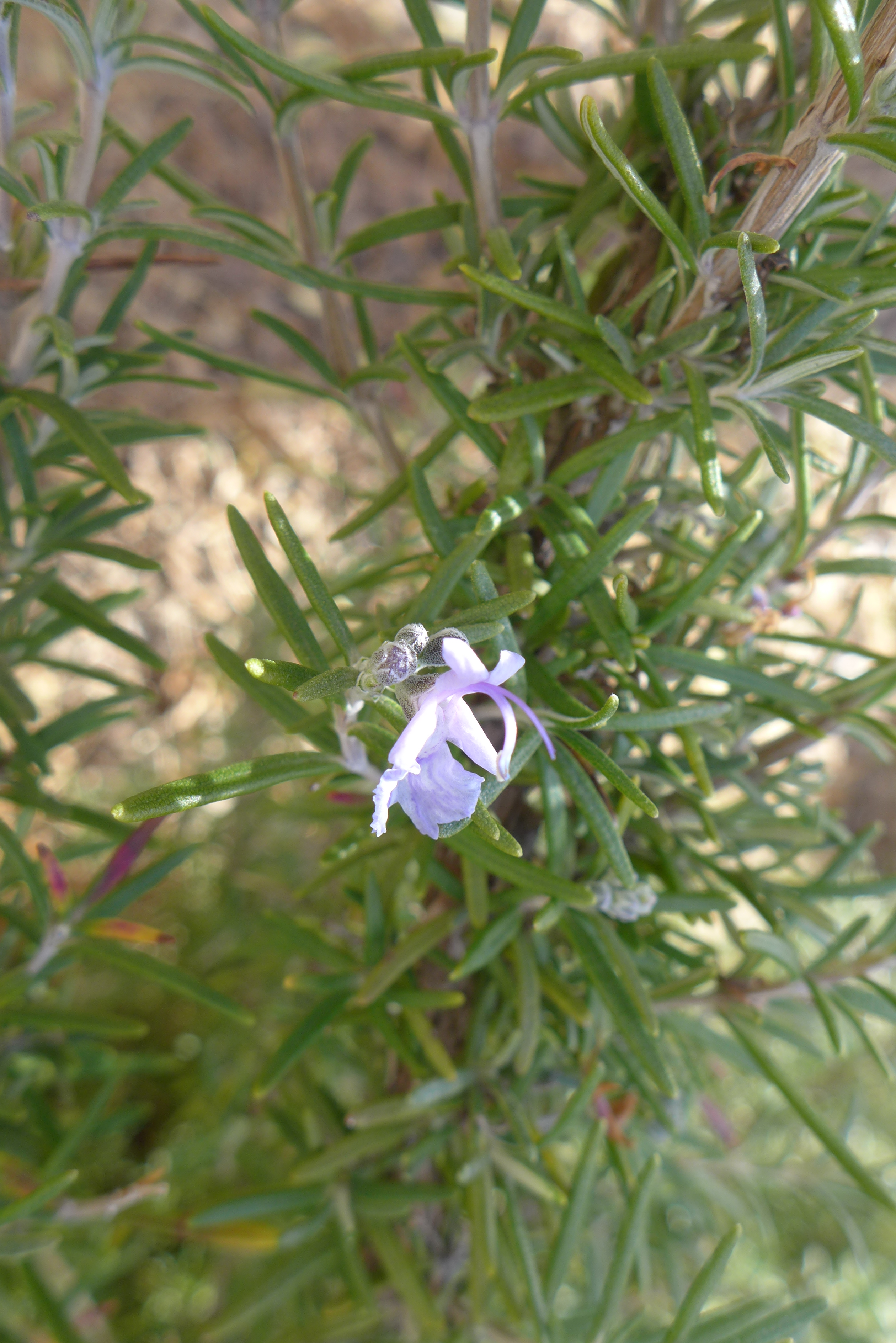
I went out to see how the garden had fared in the snow.  The parsley was very happy.  parsleyThe rosemary decided it’s time to start blooming.rosemary flowerI decided to bring a few branches indoors to add some green to my study.  rosemary in vaseI hadn’t thought about how much rosemary looks like an evergreen tree until I started working with these close-ups.  It’s leaves are like fir or spruce.  And I found one source on odors of herbs in cooking, which calls rosemary “piney.”   Looking at the vase of rosemary in my study, I started playing with these ideas.
An untitled work in progress

What’s rosemary to you?  When Ophelia
said “remembrance” I pictured
a soft leaf to brush against the cheek,
not this sturdy stiff-needled bush.
This kind of memory stays green,
refuses to go away, an ugly scene
replaying from an old movie.

Words From Mary Ruefle

Leave a comment

“Metaphor is not, and never has been, a mere literary term.  It is an event. . . .   If you believe that metaphor is an event, and not just a literary term denoting comparison, then you must conclude that a certain philosophy arises: the philosophy that everything in the world is connected.”
(“Madness, Rack and Honey,” p. 131)

“Altogether, I think we ought to read only books that bite and sting us.  If the book we are reading doesn’t shake us awake like a blow to the skull, why bother reading it in the first place?”
(“Someone Reading a Book Is a Sign of Order in the World,” p. 191)

“A poem is a finished work of the mind, it is not the work of a finished mind.”
(“Kangaroo Beach,” p. 222)

“I remember “remember” means to put the arms and legs back on, and sometimes the head.”
(“I Remember, I Remember,” p. 245)

SHORT LECTURE IN THE FORM OF A COURSE DESCRIPTION
My idea for a class is you just sit in the classroom and read aloud until everyone is smiling, and then you look around, and if someone is not smiling you ask them why, and then you keep reading―it may take many different books―until they start smiling, too.”
(“Twenty-two Short Lectures,” p. 255)

“When students are searching for their voice, they are searching for poetry.  When they find their voice, they will have found poetry.  When they find poetry, they will live to regret it.”
(“Twenty-two Short Lectures,” p. 259)

“I will tell you that if you think I know something or anything, I am just pretending to know as a way to pass the time.  Personally I think we should all be in our rooms writing.”
(“Lectures I Will Never Give,” p. 279)

These statements come from Mary Ruefle’s book of lectures/essays, Madness, Rack and Honey. There is plenty more in the book to savor, ponder, and even question―or to play with as a prompt, if you like.  Ruefle is a complex person, as these samples suggest, and she doesn’t worry about smoothing over complexities or contradictions.

Ruefle has published several books of poetry.  She is also known for “erasures” in which she takes a printed page and removes all but a few scattered words to make her artistic statement.  See http://www.maryruefle.com.

Vowel Sounds

2 Comments

We’ve all been taught that there are five vowels, “and sometimes “y.”  But those five vowels make many more sounds, fourteen or fifteen, depending on which internet source you consult.  (Apparently this is not yet an exact science.)  The value of the sounds – which is important to poetry – ranges from the high of key, cane or kite (or bee, bay and by) to the low “oh” and “oo” sounds (coat, cool, or bone and boo).

The echo of vowel sounds from one word to another is called assonance.  I’ve been playing with that feature.  The trick, for me, is keep to assonance and not get stuck in rhyme.  I haven’t succeeded yet with the “eh” sound, because there are so many words ending in -ed: bed, bread, fed, red . . . .  Rhyming is not the point of this exercise.  The long “I” has similar problems.  Too much fine wine.

Here are a few experiments:

Evening: sense
and  sound calm us down,
which is why we say
Hallowe’en,
that shriek, a keen.

Sums hum
in the air. Money
troubles the bed.
Love
comes to shove.

Flash, dash, fat cat!
Clap for all that’s
under your hat,
in your stash.
What’s after?  Ash.

You don’t have to be a poet to play this game, but I think it’s good practice if you’d like to become one.

Playing with the Camera

2 Comments

The son who gave me my new camera last Christmas was back this year and gave me some lessons in more things I can do.  One was about focusing close-ups.  Here are some of my attempts: P1000328And another: P1000329My son, in demonstrating, had the good artistic sense to focus on a green leaf among the red ones.

Photo by Jack Young

Photo by Jack Young

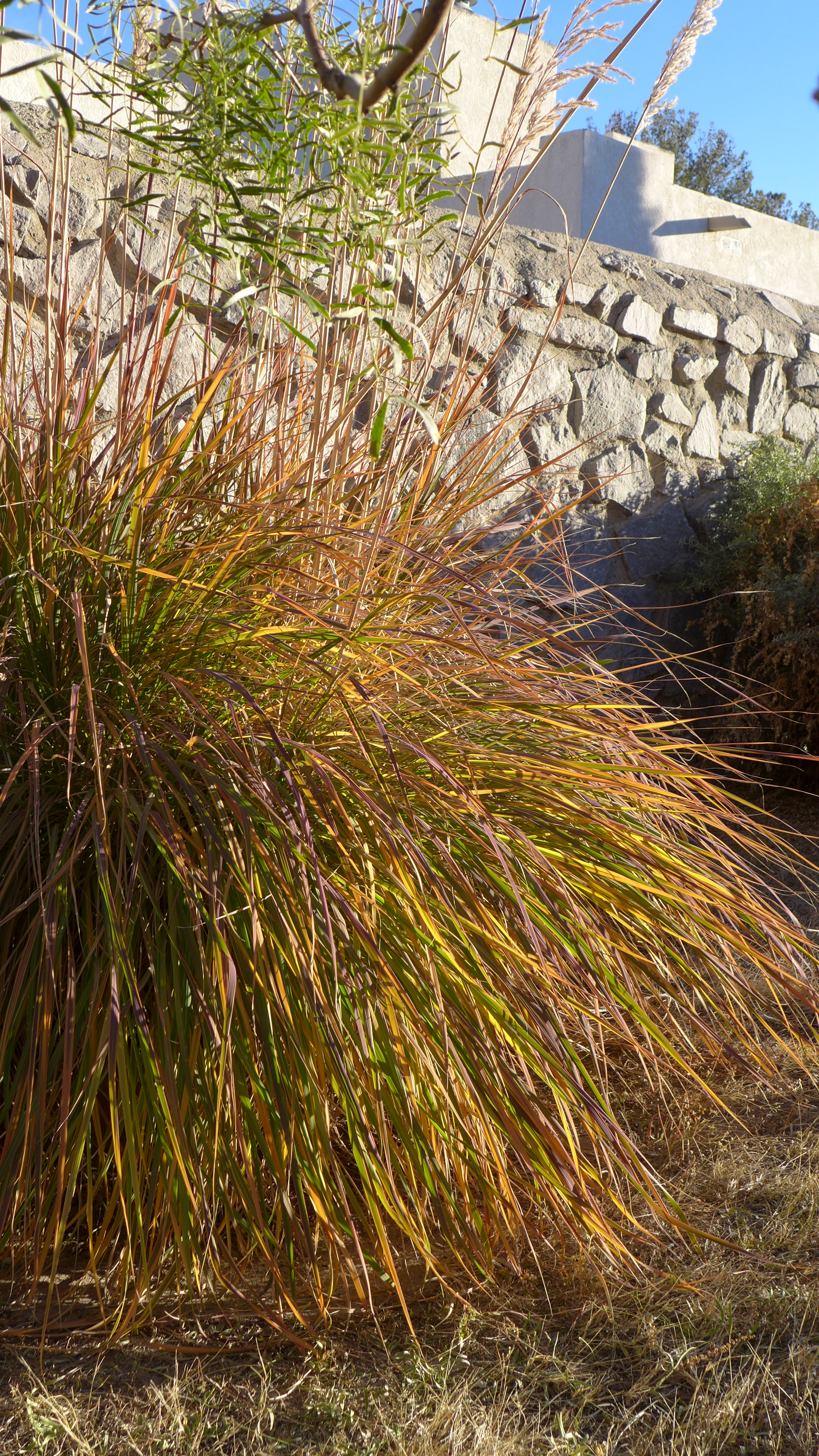
Here is my effort.  P1000338A few days later I gathered some leaves from the tall ornamental grass in my yard, and did some more practicing. P1000342The plant outside is much browner now because we had a snowfall the day after New Year’s.  I’m enjoying this color while it lasts.

The San Diego Desert

1 Comment

I was in San Diego, California, in October, but other things intervened and I’ve only now uploaded my photos into the computer.  These photos are from a walk in the Scripps Preserve, a small sample of what the landscape of the San Diego area once was. P1000287It still seems amazing to me that this area was desert, right up to the water’s edge, before people started altering the landscape.  Dry bushes on the cliff give way to green in the arroyos, which probably benefit from the runoff from houses, roads, etc.P1000291There are small yellow flowers, similar to the ones I see in “my” desert far inland.  I guess that this is some variety of Bahia. a family with many varieties. P1000289Many of the bushes had recently gone to seed – as one would expect in October. P1000293And the overall look of the area made it quite clear that California is in drought conditions. P1000292Deserts are deserts whether near sea level or at 4,000 feet, where I live.  And this is in spite of the greater humidity coming off the water.  My skin appreciated that difference.


Not a Sunrise!

1 Comment

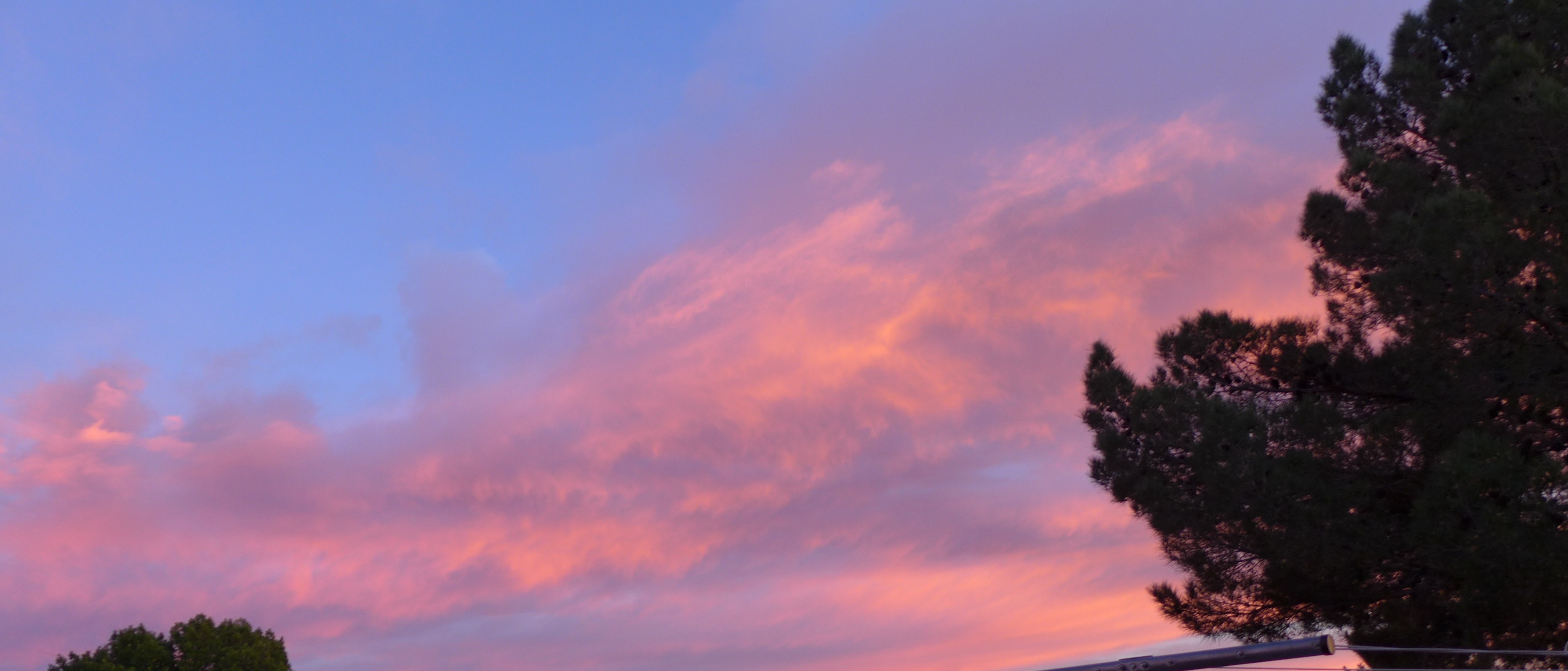
This evening a little after five p.m. I looked up and saw an unusual amount of color in the eastern sky.  This is the direction in which I usually photograph sunrises. sunset eastWe had a neighbor in Maine who lived on a point and could measure a sunset by how far around the circle of her view there was color.  Tonight’s was nearly a 360.   There was color both north and south.

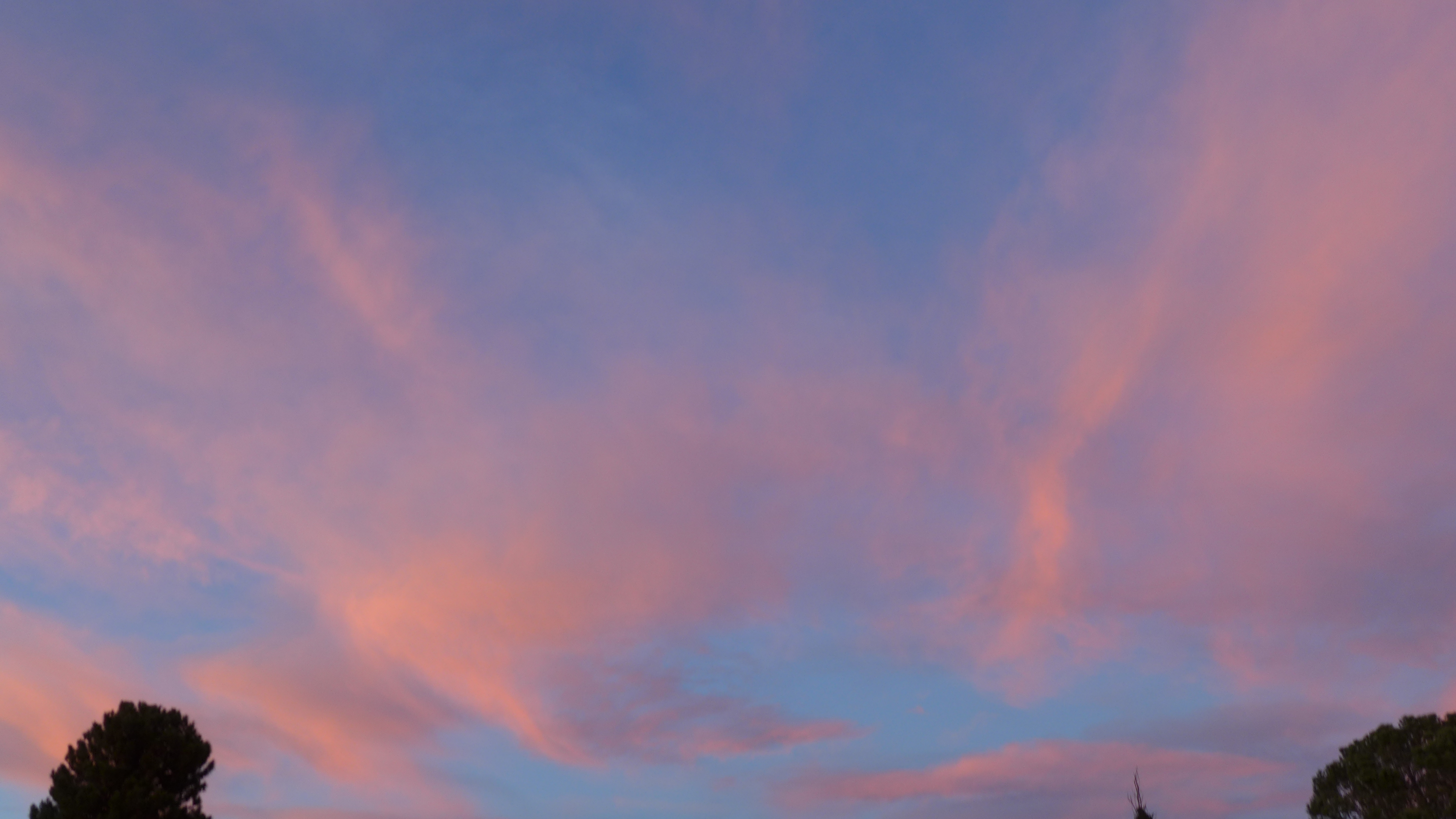
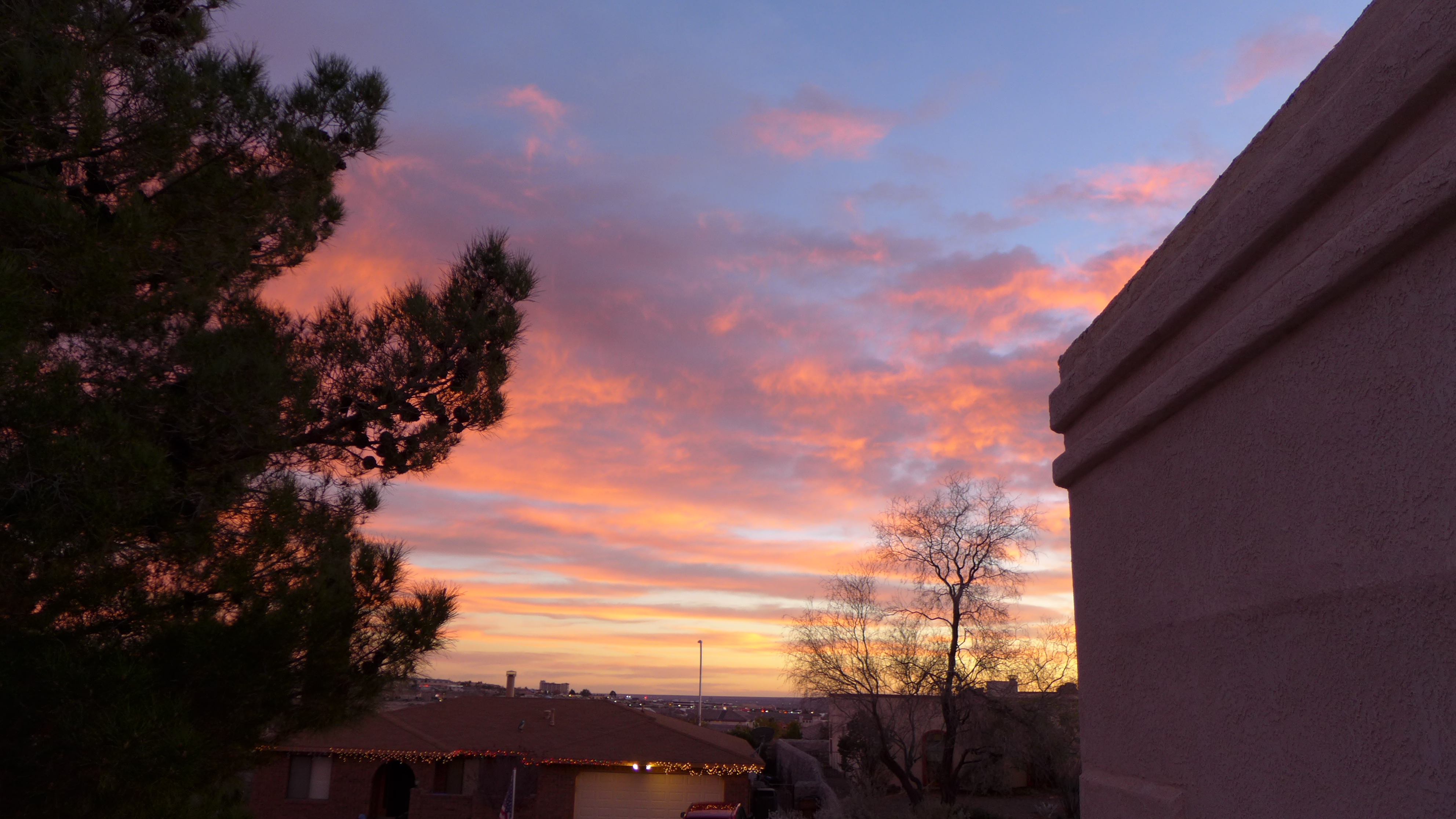
sunset northsunset south


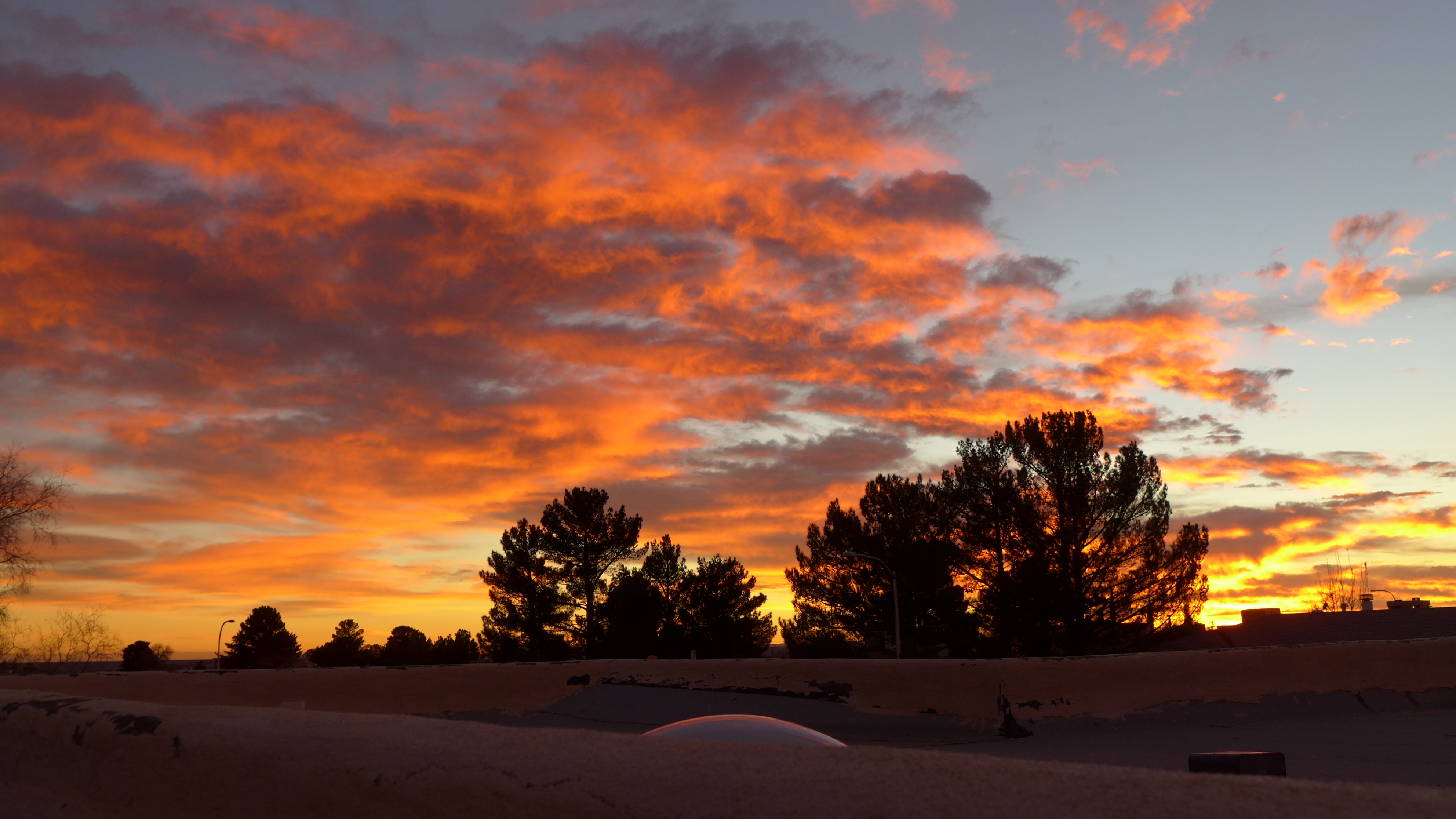
It was as if the sun had decided to make a big splash because it had such a short work day.  Which is utter nonsense, of course.  But it was beautiful, and seemed a good omen for the new season of moving slowly into more light.   Here is the main show, a little bit south of west, seen over our roof.P1000323


Looking at the Sky

Leave a comment

I caught the almost full moon rising this past Friday.  It is a full moon in Gemini with the sun in Sagittarius.  Gemini is an air sign, Sagittarius is fire.  Air relates to ideas and intellect, Fire is energy, action.  This should be a great time for getting things accomplished like communicating, or – as one of my sources says over and over again – learning new internet skills.moon cropped

I have been following the signs, and especially their elements, for a year and a half now.  It didn’t take long to discover that because of the way the elements are assigned, there are only two full moon/sun combinations.  It’s either air and fire or earth and water.  Earth connects to all things physical, water to matters of feeling.  The moon is never full in a water sign, for instance, when the sun is in an air sign.

I’m beginning to find this structure a problem.  Why can’t we have a powerful water and air combination?  Would that mean storms, wind and rain?  Perhaps, but it would also mean that the intellect and feelings would be strong together – in other words, a combination of head and heart.

And why not air and earth?  This could be an appropriate time to apply our heightened thinking skills to the very down-to-earth problems of homelessness and hunger.  My sources suggest that the compassion of an earth/water combination should lead to this.  It hasn’t happened so far.  I guess we’ll have to solve these critical problems without the aid of the stars.

Word Play

2 Comments

I have been learning a lot about tanka from Ribbons, the journal of the Tanka Society of America – too bad the acronym is in such heavy use elsewhere – and I have been experimenting with the form.  Sometimes, I know all I’ve got is a five line poem.  In the following two short pieces, the play of homonyms took over.


My thoughts coast toward
the California coast; others
shore up the Jersey shore.
Is it a fault to lie by omission
about where the fault lies?


My brother wanted
to coast down the mountain,
returning from the coast.
Papa said no, of course,
the road no sled or ski course.

Have fun with words.  You never know what might come of some word play.


Is It Winter Yet?

1 Comment

Of course it isn’t winter yet by the calendar.  But many plants are reacting to recent freezes and changing their colors.

P1000309Cottonwoods in the arroyo are all golden, but haven’t yet dropped their leaves.  The leaves of the buffalo gourd vine, on the other hand, have all frozen, leaving the gourds to show their stuff.  P1000307In my back yard the four-wing saltbush is covered with ochre seed pods. P1000304And the tall grass plant is turning leaf by leaf from green through red to yellow to brown.P1000313There’s an extra glow in the morning sun which I haven’t found a way to catch in the camera.  I haven’t caught it in words either, though I admire it from my desk every morning.

September Revisited II

3 Comments

No pictures this time.  I shared pictures from an afternoon reading I did for my new book soon after it happened in September (see “We Had A Party” posted September 28).  There was also an evening reading, which was not so well suited to photographs.  Instead, I got a poem out of it.

The poem is in a form developed by Allison Joseph. She calls it a sweetelle.  The form is ten lines of fourteen syllables each, with the first, fifth and tenth lines identical.

Introduction

Thank you for this fine occasion to read from my new book
though this is a dark corner and the microphone will not
stay put.  I’m stalling in the hope that others will appear.
Vain hope, false promises; it’s past the time we should begin:
Thank you for this fine occasion to read from my new book.
But it’s not new to me.  More than a year in production
since I signed that contract.  No additions since.  Take a look
at the cover, another’s work.  Inside, it comes to this:
I’d like to introduce you to some friends from former years.
Thank you for this fine occasion to read from my new book.

At first, I thought the name “sweetelle” meant that the subject should be sweet – something I’m not very good at. It has since occurred to me that the name may have been chosen to point out that this is a form with repeated lines which is not to be confused with the “villa(i)nelle.”

I learned about this form through a post which Joseph mistakenly posted on her CRWROPPS list, and then explained. The acronym stands for Creative Writers Opportunities list, which can be found at: https://groups.yahoo.com/neo/groups/CRWROPPS-B. If you are a writer, especially a poet or short fiction writer, you will find this a great resource.

Older Entries Newer Entries