Home

A Winter Walk

2 Comments

It was a hike, really, but a short one.  I had to make a trip down to El Paso and stopped in the Franklin Mountains on the way back for a short trip up a canyon.  It was a trail I had not walked before and I was disappointed at the rockiness of the old jeep road up.  The weather was poor: wind blowing up a lot of dust across the valley below.  In time my irritation subsided in the pleasures and challenge of the moment.

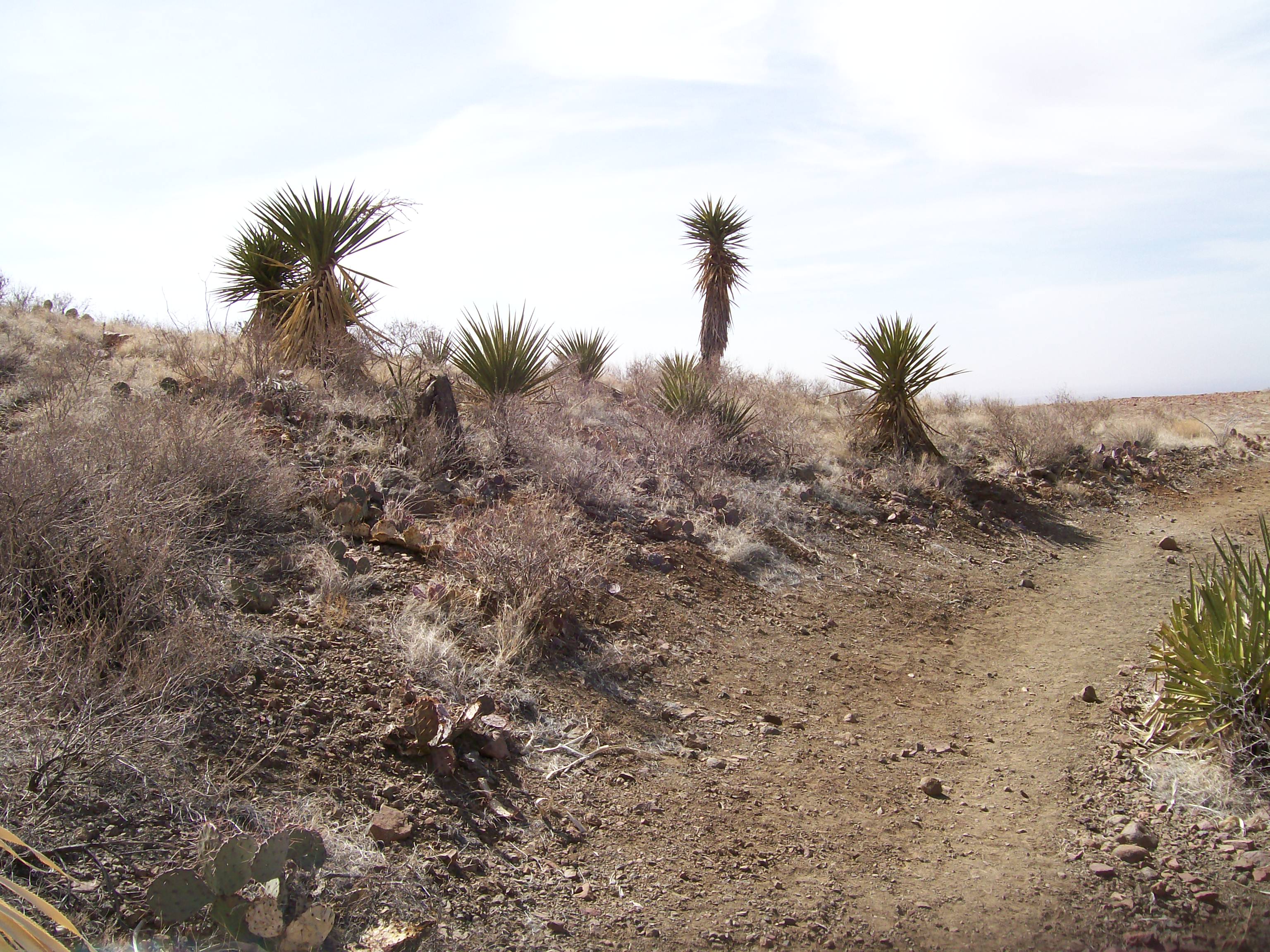
canyonThere was lots of red soil and rock

red rock

And yucca plants sturdy on the slopes.

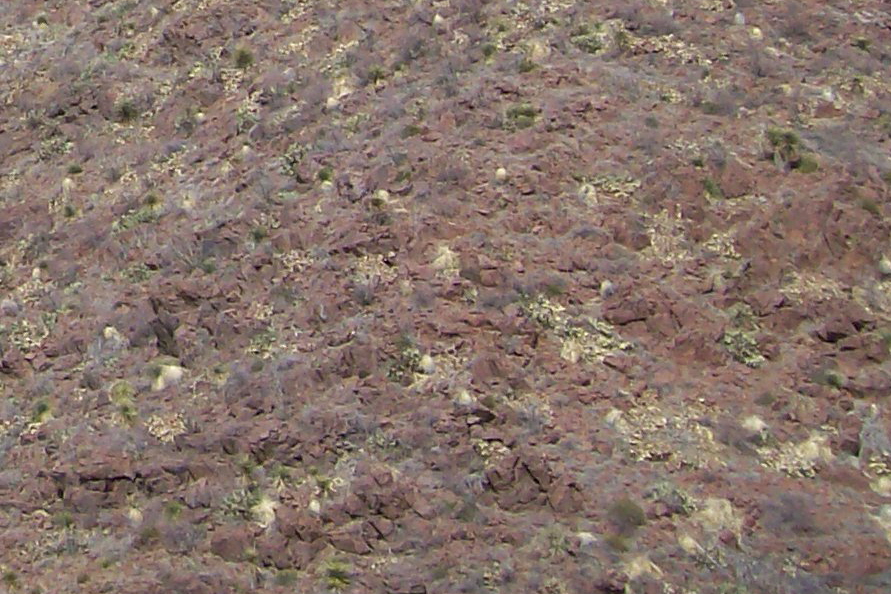
yuccaI love the color of the hillside, but it is hard to capture: the deader stalks provide a background I think of as mauve, a sort of dusty dim purple, for the bright yellow-green of the scattered prickly pear.

carpet lookI can imagine a carpet in those colors, but since I have no place to put one, I admire it across the canyon. I return from an adventure like this thinking I must do this more often.  Spring and its increasing heat will be here soon.  I’ll hope for better light for photographs next time.

A Special Place in New Mexico: Bosque del Apache

6 Comments

This past weekend I made a trip up to the Bosque del Apache to see the cranes.  The Bosque is a national wildlife refuge established twenty-five years ago to provide winter forage for migrating sandhill cranes and snow geese.  The refuge is only about 120 miles north of where I live, not a long distance by New Mexico standards, especially on the Interstate, but I had never been there during the winter season.  There were a fair number of cars taking the loop road and stopping to see the ponds and fields, but I am sure I avoided much larger crowds who will come for the Festival of the Cranes next weekend.

Geese on the pond

The Bosque del Apache takes its name from its use by Apaches during the Spanish era as a camping ground.  Now the area is turned over to the birds.  Fields are planted and ponds are maintained to provide the habitat needed.  (I think this is a great use of my tax money.  When the refuge was first created, the sandhill cranes were in serious decline.  Now there are plenty of them.)

Cranes in the field

I missed the move of the geese from the pond to their roosting areas.  The pond had hundreds of geese in it when I drove into the area.  Cars were lining up along the pond to see the “show.” When I completed the loop road the geese had flown, leaving the water to a few brown ducks.  I had come to see the cranes and I did.   They were moving in small groups from field to field, feasting on the only young green plants for miles around.

Cottonwood by the trailhead

I had intended to hike and stay until dusk to see the cranes fly to their roosting places, but it was cold and windy.  I decided to start for home before dark.  I had been richly rewarded for my time and travel by this first view of the cranes and the unexpected sight of so many geese.

Ghost Ranch, Abiquiu, New Mexico

1 Comment

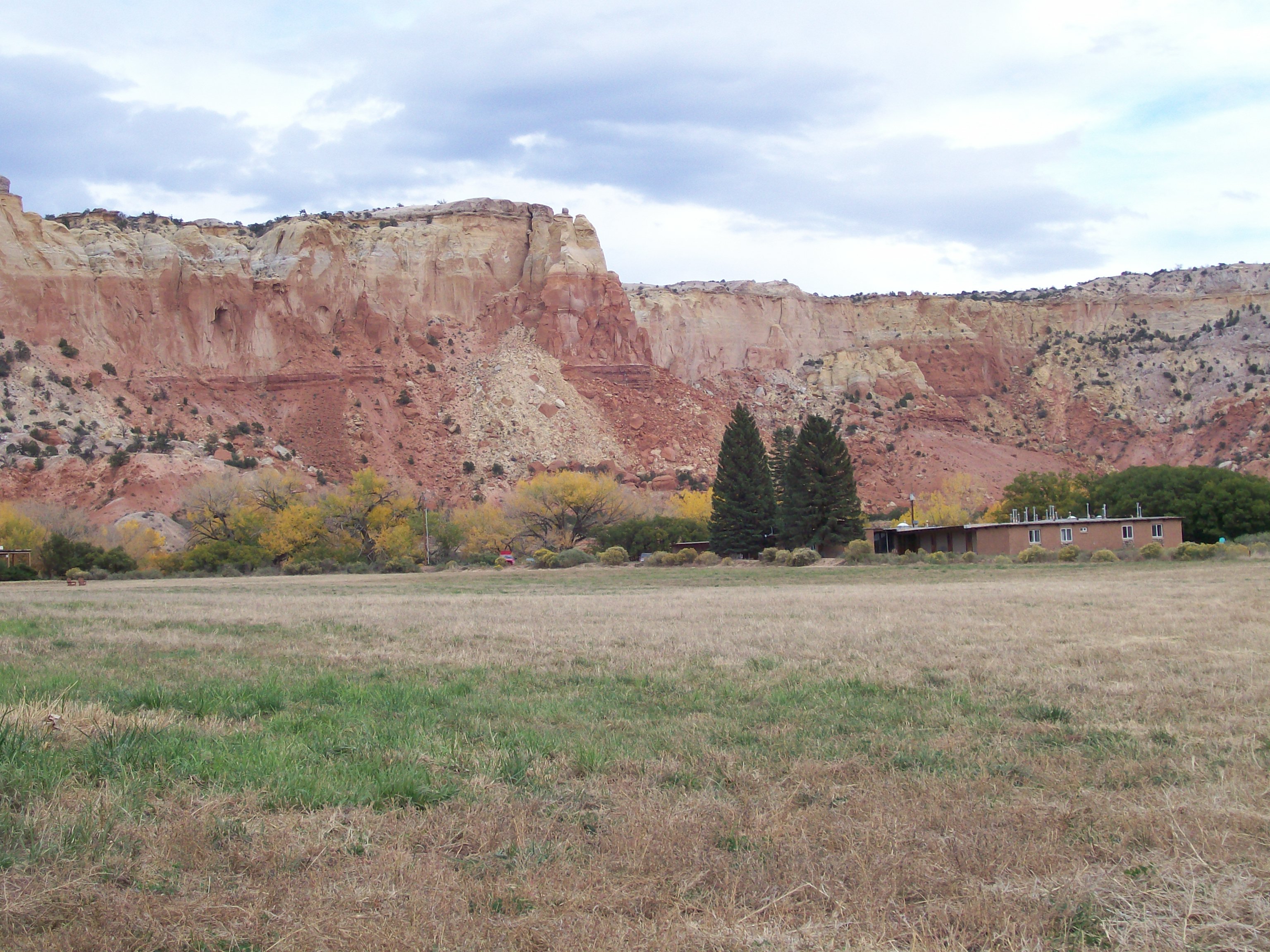
Cliffs at Ghost Ranch

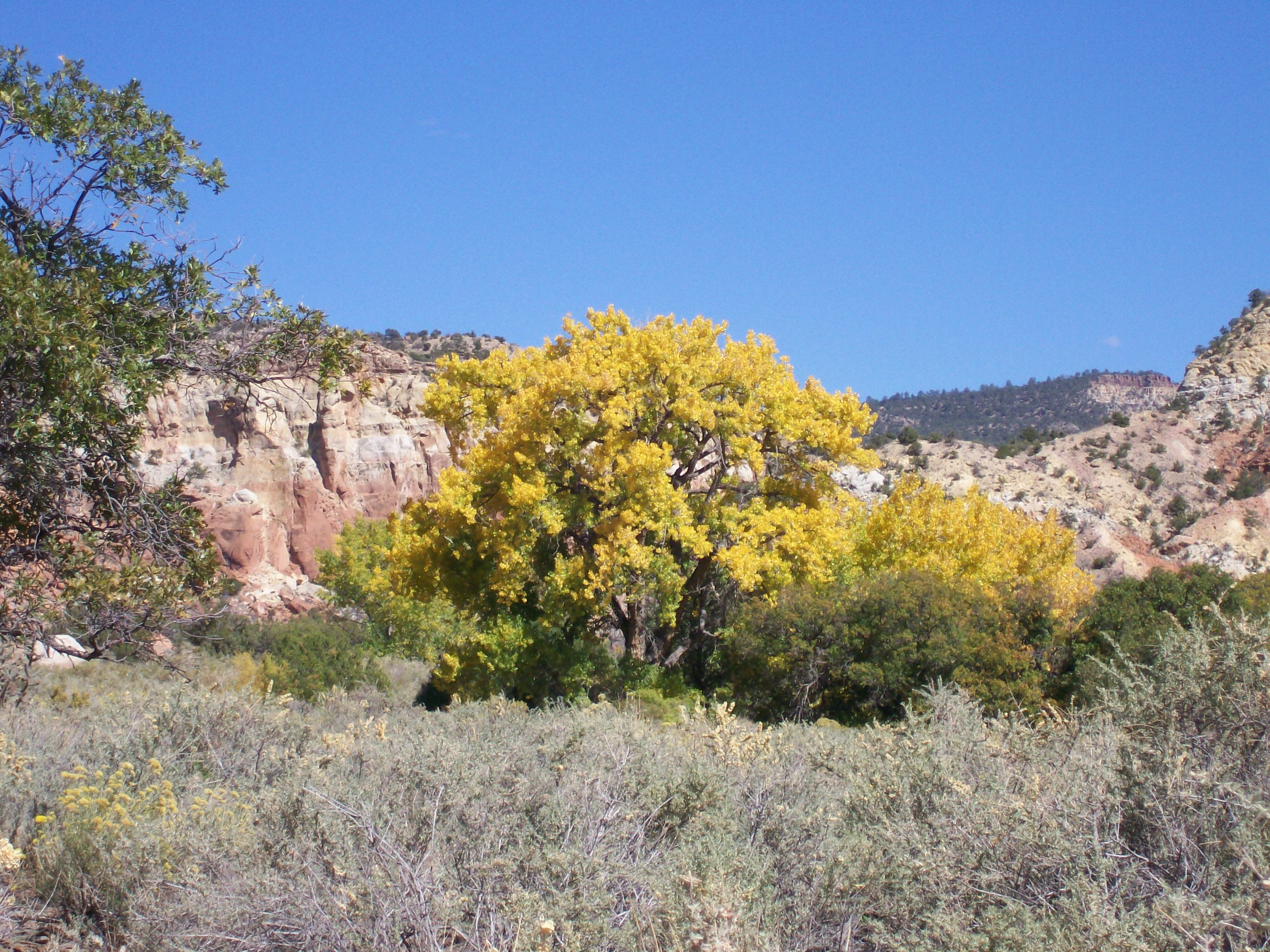
Ghost Ranch is a feast for the eyes, a wonderful place for a photography or painting class.  I was there to write.  All week, I tried to find words to describe the turning cottonwoods, yellow, gold, against the evergreens of pine and juniper.  I failed.  But I came away with many words on other subjects: new material to work with.  More on the people, the place and the class in a future post.

Cottonwoods at Ghost Ranch

Happy Autumn!

3 Comments

Autumn’s just beginning, but I’m thinking of the tree outside my window at my old house: a small red-leaved maple.  Beside it in the front yard was a small green-leaf maple, so in fall we had a two-toned orange and red carpet across the lawn.

Autumn is my favorite season, though I don’t dislike any of them.  It’s the time when my energy rises and all things seem possible.  “Maybe this is the year I reach my full potential,” my heart sings, even as my head labors to track all the events filling the calendar.  So much of our activity rises and falls with the school schedule, though no one in the household has been in school for many a year.  This is the pattern of society, and I think the weather has more to do with it than we may want to believe.Now, instead of the decades-old maple tree, probably planted when the house was built, I look out my window at a small mesquite tree, just six years old, which I planted myself.  It too will turn color later in the season, though its color will be a rather uninspired yellow.  It and I have settled in together.  It is now growing at a steady pace, and so can I.

On the day I began drafting this post, a roadrunner appeared in our back yard.  This pleased me greatly, because I want our yard, small though it is, to be a wildlife haven.  How he came in I have no idea, but he was finding good things to eat.  He wouldn’t pose for the camera, but here he is enjoying the shade of the small mesquite tree.

Visitor

After Desert Rain

2 Comments

My back yard is mostly sand.  At least twice previous owners have tried to grow grass there and given up, leaving the strings which once held sod together.  The ground is a pale yellow color.

Until the summer rains come.  Then all manner of weeds sprout up, providing a cover of green.  It is said that a weed is simply a plant in the wrong place, but I find the situation is more complicated than that.  Some weeds I pull as fast as I can: the lanky grass that goes to seed so quickly, and the pretty, spreading plant called goathead, whose yellow flowers turn into nasty pronged seeds that stick to cloth and hurt bare feet.
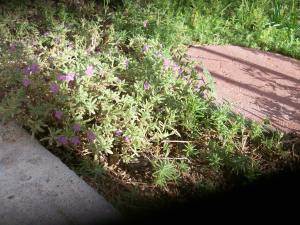
Purple Mat

Other weeds I have reclassified as wildflowers.  One of these is purple mat (Nama hispidum).  When we have a wet winter, which we did not this year, this low plant shows up across the desert where I walk.  In my yard, it likes the shady spots where moisture lasts a little longer.  I had to go out early to get a picture of it in the sun.  And even so, you can hardly make out the purple flowers.

Another native flower I’m fond of is limoncillo ((Pectis angustifolia).

Limoncillo

Its English name, lemonweed, may reflect what most people think of it, but I think it’s lovely, with its thin leaves and yellow flowers.  I usually get a scattering of this.  This year, it has sprouted all around our small pool, as if it had been planted there.  How very nice of it!  I happily pull out all the competing weeds so that it can shine.

In this harsh desert climate I’ve had little luck at the kind of gardening I did in Pennsylvania. Even when I focus on heat-hardy plants, my seedlings fail to take hold and my vegetables die off before producing.  I’m dependent on nature and native plants to fill my yard.  After the poppies of early spring there were “wire lettuce” with its wee pink flowers, and stickweed, currently called “Velcro plant,” whose pale yellow flowers are best appreciated from a distance.  Then things got hot and dry.  After the rains come, purple mat and limoncillo arrive to give me joy.  They are a gift I did nothing to earn.

Newer Entries