Home

Road Tripping

3 Comments

We are on the road again.  Each year we drive across the country from Las Cruces, NM, to Maine and back.  Ten years ago we would have made no reservations and looked for a place to stop as we went.  We’ve minimized the adventure since then.  We’ve chosen one hotel chain which gives us what we want: nice towels, a box, not a pocket pack, of tissues, continental breakfast and internet connection―and every so often we get a free night.  But there are still unexpected experiences.

I was staring out the window of our hotel in Quincy, Massachusetts, when a very long red trailer truck appeared.  I watched as it was maneuvered, with the help of several people around it, into parking along the back edge of the lot.  All I could read from my window were the words “75th Anniversary” at the front and “Meals on Wheels” at the back.  What appeared to be an enormous granite rock was strapped in between them.

75th Anniversary of Meals on Wheels?  This did not seem likely.  I went over to investigate.

The truck is the 72 foot long project of the Idaho Potato Commission, called The Famous Idaho Potato Tour.  It’s the Commission’s 75th anniversary.  The “rock” represents a giant potato: one that would take 10,000 years to grow, were nature capable of doing that.

Famous Idaho Potato Tour Truck

Famous Idaho Potato Tour? I conclude that it is the potato, not the tour that is famous.  But if Idaho potatoes are already famous, why all the publicity?

An Idaho potato in the hand gives pleasure: solid, attractive in its usefulness, it is a good base for a healthy meal.  The Idaho Potato Commission seems to have caught a serious case of the “more is always better” syndrome and gone over the top.  It’s marketing supersized.  I found the Famous Idaho Potato Tour Truck at once charming and disturbing.  Why pretend a potato could grow so long, so large?  Why not demonstrate how real potatoes grow?  That “giant spud” still looks like imitation granite to me.

The four crew members must be having a great time traveling the country, though it’s a mighty long rig to handle.  Wouldn’t it have been enough, and saved a little gas, if it were 60 feet long instead of 72?    In the month since I saw it the truck has moved south into Georgia and Alabama.  Then it will be heading west.  For more information check their website: http://www.bigidahopotato.com.  They may be coming to a parking lot near you.

A Poem for July 4

4 Comments

Parade Float, 2012

For many years we have celebrated July 4 at our extended family’s summer cottage in Maine. After the small town parade in the morning, we go home to prepare our potluck dish and gather with acquaintances in the afternoon for a party.  Seeing people we haven’t seen for a year can be complicated, producing the sensations in this poem:


Hail, Festival Day!

First the parade: old
cars, fire engines,
floats carry costumed
neighbors.  Then
the party: annual
acquaintance makes
conversation hard.
Even the names slip
from these not quite
strangers: is this
the grandmother who
reported two weddings,
or the mother whose
child had cancer?
An interior parade
imprints names,
connections: she’s
Mary’s daughter, he’s
Frank’s houseguest.
Is Joan the artist
or the realtor?
Brain tires with
body: oil of politeness
cannot loosen stiff
ligaments, strained
from standing
so long at attention.

The Giant Lizard of Lounsberry Beach: A Fable

Leave a comment

Tree Lizard on Beach

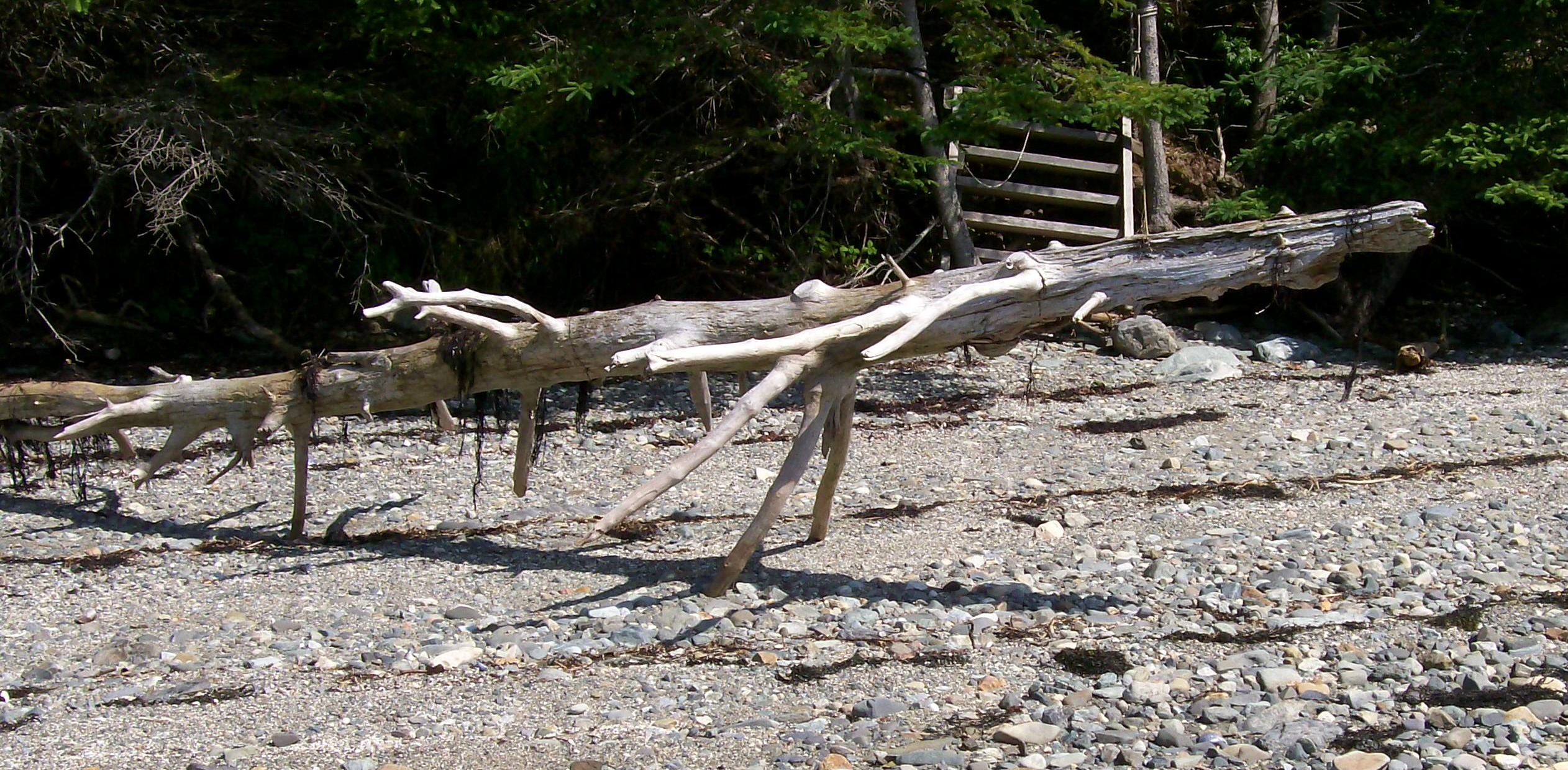
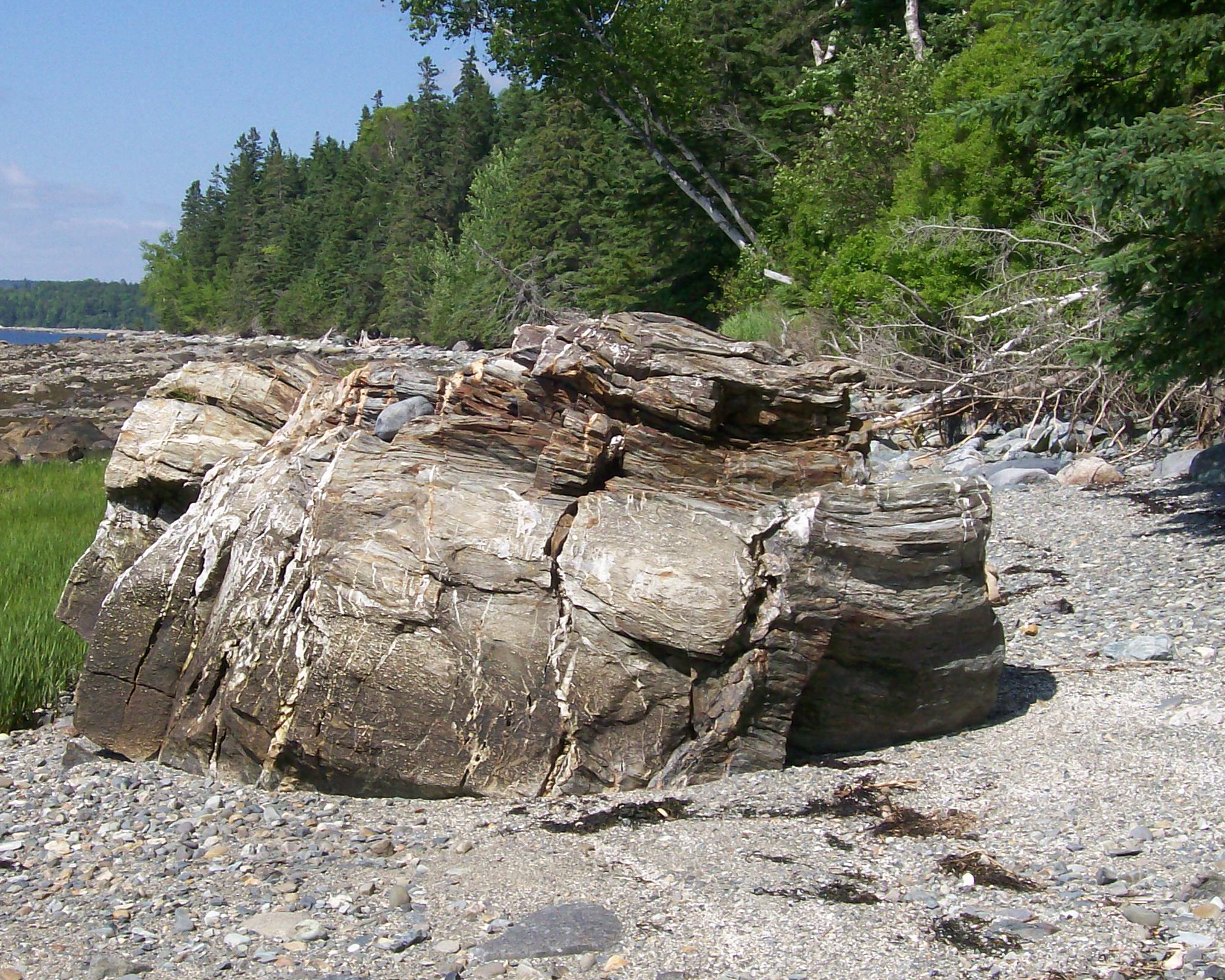
A winter storm in Penobscot Bay had carried the tree lizard far up the beach and left him there.  When the weather calmed, he found himself near stairs and beside a very large rock, the largest in sight.  “Good,” he thought, “he will know.”

“Excuse me,” Lizard said, “ Do those stairs lead somewhere?  To a castle perhaps?”

The rock frowned.  “Castle? No castles around here.”  The rock said no more.  He didn’t care for company, though he was feeling fortunate.  If the lizard had been pushed a few yards closer, his head would be resting on the rock’s shoulder.

“I wonder, then,” Lizard said after a few moments, “What my purpose is.  Who am I here to guard?”

There was a murmur around his feet that grew into snickering, as the small stones chattered to each other.

“Hush!  All of you!” boomed the rock.  “What’s this fuss about?”

There was more murmuring.  “He doesn’t know what he’s here for!” one finally said aloud.

“And you do?” asked the rock, his voice still loud with irritation.

“Yes, we do,” the bold bit of granite said.  “We’re here because God put us here.”

“Hmmph!” was all the rock had to say to that.

“Evidently,” the lizard began, looking down at the stones, “You don’t know the difference between cause and purpose.  I know how I got here; the sea carried me.  My question is, what am I to do now that I am here?”  The stones made no response; the discussion was over their heads.

“I had wished for a castle to guard,” the lizard said.  “I guess that’s not to be.”

The rock knew it was his turn to speak, but he saw no point in developing acquaintance with one who would only be carried away again: if not next winter, in another winter to come.  This intrusion on his beach would be easier to endure, he felt, if conversation was discouraged.  He turned his attention to the water.

At night the lizard bends his branch-forelegs down and rests.  When the high tide comes in, he laps the water.  He was carried by it so long it tastes comforting, like home.  All day he stands, observing sea, sky and the rock-strewn beach, alert for whatever he was put there to do.

The possibility that he is there to inspire a story does not occur to him.

The moral: If you long to be useful, don’t limit your options.

Photos by Ellen Young

Celebrating June

Leave a comment

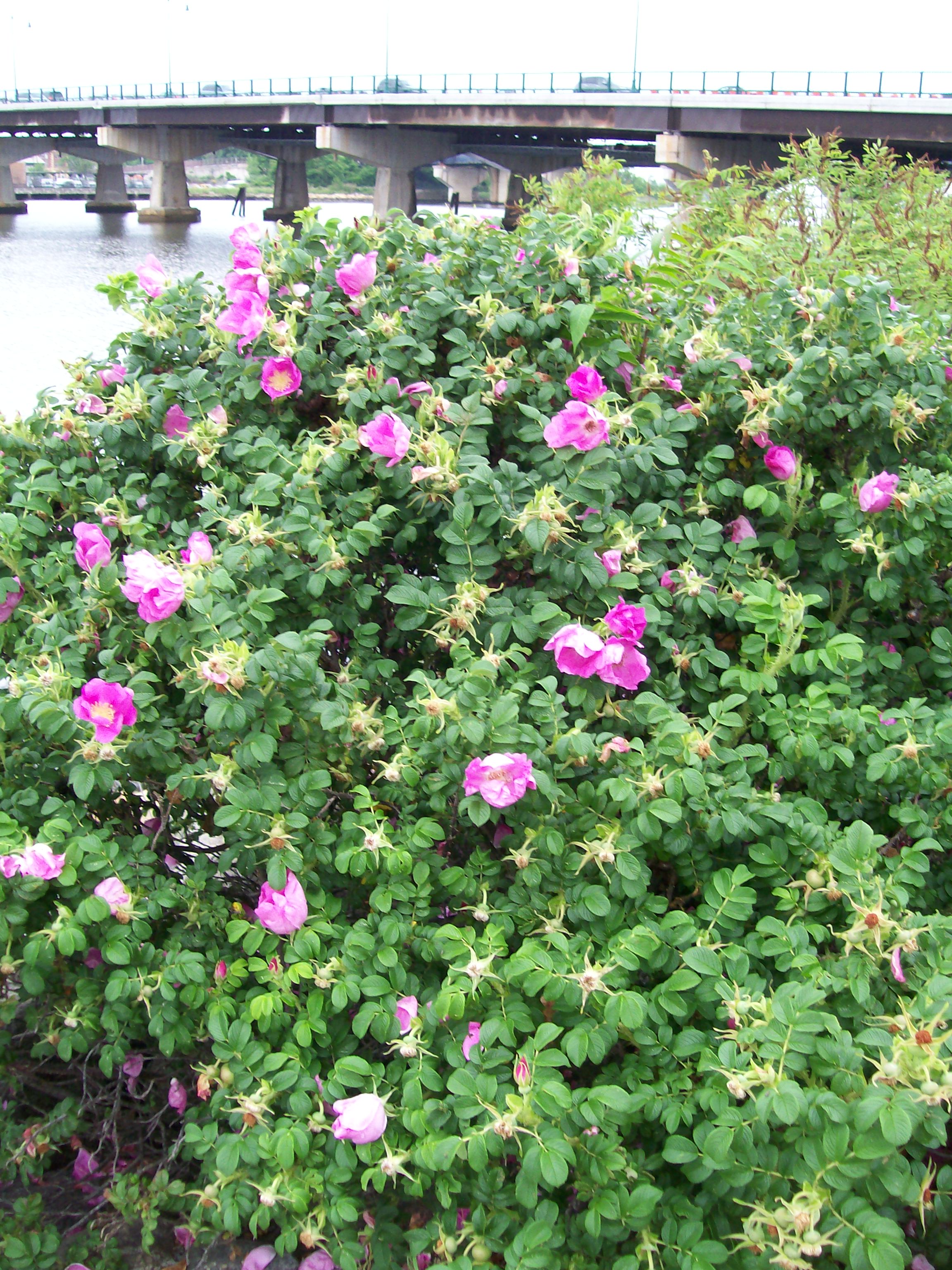
Wild Rose, Neponset River, Quincy, MA

It’s June, and James Russell Lowell’s prelude to The Vision of Sir Launfal comes to mind:

And what is so rare as a day in June?
Then, if ever, come perfect days;
Then heaven tries earth if it be in tune,
And over it softly her warm ear lays:
Whether we look, or whether we listen,
We hear life murmur, or see it glisten;
Every clod feels a stir of might,
An instinct within it that reaches and towers,
And, grasping blindly above it for light,
Climbs to a soul in grass and flowers; . . .

And that is as far as my memorization as a young person went.  I did not know this June as a young person, but I thought I did.  When I came to the clod I pictured the freshly plowed orchard beside my house, ignoring the fact that the plowing happened long before June.  June where I grew up could be hot, uncomfortably so.

This passage celebrates June in New England.  I know that now, because I visit Maine in June.  The fact that the description didn’t fit my experience was no concern to me as a young person.  Without realizing it – until I thought back much later – I put the world of books and words in a separate compartment from the world I lived in.  It did not occur to me that those New England writers which formed so much of my education were trying to convey real experience.  From where I stood, on the west coast, it might as well all be imaginary.

What is your experience in finding the relation between literature and life?

Questions of Scale

Leave a comment

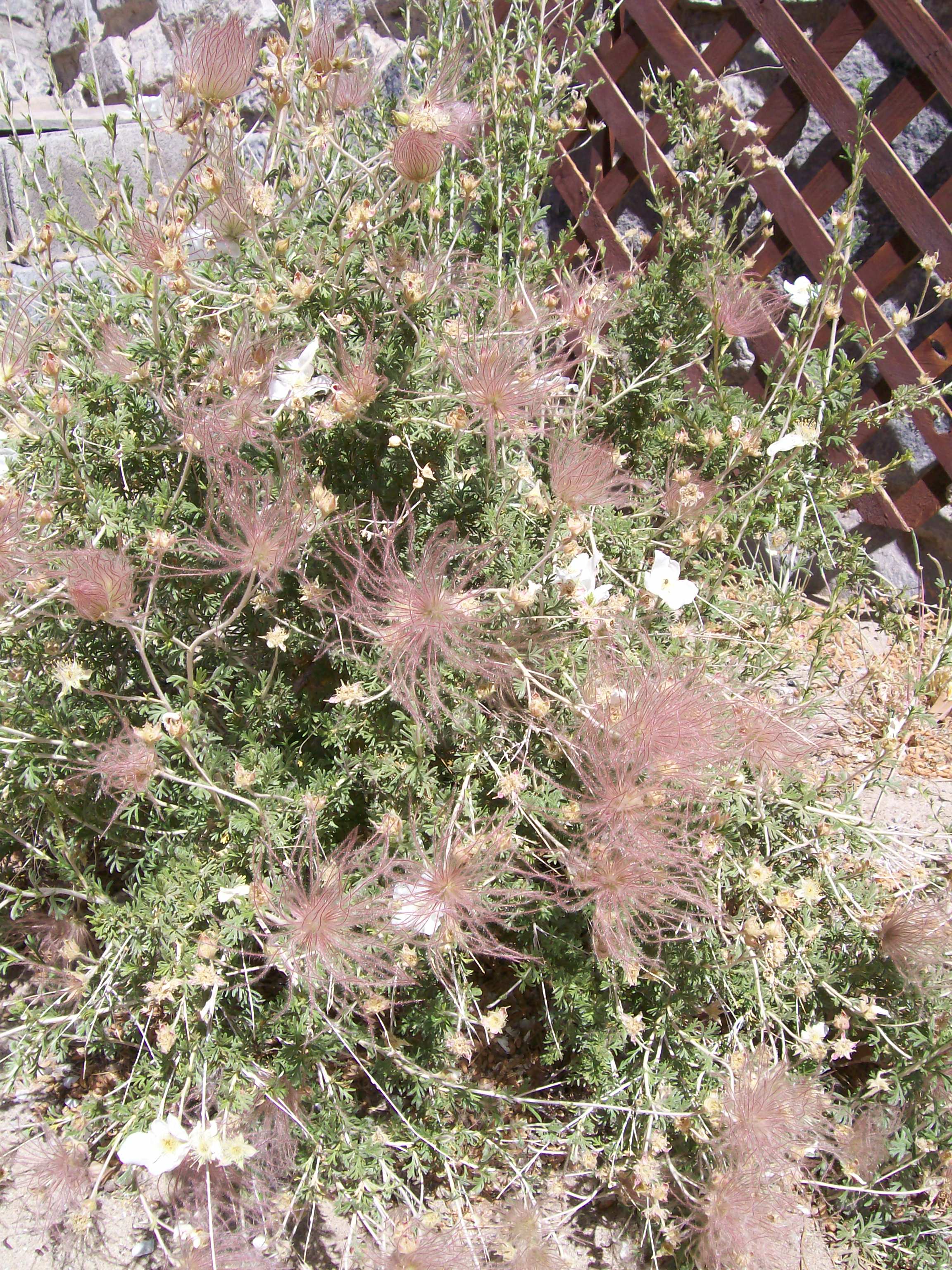
Apache Plume (Fallugia paradoxa, a member of the rose family) has been in bloom in our area recently.  I first learned about Apache Plume in a nature guide at Dripping Springs, a BLM recreation area in the Organ Mountains.  Nothing was in bloom at the time; I could not guess which plant beside the trail the guide referred to.

Reading that the plant was named for the seed plumes, which look like Apache war bonnets, I pictured something grand.  It was at first a disappointment to discover that the five-petalled white flowers are about 1 ½ inches across.  The seed heads are pink plumes of about the same size.  The pink soon turns brown and the seeds are blown away by the wind.  The plant is beautiful in bloom, in the seed stage or, as here, at half and half.  The season is short: for most of the year all one sees are the small clustered leaves on an often straggly plant.

Who first saw a war bonnet in this small, delicate shape?  Was it someone for whom raids by Native tribes were a real and present danger?  Was it someone who recalled such raids as recent and treasured history?

To see the large in the small requires a certain kind of creativity, a talent for comparison across difference.  To see the small in the large may be an even rarer gift―or perhaps it simply is not mine.  The ability to see similarities in things of different scale is the way of metaphor, an important tool for poets and others who seek to see things in fresh ways.

May Days

2 Comments

I have a theory about Cinco de Mayo.  I believe its popularity is partly due to its proximity to May 1, the spring cross-quarter day.

Cross quarter days mark the half-way points between solstices and equinoxes, which are also the events which mark our sun-based seasons: winter begins about December 21, on the winter solstice, spring on the equinox in March, and so on.  I’ve made a clumsy sketch of this.

The cross-quarter days, October 31, February 2, May 1 and August 1, midpoints in the sun’s move from equal day/night to longest or shortest day, to equal day/night again, have been celebrated since ancient times.  For some these were the beginnings of seasons, for others a time to move cattle or start crops, for still others a time of purification.

Given the contemporary enthusiasm for Halloween, I’m surprised that I didn’t make the connection for Cinco de Mayo sooner.  Halloween is a multiply corrupted holiday, having begun as Samhain in its Celtic manifestation, and been converted to “All Hallows Eve” by the Christian church, which cannily placed its festivals on traditional dates whenever possible.  Current celebrations ignore both the connection to All Saints Day and the purification and preparation for winter qualities of earlier usage.

The original May Day (Beltane to current Wiccans) was the beginning of summer.  People celebrated fertility with flowers and Maypole, and for herders it included moving herds to their summer pasture.

While Christians have often fretted over confusion with ancient practices, freethinkers should see no problem with celebrating the cycle of the year.  Though we may have no crops to plant or cattle to move, we are still made of the stuff of earth and should be aware of its turning.

But if you missed May 1, enjoy Cinco de Mayo, a festival built on a small battle victory, which happened to fall at a time when our bodies’ link to the earth tells us it’s a time to celebrate.

Ascent Goes Public

Leave a comment

Let this bold blooming yucca in my neighbor’s yard stand for the achievement of the five southwestern women poets as we presented our work in our book Ascent to the public today at our local library.

Some of us have been writing for decades, others only recently, but for all of us this is work of our maturity.  Three years of critiquing each others’ work had not blurred the difference in the way we see our world.

I shared this observation on the environment where I now live:

A jackrabbit feeds on
freeze-dried prickly pear,
bolts a my approach,
happy in his speed, doing
what he’s made for.

Susan Gomez describes a dust storm in “Fury”:

Our small car listed
as we navigated the wind
with its airborne sediment. . . .

Air and silt, violent, howled into the night.

Teral Katahara closely observes another part of our landscape:

I stop to see Sandia and pungent Jalapeno
chile plants
sitting in the neighbor’s field. . . . .

Sun shines through
translucent red skins
splotched with warm gold.

The other poets chose to share pieces about their past.  Lucille Tully recalls Chicago in “State Street 1957”:

Now in the quiet of the late night
I walk alone except for the one

staggering drunk who does his dance
while I smile, do mine, to stay clear of his

Still, as strange, silent companions
we share this concrete way.

Polly Evans, eldest and in many ways wisest of the group, encompasses a lifetime in “Hide and Seek,” beginning with basement and closet. Then

The apple tree was easy . . .
I hid in the foliage.
The big dog knew I was there;
I watched the cats,
and the kids coming home.

After a stanza about hiding in early marriage, the poem concludes:

The night you died
there was no place to hide.

Ascent is a truly self-published book, available only from the authors.  See the Books page and use the Contact page for more information.

Spring!

Leave a comment

My “thousand words” on early spring in southern New Mexico.  A corner of my back yard.

Newer Entries