Home

Sin Fronteras Journal Accepting Submissions for Issue #18

1 Comment

Sin Fronteras/Writers Without Borders Journal now has its own website.  The Journal is now accepting submissions for next spring’s issue, #18.  The details can be found at: http://sinfronterasjournal.com/submissions/

Sin Fronteras Journal is published in Las Cruces, New Mexico, forty miles from the border and very much within a border mentality.  While we are interested in featuring border writers and writing about the border, we are not limited to that concept.  Send some of your best work according to the instructions at the site listed above.

Yes, we are still asking for snail mail submissions.  With seventeen years of tradition behind us we are moving into the twenty-first century one step at a time.


Recommendation: David Chorlton’s “The Porous Desert”

Leave a comment

When I learned that David Chorlton had written a book of poems called “The Porous Desert” I knew that was a book I wanted to read, because I have been fascinated by and writing about the desert since moving to Las Cruces eight years ago.  The book did not disappoint.

The book is not just about the desert but about the desert in drought, our current condition.  His desert is not quite like the one here because they have significant winter rains, which we do not.  A number of his poems are named by dates in February, a month when those in Arizona expect some rain.  Here is one of the more complex poems, titled “February 9th”:

We’re logging on to tomorrow, divining
our way through hours
as they drip from a rusty faucet.
We type in the address: http://www.water.com

but it comes up dry; so we try a search
for rain.  The first result
is a tease: On February 6, 1896, 3.86
inches of rain fell in Philadelphia,
setting a maximum daily record.
Tonight

there will be a meeting to discuss
the heat island in our urban region
which spreads further and digs
deeper by the day, down to the ruins
of a past civilization: clay pots

still bearing the potter’s fingerprints,
and the tracks her sandals
left behind when she looked into the future,
saw us, and walked the other way.

The book contains 49 poems on 54 pages; I don’t know whether to call it a long chapbook or a short book.  One that is less specifically about the drought, though it is clearly about a dry place, is “Condor”:

The condor stares down into time;
the work of years
with a knife edge, of seasons
that sand away and polish
surfaces then grind them into wizened planes
stacked one above another
until the clifs hang on a talon.
The daily passage of shadows

from rim to canyon rim
and the final drop
of light disappearing from the highest rock
are nothing but sighs
to a bird suspended from the sun

while the minutes drip
from its wings, evaporating
before they can reach the river

moving at the pace of history,
water burning deep
into pages of stone.

Particularly felicitous phrasing or strong images turn up almost unexpectedly.  “Highway Religion” for example begins:

The desert keeps its good looks
for a while west of Phoenix
then it turns honest.

Here’s the beginning of “December”:

An empty nest floats through winter
in the fingers of a tree
scratched against a mountain
at rest.

Here’s one of “Three Lies About Moths”

In previous lives
moths were books that stood unread
on library shelves.  When the lights went out
they eased themselves free of confinement
and nobody knew in the morning
what mysterious force
opened exactly the pages
whose text described the moon.

It fits Chorlton’s overall matter-of-fact approach to call these “Lies” rather than “Myths.”

Two poems specifically refer to the work of writers.  One, called “Proofreading” begins:
This is the detail work
of flossing between the letters.

The second, called “Writing in the Desert” I give in its entirety:

Once you have entered the desert
a lock behind you clicks.  A new vocabulary
floods your tongue and leaves you struggling
to pronounce the words.  After the first year
you learn that silence is the official language
here.  The longer you stay
the shorter the book you came to write becomes
until the manuscript fits on the wings
of a moth.  Each dusk, a lifetime’s work
draws closer to the flame.

I feel that way sometimes too.  It’s a good thing this is not literally true; if it were this book, “The Porous Desert” would not have been published.  I recommend it.

Marks of Spring

1 Comment

Two signs that we are really into spring have appeared in my yard this week. primrose.1

One is the Mexican Primrose.  I planted this early in my gardening efforts and thought it had died, so I planted a chamisa bush in the “empty” space.  The Primrose evidently appreciated the cover and came back to life.  It blooms in spring and then is covered over by the chamisa.  In late summer or fall, thin tendrils push through the bush to produce a few more of the lovely pink flowers.  I don’t dare transplant it.  It likes its present location.

100_0787

100_0788

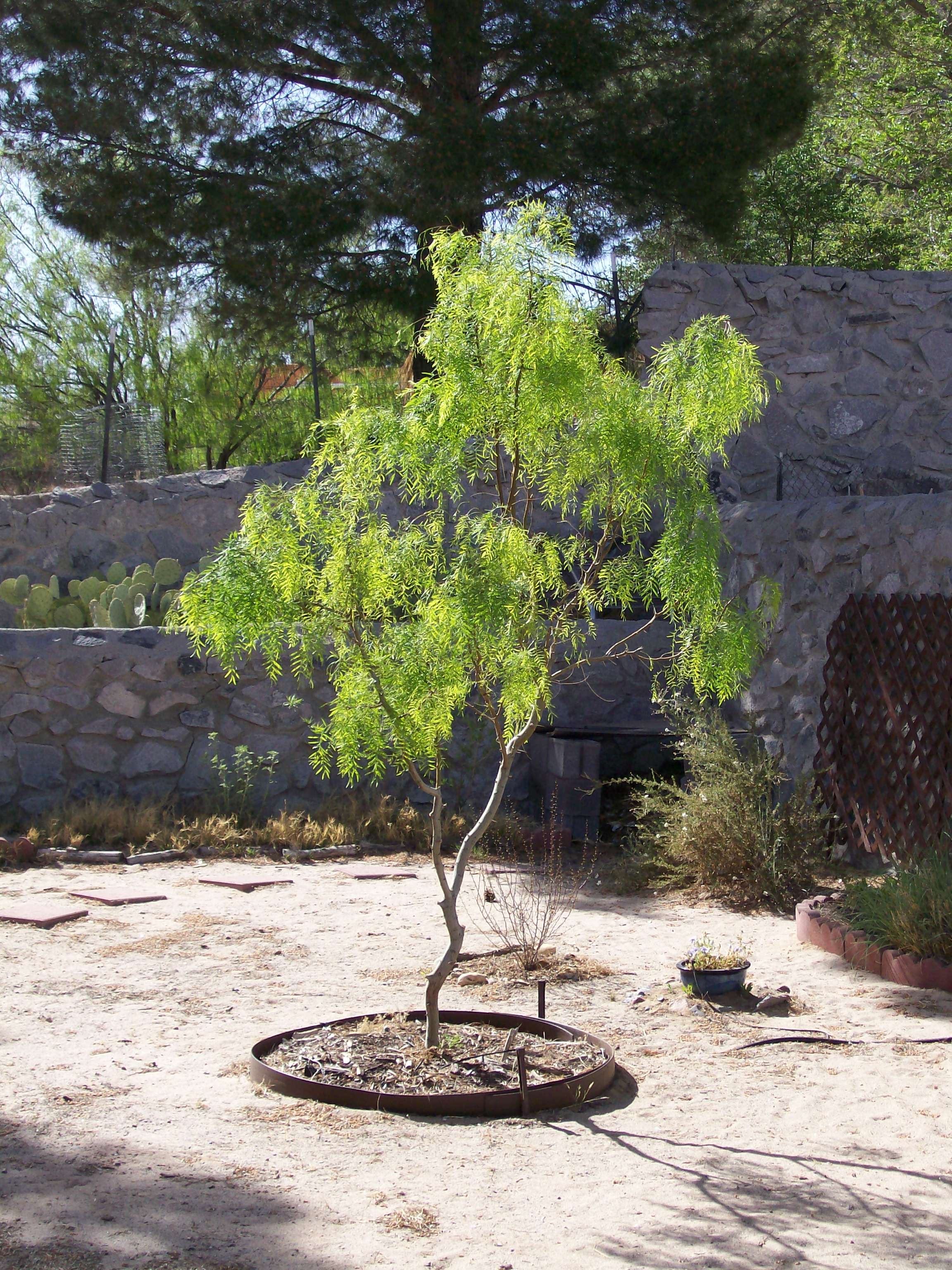
The second sign of spring is the leafing out of the mesquite tree.  I planted this tree as a wee thing out of a seven inch pot about six years ago.  I worried for two years whether it would ever tree; all it took was patience.  I have been told by more experienced gardeners that the mesquite is the best marker of spring.  Unlike the decorative fruit trees and some others, when the mesquite begins to leaf, one can be confident that the danger of serious frost is past.

What have these signs of spring to do with either freethought or metaphor?  Both freethinkers and poets are aware, though in different ways, that humans are connected to the rest of nature.  The wisdom of these plants appeals to both sides of my mind.

Visit to Portland

2 Comments

I had three things in mind for my visit to Portland, Oregon, last weekend.  All came out well.

The first was a visit with my mother’s cousin Del, whom I had not seen in over ten years.  She is living with her grandsons Dan and David, who, like so many in their thirties and even their forties these days, could not afford to buy a house without her help.  We had great conversation and good food together.

The second thing and the main excuse for making the trip was a meeting of the American Society of Church History.  Years ago, as a graduate student, I was giving papers at meetings like this one.  Now I listened to current students as well as older scholars.  The varied topics included the warlike language of new churches during the second world war, and the changes in sacred spaces at various times in religious history.  Just what makes a space sacred is always a good topic for debate.

My third activity was sightseeing, which meant a visit to the one place I know is an important tourist destination in Portland: Powell’s Book Store.  It did not disappoint:  a huge establishment with a nice café, it was quite busy on Friday morning.  They have two long sets of shelves of poetry books, much more than any other bookstore I’ve been in, and were selling them at 15% off in honor of Poetry Month.  I came home with four more books to add to the pile of books I had ordered from them online back in January.  Having the books in one’s hand makes it harder to resist.  And, yes, I bought the tee-shirt.

Powells Logo

Powells Logo

Outside it was spring; the rain was washing down blossoms from the tree.  Coming from the desert I enjoyed the damp air and took several walks.  I’m not sure how long I would appreciate the gray skies, but for a weekend it was wonderful.

Hike to Dripping Springs

4 Comments

The “blogosphere” is a strange world of unlikely connections.  One blogger who found my website is Russel Ray.  I enjoy his photos of San Diego so much that I’ve added him to my blogroll, the links in the right hand column of this page.  You might like his work as well, especially if you have any connection to San Diego.

I’m not as accomplished a photographer, but I’ve been practicing, so here are a few from a hike I took in the mountains last week.  It has been too dry to produce many wildflowers this spring, but there are other things to see.  I hiked up to Dripping Springs in the Organ Mountains, a three mile round trip to several old ruins.  Halfway up are a stunning pair of alligator juniper trees.juniprs

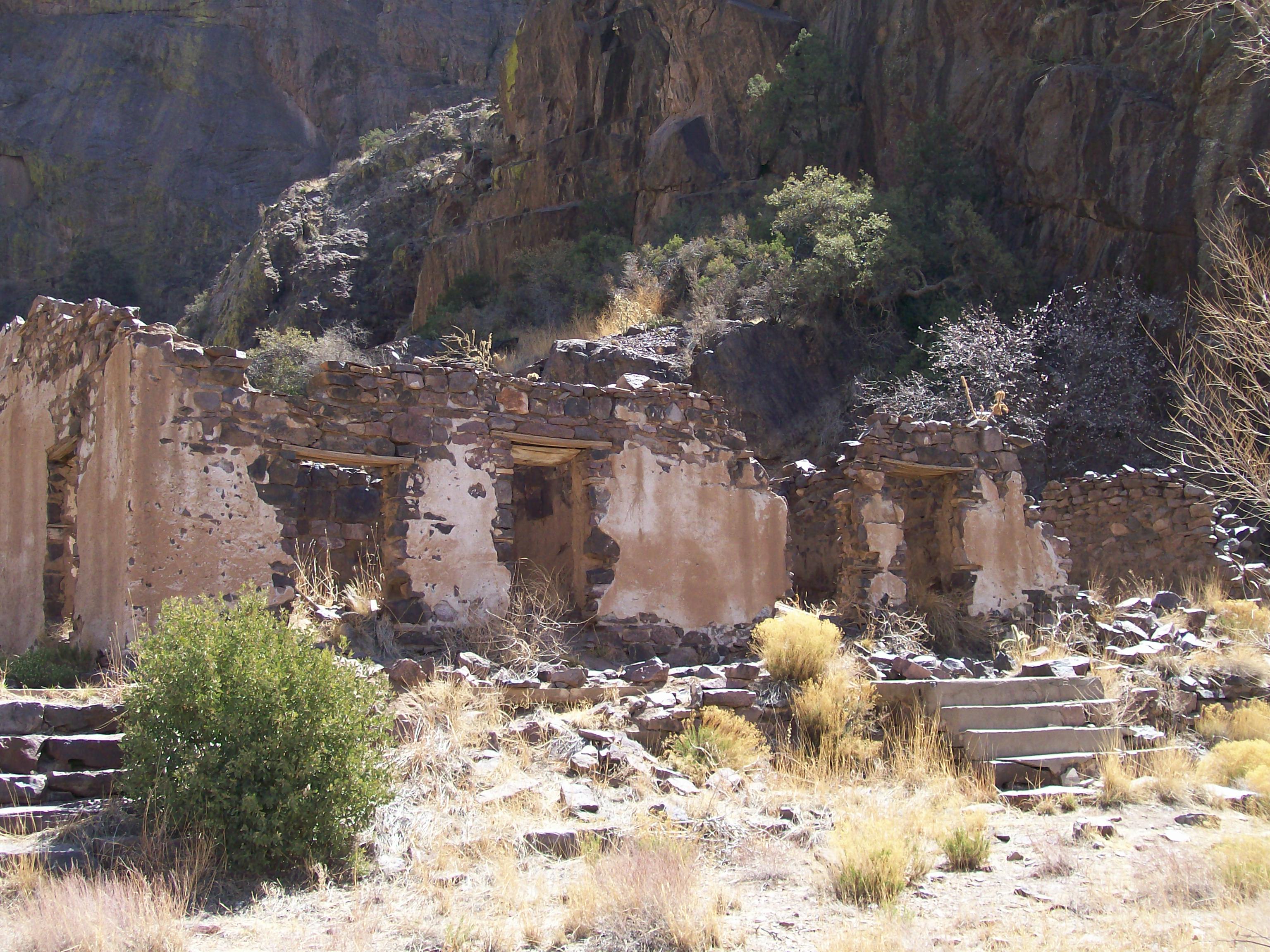
One of the ruins is Nathan Boyd’s sanatorium, built in 1917 for patients with tuberculosis.  That disease brought many “anglos” to New Mexico in the late nineteenth and early twentieth century.Boyd's sanatarium

A more substantial ruin is Van Patten’s Mountain Camp, actually a rather nice hotel resort in its prime, built in the 1870’s.  It once had stairs up to a nice entrance.Van Patten front

On the way back down the mountain one can see, though it doesn’t photograph very well, the town of Las Cruces in the Rio Grande River valley.view of Las Cruces

It had been about six years since I made this hike.  The ruins are not much changed in that time.  Two other hikes at Dripping Springs can take you to a cave which once housed a hermit, before Van Patten’s time, or to a waterfall – when there is water in it.  I left those for another day.

Trust?

3 Comments

Alamogordo, New Mexico, has gotten itself in the news by putting the motto, “In God We Trust” on its city hall.  The mayor has been shown on television saying, “It was affirmed as a national motto by Congress in 2011,” as if that standing was the only reason the city leaders chose to use it.

The atheists are offended, as of course they should be.  The posting of this motto in a public place implies that if you don’t trust in God (some God, any God) you are not one of the “we”―the “we” who are running the town, the “we” who “belong” in it.

Christians should also be offended.  Posting this motto in a City Hall (in spite of its traditional use in American society) cheapens the idea of trust in God.  Those who actually put their trust in God are likely to be found on the fringes: to be poor, whether voluntarily or involuntarily, or to be busy feeding the poor or working for environmental justice.  Or perhaps they are taking a big risk for some hope for themselves or their community.

People who are trusting in God are not trusting in politics, or a bank account.  Most people who succeed in those terms are like the rich young man in the Gospels: it is very hard to let go of dependence on what one has and turn one’s trust to God.  I know my strongest lessons in trust (call it God, or spirit, karma or the universe) have come when other things weren’t working out.  And then, somehow, they did, though often not as I expected.

Clarence Darrow, Friend and Colleague of J. E. Roberts

Leave a comment

Darrow0001 Clarence Darrow was a few years younger than Roberts, and like him was gradually making a name for himself in the nationwide freethought community represented at the American Secular Union conference in Cincinnati in 1900.  Darrow was not yet the widely known figure that the Leopold and Loeb case and the Scopes Trial would later make him.  This event in 1900 was apparently the first time these two men came into personal contact.

Born in Kinsman, Ohio, in 1857, Darrow had a different background from the majority of freethinkers: he was born into it.  His father had trained to be a Unitarian minister, but lost his faith. Darrow looked up to his father as “the village infidel” and sought to emulate his moral commitment and intellectual courage. Darrow studied at AlleghenyCollege in Pennsylvania and at the University of Michigan, but earned no degrees. He became a lawyer through apprenticeship in a law office in Youngstown,   Ohio, passing the examination in 1878, the same year Roberts completed his education for the ministry.

Darrow married in 1880. After a few years in smaller towns, the couple moved to Chicago in 1887. There Darrow soon got involved in local and then wider politics. He worked closely with John P. Altgeld, helping to elect him governor of Illinois in 1892. In addition to giving political speeches as a member of the Democratic Party, Darrow also gave popular lectures.

Darrow’s fame spread beyond Illinois with his defense of Eugene Debs following the Pullman Strike of 1894. In 1896, he hoped to be elected representative from Illinois’s 3rd District. He spent more time campaigning for the top of the ticket William Jennings Bryan and for Governor Altgeld’s reelection than for himself; all three lost. In the process, Darrow developed a long-lasting dislike of Bryan.

Clarence Darrow was a restless man, not at all a homebody. His work and political activity took him away from home a lot, and his wife Jessie’s disappointment pushed him further away. After several years of this, he asked her to divorce him. No fault divorce was unheard of in this era. Jessie could have found plenty of faults with Clarence. Instead, she graciously allowed him to divorce her, though charges had to be invented, for the sake of his career. The divorce was filed in 1897.

Darrow would marry again in a few years, but when he and Roberts shared the podium in Cincinnati in 1900, he was living as a bachelor. According to several reports, he tended to look rather scruffy and ill-dressed. If Roberts’s appearance lived up to the photographs available, they would have made a striking contrast. In addition to questions of dress, Darrow’s square face contrasted with Roberts’s narrow one. Both men would have their ups and downs in the years to come. Although Darrow was only four years younger than Roberts, his fame beyond Illinois would not peak until the 1920s, with the Leopold-Loeb Trial and the Scopes Trial. Roberts, in contrast, though he did not know it, was close to his peak of popularity, which would come in 1902. This may have been partly because Roberts’s style of speaking retained more of the nineteenth century than that of Darrow. Location and contacts were also factors in the difference.

The two men shared an admiration for Ingersoll, but they developed quite different philosophies. While Roberts followed Ingersoll in style and substance, often quoting him, Darrow admired Ingersoll for his success in broadening awareness of freethinking, but he took his own views from other sources. In spite of this difference, Roberts and Darrow maintained a long friendship. Darrow was frequently available to speak at Roberts’s podium, and Roberts usually made use of Darrow’s presence to raise a little extra money. They shared a love of civil argument, and the pleasure of speaking before an audience.

This post is taken from the biography, John Emerson Roberts: Kansas City’s “Up-to-date”Freethought Preacher.  There’s more information and a link on the Books page.

Dr. Roberts Reaches a Wider Audience: From the Biography

Leave a comment

94933_CoverFrontIn November 1900, Roberts was one of several featured speakers at the Twenty-fourth Annual Congress of the American Secular Union and Freethought Federation held in Cincinnati, Ohio. This group, supported by The Truth Seeker, and by Ingersoll, who regularly spoke at its meetings during his life, was a coalition of local societies and interested persons. It supported secular interests such as keeping World’s Fairs open on Sundays. . . .

Roberts chose for his topic “This Natural World of Ours.”  As reported the following month in The Truth Seeker, this speech shows that Roberts is still as reverent as any minister. He has transferred his reverence to nature, the “sublime” discoveries of astronomy, and the gradual revelation of the universe as an “ordered whole.” As he has done before, Roberts faults Christianity for condemning the world as evil. If God lost the world to the devil, he argues, this makes God the creator a failure. He speaks harshly of medieval piety:

Within the cloister, the sanctuary and the cell, with bleeding knees on floors of stone, crouched and cowed the saints in terror. With aching bones, exhausted bodies, tortured nerves and disordered brains, they were visited by visions of horror. Those hideous dreams were called revelations from God, and have come down to us as theology.

The true secularists among the audience would have enjoyed this immensely. It is not clear whether all would have agreed with where Roberts goes next. He makes a general argument that the world is divine. He sees only two possibilities: either the world was created, in which case it must reflect its creator and that creator’s divinity, or it was not. If it was not created, then the natural world “is eternal, self-existent, intelligent and self-sufficient. Can God be more than that?” Either way, he asserts, the world is divine. The Christian theologians, he claims, “turned into a cell” and refused to see the light in which this divinity should be obvious.

After offering the lessons of astronomy as evidence that the world is wonderful and not evil, Roberts goes on to personify the natural world as mother:

The faithful world pays the strictest and most minute attention to the least and humblest thing, and treats it with the same dignity that she does the largest and greatest things, the worm, the bird, is as much provided for in the intelligent plan of nature as is any rational being . . . Moreover the laws of nature are moral. They exist in the interest of the health and well-being of man.

He affirms that the origin of life is unknown, adding, “It may be that the vital forces were somehow in the earth; we can only guess, but we do know that being here the great mother-world nourishes, cherishes and sustains all.”

Having praised the world that is, Roberts turns to the question of the world to come. We can have no knowledge of this, he says. Why, then, have Christians assumed it would be perfect? “Can it be that the dream of the beautiful world beyond was the gambler’s dream of something for nothing, or the visionary’s dream of sudden wealth?” A world that was not earned would be immoral. Rather, this is the world we have, and moral action will make it right:

There is an eternal law of exactness and compensation whereby the great world gives back to every one in equal measure and undiminished what each one gives to the world. If we knew this world and kept its laws we should find that sickness and disease, deformity, weakness of will, and poverty were unnecessary, and we should look upon them as disgraceful just as we look upon crime. If we knew this world and kept faith with it we should make our heaven here and ask for none here or anywhere that we did not make.

Roberts was paid $25 for giving this speech. Another speaker at the Cincinnati gathering was Clarence Darrow, who also received payment of $25.

More on Clarence Darrow to come.  All of the above is from the biography, John Emerson Roberts: Kansas City’s “Up-to-date” Freethought Preacher. For more information and a link, go to the Books page.

Happy Equinox!

2 Comments

It’s the midpoint on the sun’s journey from south to north.  I know it is really the earth’s tilt that causes this apparent journey, but it is hard to think in those terms.  We humans have always seen it as a shift in the sun, not in the ground we stand on.  It’s the first day of spring, and in the garden, the plants are already ahead of me.

100_0768

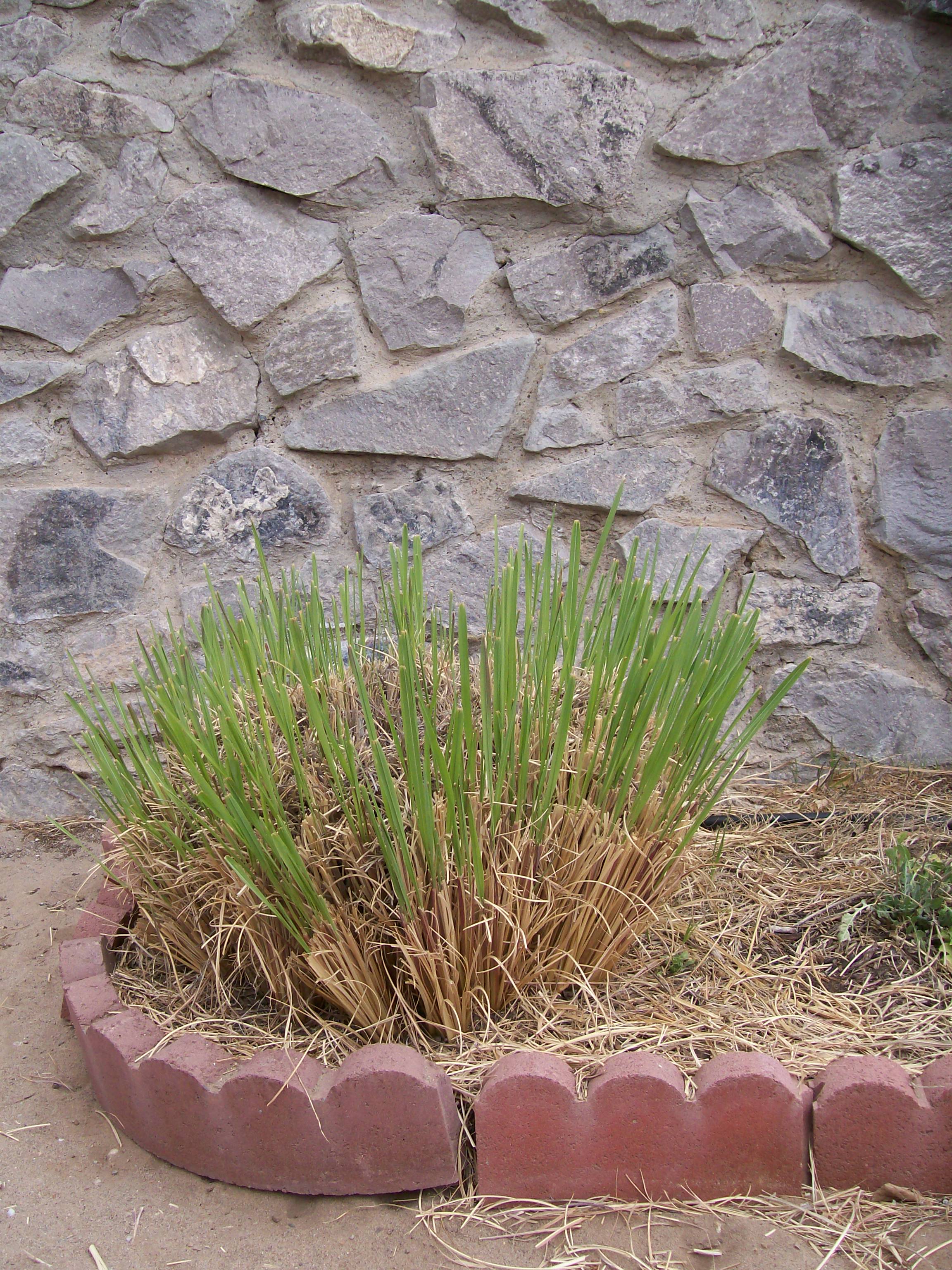
The large grass plant has made a big start.  It has far to go, since its seed heads will reach seven feet or more.

100_0770

The chamisa, which will also grow large, is nagging me about the sloppy pruning job I did on it this winter.  I couldn’t decide which branches to cut down to the ground.

100_0769

The pansies, which provided a bright spot through the winter, also are happier with the warming weather and longer days.  They’d look even better if I got out to rake out the old weeds around them.

That’s how it is with gardens.  There’s too little to do until suddenly there’s too much.  If you’re still waiting for spring to reach your yard, get those tools ready and replan your days.  I didn’t do that.  I should have seen this coming!

Finding Troy

3 Comments

The Greeks turn up in unexpected places.  Recently I found them in Ray Bradbury’s Zen in the Art of Writing.  I suppose most writers are guilty of seeking out and devouring books about writing.  We read every one that comes to our attention, even though, after about five of them, each may only provide one new idea or trick for keeping at the writing craft.  It was a quotation on a LinkedIn group which brought Bradbury to my attention.  It had been several months since I’d read a good craft book so I tracked down a used copy.

The book is a collection of essays about Bradbury’s own work, his methods, his efforts at teaching.  It is well worth reading although you may, as I did, feel a bit jealous when he speaks of being able to type out a full story in one short sitting.

The Greeks show up not among the Martians and other aliens with whom Bradbury has spent most of his time, but in one of the poems that form a sort of coda to the book, in the form of Troy.  Troy is a symbol of archaeological work, the digging and finding of treasure, as it was when Schliemann excavated there in the late nineteenth century.  For Bradbury it becomes a metaphor for his finding his own unique path in life.  Others tried to dissuade him, but “I knew my Troy.” he says. He had to keep it secret. however.   “I dug when all their backs were turned.” he says, in order to avoid the scorn of those who did not believe.  He concludes the poem speaking about what he found:

One Troy? No, ten!
Ten Troys? No, two times ten!  Three dozen!
And each a richer, finer, brighter cousin!
All in my flesh and blood,
And each one true.
So what’s this mean?
Go dig the Troy in you!

How satisfying that he can stay with and expand that one image, that Troy that has been magical since Homer.  It rings and resonates.

For me, one Greek leads to another, one archaeological site leads to another.  Schliemann, who found Troy, also unearthed gold masks and other riches at Mycenae where Agamemnon ruled.  He went looking for Pylos, the home of Nestor, the wise older advisor of the Iliad.  Like Schliemann, I cannot settle on one site.  But Bradbury does promise many Troys.

There are nine layers at Hissarlik, the site of Troy.  Schliemann was wrong about which was the Homeric Troy.  He thought Priam’s Troy was the second layer; it appears now to have been the sixth.  Layers are also metaphor: the layer of history is overlaid by the layer of excavation in the tales of the place; between what we learn and what happened there is always a big gap, but the set of tales about what was found adds its own layer to the story.

Each of us, Bradbury suggests, has our Troy or series of Troys to find, though we would be wise not to talk too much about them.  Mine is the next poem project; it always takes some searching to find what I’m after.  May you be fortunate in finding your Troy.

Older Entries Newer Entries