Home

Poems in On Line Journal

Leave a comment

Lantern_Journal_Fall_2013_Issue_FlyerThere’s a small sample of my poetry collection responding to William Paley, Made and Remade, on the web.  It is in Lantern Journal’s Fall 2013 issue.  The overall theme of the issue is “Evolution.”  The selections chosen by the editors are extremely varied.  My entry is a set of three poems, two from the Paley collection. You’ll find the contents and introduction to the issue (Volume II, No. 3)  at: http://lanternjournal.org/category/v2-i3-2013/  There you will find my summary statement of Made and Remade and a picture of the Wearmouth Bridge, along with other photos.  Click on “View full ARTicle here” to read the poems.

The first of the poems, “Lost Leverage” while it fits the theme just fine, is from an earlier collection.  As the word “Lever” buried in the title may suggest, it is from my Archimedes series, which has yet to find a publisher.

The connection of “Evolving” to the theme should be self-evident.  I leave it to the reader to determine how “Headache” fits.  I hope it doesn’t give you one.

The Bridge Outside Paley's Door

The Bridge Outside Paley’s Door

Chronophobia: Fear at the Equinox

3 Comments

Time always seems to be an issue at the fall equinox.  The shortening daylight gives a feeling of shorter hours, while the activities that resume in the fall take up more of those hours.  The tasks put off during hot weather have also accumulated.  There is one plus to this season: being up before the sun to see the dawn color.

September Sunrise

September Sunrise


The rest of the day time seems to run and leap, trampling the to-do list.  I may even suffer an attack of Chronophobia:

I’m on the monster’s back and I don’t dare get off.  Time is the enemy, a threat to all my projects.  Of hours in the day or days in the week there are never enough to keep up with all my chosen tasks: the writing, the meetings, the email, the sewing, the gardening.

Some weeks I wonder if I should even be spending Sunday morning at church.  I hear time growling, licking his lips.  Martin Luther said, “I have so much to do today that I must spend a long time in prayer.”  How could this be, I wondered.  Then I discovered the secret.  When I stop, really completely stop―not just sit down with a book, not just make a cup of coffee―when I really come to a full stop, time stops too.

It doesn’t last long.  As soon as I begin to move again, I have to get back up on the monster’s back and race toward the next task, the next deadline, the next chime of the hour. If I slip off I may be eaten.  This is Chronos, after all: the old god who eats his children.

Thanks to Ina Hughs, at last year’s October Writing Festival at Ghost Ranch, for her “sheet of fears” exercise.

Public Art in La Jolla, CA

1 Comment

La Jolla from Torrey Pines Beach

La Jolla from Torrey Pines

On a trip last week to southern California we found out about the mural project in La Jolla and went to investigate.  We came south from Torrey Pines and worked our way into and around the village.

There are a total of eleven murals by ten artists.  They weren’t easy to find, especially from a car, and some of us are poor walkers, but we did find several.  Here are some I liked:

53 Women by Ryan McGinness

53 Women by Ryan McGinness

Applied, by Richard Allen Morris

Applied, by Richard Allen Morris

Tail Whip, by Gajin Fujita

Tail Whip, by Gajin Fujita

Favorite Color, by Roy McMakin

Favorite Color, by Roy McMakin

It was fun to hunt for these.  I can’t pick a favorite among the art works, but I particularly like the title “Favorite Color.”  You can learn about the rest of the eleven murals at www.muralsoflajolla.com

Salinas Pueblo Missions, Part II

1 Comment

Abo is not far from Quarai (see previous post) though present roads take one around three sides of a trapezoid.  It appears to have been about a ten mile walk south from Quarai to Abo along the eastern slope of the Manzano Mountains in the days when the Spanish missions were built.  The sites are similar, but have worn and are maintained differently.

100_0926A

The Abo church and its buildings are surrounded by yellow grass – it would be good food for cattle if they were allowed in.  Instead of scraps of stone on the hillside, there are huge stone slabs where water ran.100_0930A

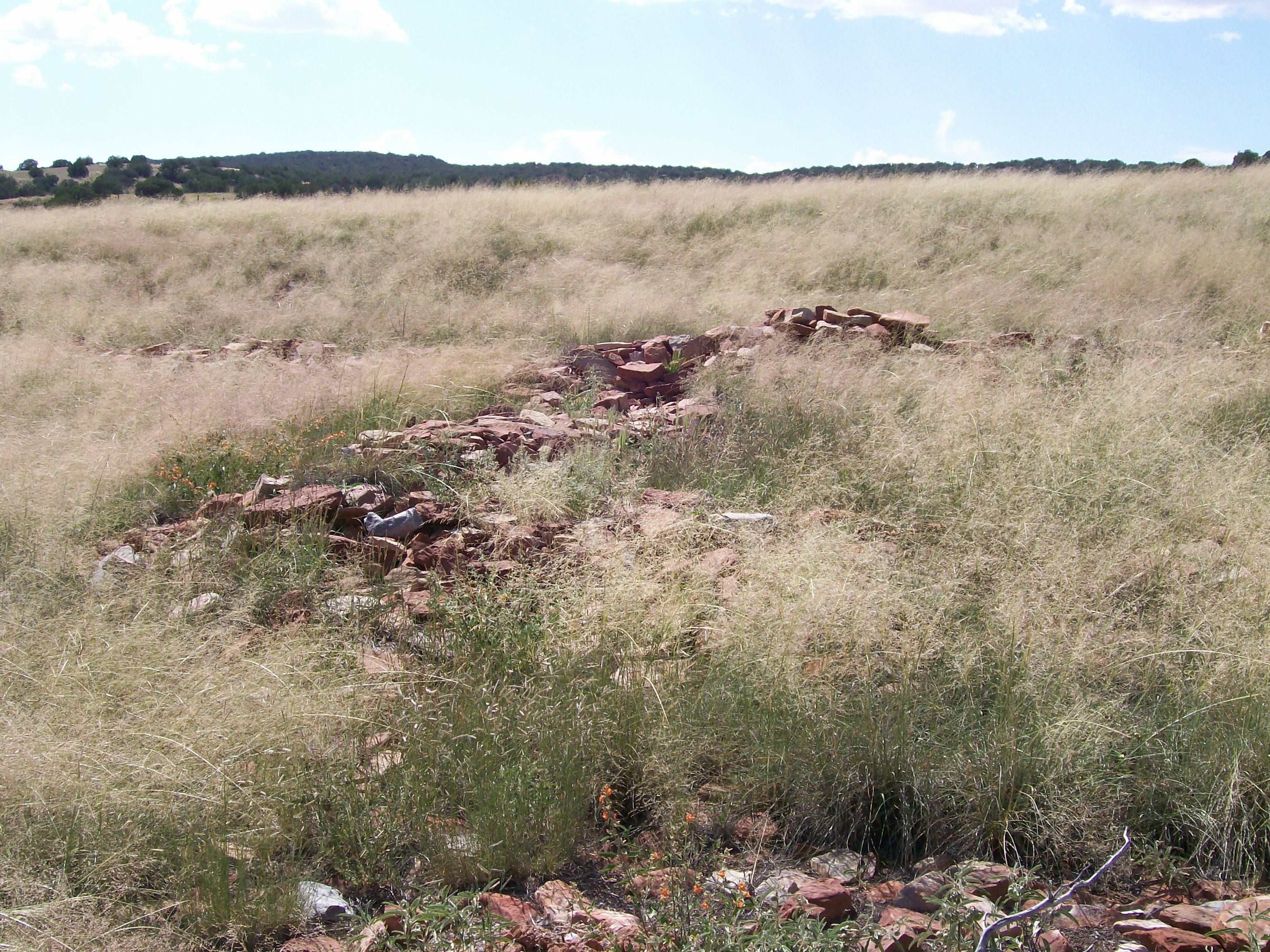
I came close to one ruin of a Pueblo building.  It is just tumbled stone, suggesting that one strong point for the Spanish conquerors was the ability to make better mortar.pueblo house A

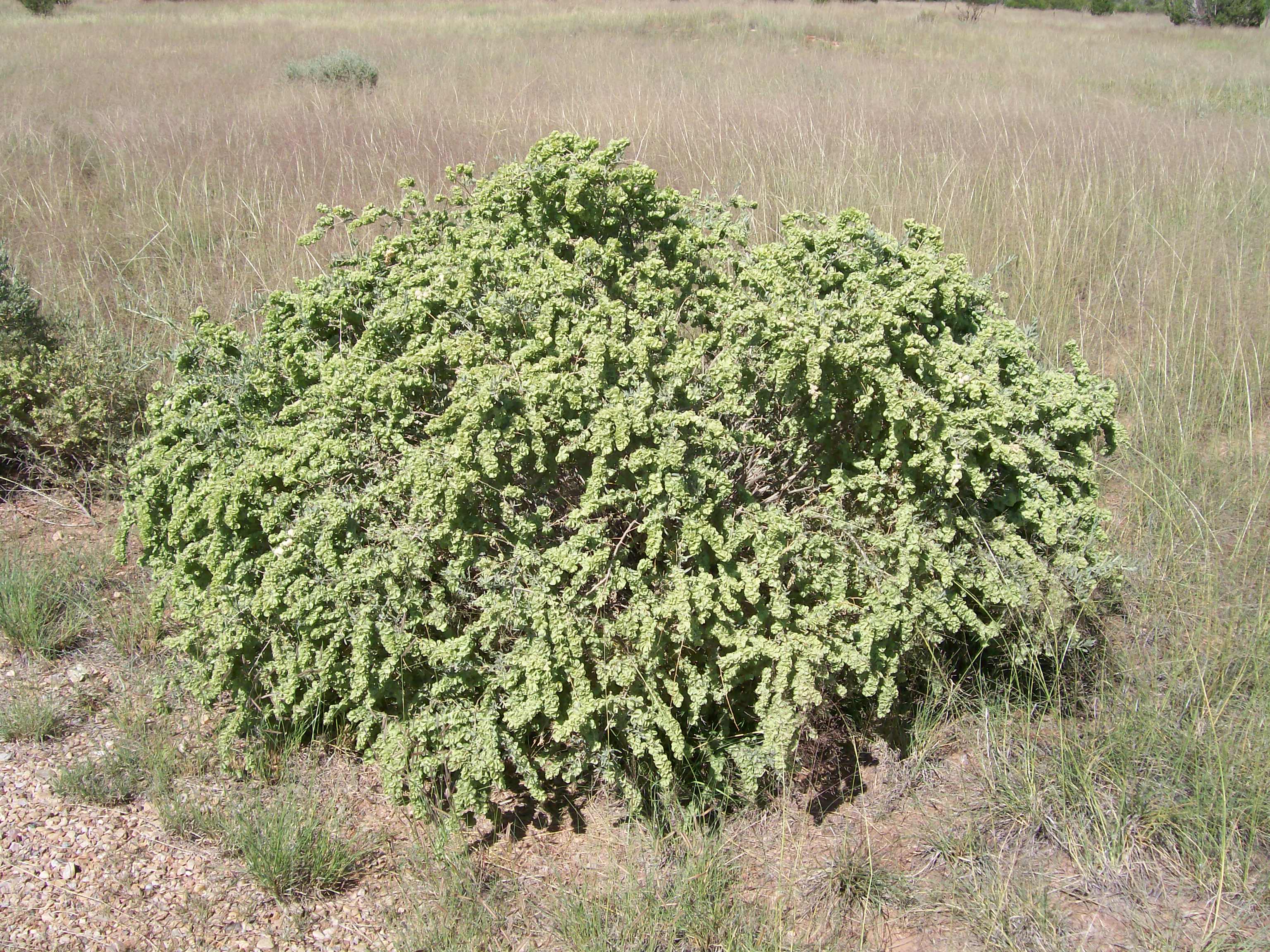
Two plants particularly caught my attention.  The first was an nicely shaped four-wing saltbush.  Its four-winged seeds will turn golden in the fall.  I have one of these in my back yard; it gets too much water apparently, due to other plants around it, and is very shaggy.saltbush A

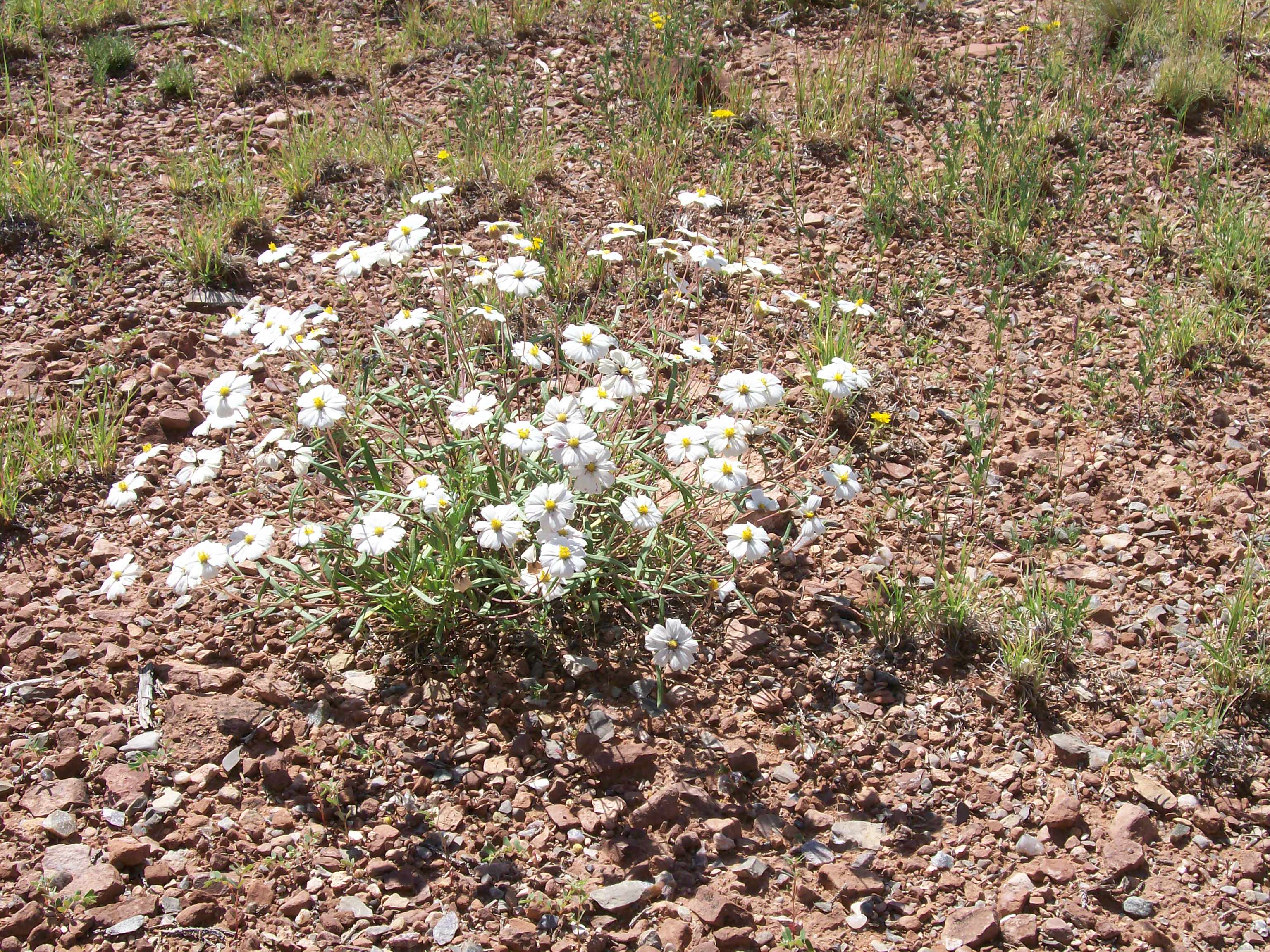
Another well-shaped plant I came across at Abo is one I have found in the arroyo near our house in a good season.  It shows up in summer after rain and is covered with white flowers all at once.  They don’t last long.  I have not learned its name.white flower A

Salinas Missions, Part 1

1 Comment

On a trip to northern New Mexico last weekend I stopped to visit two of the Salinas Missions.  The Salinas Pueblo Missions National Monument, established in 1981, consists of three separate sites.  Each was once a native American pueblo, inhabited by people who spoke Tiwa.  Each became a Spanish mission site, with a big church and a number of outbuildings.  At only one site, Gran Quivera, is there much of the pueblo to see.  I visited that place quite a few years ago, before I had a digital camera.  Now that I’ve seen the other two, I am eager to go back.

This post is about Quarai, located north of Mountainair.  The church there is the best preserved and is often photographed.

100_0908

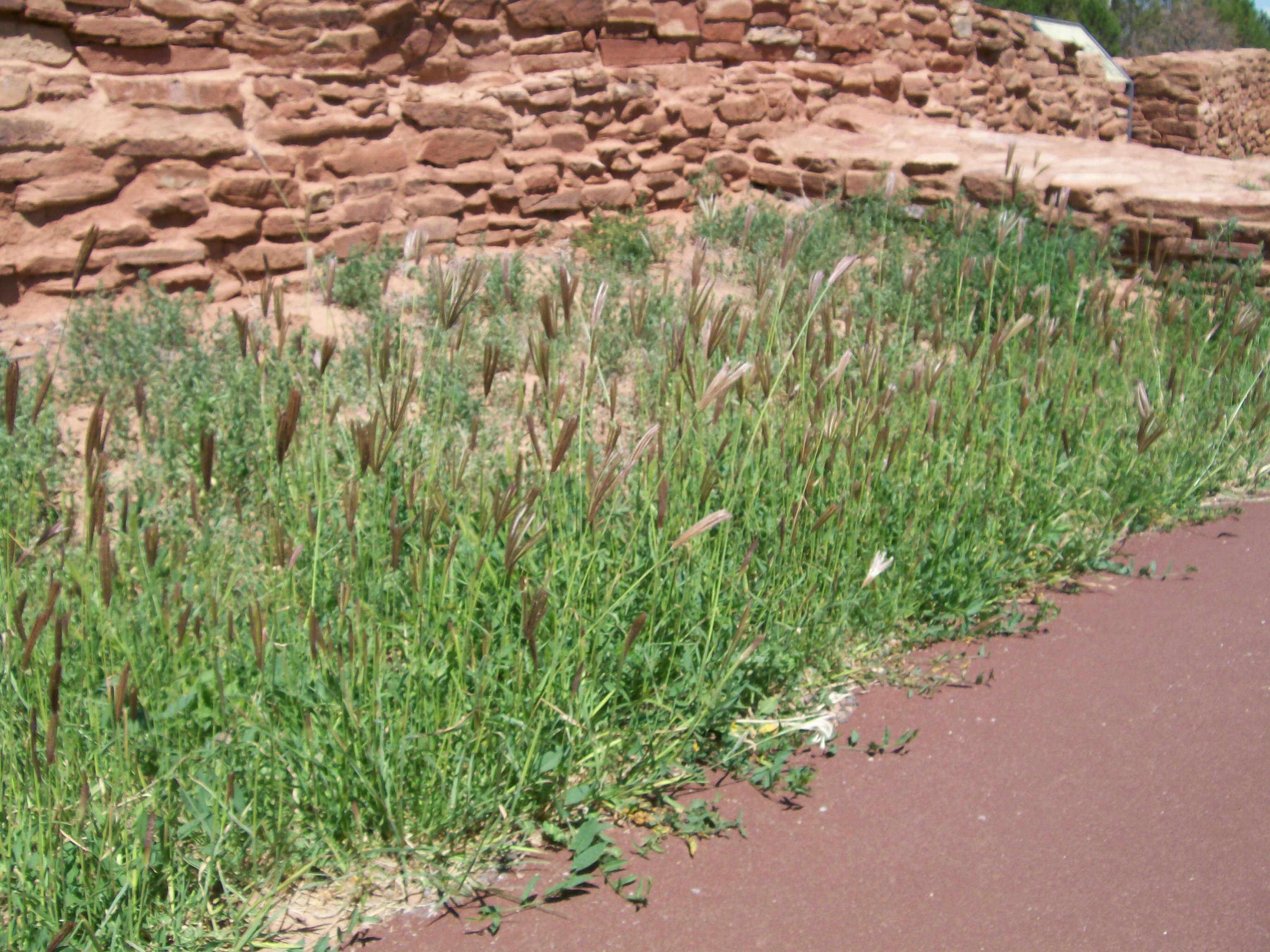
Below is an attempt to photograph a grass I don’t know the name of, which has quite large heads for a grass.  I wondered if it is edible.

grassQuarai has a one mile “primitive” trail beyond the once settled area, where the “trail” is paved.  It becomes clear that the stone for building did not have to be brought from far away.

stone trail

Looking from the trail toward the green near the entrance to the ruins I had complicated thoughts: this green is neither natural nor a reconstruction of what was there when the Spanish mission was operating.  How hard the park service works, simply for our enjoyment!  Our tax dollars at work.

100_0914

Two pictures show how different plants share space.  The first shows the orange flowers of desert globemallow, a plant which grows six feet tall and blows in the breeze in my back yard.

100_0922

This second picture was an attempt to capture the sense of fall: red berries on what I believe is a sumac.  It is so intertwined with other plants that it is hard to tell.

berries

My next post will have pictures from Abo, the third of the three Spanish pueblo mission sites in the National Monument.

One for Fun

1 Comment

On the road this past weekend I found myself eating in restaurants and remembered this poem which I wrote several years ago.  It’s all about the word play, and you’ll see by the end, if you don’t recognize it immediately, that it is rapidly becoming dated.  Enjoy!


Checkpoint

Checking out the new
restaurant, we place
our order, chat about
that smiling checker at
the grocery store, my
check-up – the doctor’s
clean bill of health.

It’s my turn to pick up
the check.  We recall
when checks we wrote
had stubs, those books
with three to a page
your father used, as if
home were a business.

Waitstaff scurry from
table to computer, which
prints small characters
on short thin strips.
I say, “We’re ready for
the check.”  Our server
calls it a ticket.


Mashed Potatoes and Ruth Krauss

3 Comments

The Broken City has a new issue out on the theme of food.  They’ve included a poem of mine, “Mashed Potatoes” which begins:

So there must be gravy
and a decision about who’s to make it.
Thanksgiving celebrates acquisitions,
mergers: his family’s sauerkraut,
her neighbor’s homegrown squash. . . .

You can read the rest of this poem, and other interesting poems about food at: http://www.thebrokencitymag.com/BC12web.pdf.  There are also stories and, at the end, comments from the contributors, who were asked to answer the question: “If we are what we eat, what are you?”

For my poem I used an epigraph, “[Mashed potatoes] . . . are to give everybody enough.” This definition comes from Ruth Krauss’s little book for little people, A Hole Is To Dig.  Krauss collected definitions from first graders for this book.  It is a wonderful early reading book which I remembered from my childhood and read to my children.

Even better for reading to children is Krauss’s book, A Very Special House. The words are spread on large pages among drawings by Maurice Sendak (before he became famous for his own books).  The “special house” is inhabited by creatures of all kinds.  A lion eats the stuffing from the chairs.  My favorite lines, remembered since childhood are:

A Very Special House

A Very Special House

And that’s not all―And that’s not all,
They’re playing toesy-woesy on the wall wall wall.

These books must have been important influences in my developing appreciation for words, rhythm and rhyme.  I’m delighted that I was reminded of her work while writing “Mashed Potatoes” and could acknowledge my debt to her. Krauss died in 1993, but her books are still in print.

More About William Paley and his Bridge

Leave a comment

Photo: Sunderland Public Libraries / Foter.com / CC BY-NC-SA

Photo: Sunderland Public Libraries / Foter.com / CC BY-NC-SA

The bridge which William Paley admired at Wearmouth (see my post of July 26) tells us two important things about the time when Paley wrote his book, Natural Theology.  First, the smoke from the smokestack tells us that the industrial age has arrived.  Second, the sails on the ships tell us that engines which can move ships (or trains for that matter) have not yet been invented.  This is a world of commerce, but it is not our world.

William Paley came to live in Wearmouth in 1795.  He was then 52 years old; his most successful years were behind him.  Paley was educated at Cambridge and became a teacher there.  He was ordained in 1766 as an Anglican priest, and was appointed to various positions in the church.  He wrote three important books before Natural Theology, one on moral philosophy and two defending the historical accuracy of the New Testament.

In all his writing Paley emphasized reason, and wrote clear, logical arguments.  That clarity, and his use of language in general, makes Natural Theology a pleasure to read, in spite of the fact that, as the picture demonstrates, his world is very different from our present circumstances.

My collection of poems, Made and Remade, responding to William Paley’s writing, is to be published by WordTech Editions in 2014.

A Mountain Hike

2 Comments

This past week I found the time to drive to Cloudcroft for a hike in the Lincoln National Forest.  I’ve been meaning to do this for years – since I moved to Las Cruces, in fact, and this was the first time I did it.  The air temperature in Cloudcroft, at over 8,000 feet, runs about 20 degrees cooler than the temperature here at 4,000 feet, where it has been up in the high 90s for many days.  The weather was beautiful; it only rained while I was in the car.  The beginner hike of two miles round trip was just my speed.

Osha Trail

Osha Trail

I hoped to see more wildflowers.  Those I did see are not known to me by name, but pleasing all the same, especially the one that pokes out of other plants’ leaves to give itself a green background.

100_0901

100_0899


The forest is primarily pines and maples.  At one spot, the baby maple trees were so thick they looked like ground cover.

100_0904

I promised myself I would come back again soon.  It’s an hour and a half drive away, which in New Mexico, is not considered far at all.  I have no excuse.

After Rain

1 Comment

The ground in my back yard is mostly sand between the bushes.  But then it rains and it becomes clear how many seeds are buried in that sand.   Rain is a good metaphor for all kinds of nurturing.  When the rain doesn’t come for a while, more yellow shows from the ground.  When it comes again, the ground is green.

100_0896


Dry skin in winter,
wind burnt in spring, the ground
turns to green fuzz
after rain, grows out ragged
as an adolescent’s beard.

100_0897

Older Entries Newer Entries